


EB-1 visa explained: Who qualifies for the US 'Einstein green card'
US Congresswoman Jasmine Crockett reignites debate over the EB-1 'Einstein visa' by questioning how Melania Trump qualified for it as a model in 2000
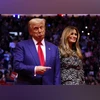 "Donald Trump and Melania Trump")
Donald Trump and Melania Trump. Photo: Reuters
Listen to This Article
The EB-1 visa, often called the Einstein visa, is once again the subject of political and public scrutiny in the United States, after a Democratic congresswoman questioned how Melania Trump had qualified for it.
During a heated exchange at a House Judiciary Committee hearing last week, Congresswoman Jasmine Crockett raised eyebrows by suggesting that Melania Trump, a Slovenian model at the time she applied, may not have met the bar set by the EB-1 category.
“The first lady, a model, and when I say model, I’m not talking Tyra Banks, Cindy Crawford, or Naomi Campbell-level, applied for and was given an EB-1 visa,” Crockett said.
“Let me tell you how you receive an Einstein visa,” she added. “You’re supposed to have some sort of major achievement, like a Nobel Peace Prize or a Pulitzer, being an Olympic medallist, or having sustained success in sciences, arts, education, business, or athletics. Last time I checked, the first lady had none of those accolades under her belt. It doesn’t take an Einstein to see that the math ain’t mathin’ here.”
Melania Trump, then known as Melania Knauss, applied for the EB-1 in 2000. The visa was granted in 2001. She became a US citizen in 2006, later sponsoring her parents for green cards under a process known as family reunification—something her husband, President Donald Trump, has repeatedly criticised as ‘chain migration’.
Also Read

 "Donald Trump, Alligator Alcatraz")
 "US President Donald Trump")
 "White House")
 "Donald Trump")
 "Alligator Alcatraz in Florida")
“Why aren’t we talking about integrity when it comes to the president’s family’s visas?” Crockett asked.
What is the EB-1 visa?
The EB-1 visa is a US green card category for people with ‘extraordinary ability’ in areas such as science, education, the arts, business, or athletics. It leads to permanent residency and is often seen as one of the fastest routes to US citizenship.
According to the US Citizenship and Immigration Services (USCIS), applicants must either win a major international award—like a Nobel Prize or an Oscar—or meet at least three out of ten listed criteria that show sustained national or international acclaim.
There are three subcategories under EB-1:
1. Extraordinary ability
This allows individuals to apply without an employer. Applicants must show either:
A one-time major award such as a Pulitzer, Olympic medal, or Oscar
Or at least three of these criteria:
• National or international awards of excellence
• Media coverage in top-tier outlets
• Invitations to judge others in the field
• Original contributions with measurable impact
• Academic publications
• Leadership roles in recognised organisations
• Higher-than-average salary
• Commercial success in the arts
Applications are made by filing Form I-140.
2. Outstanding professors and researchers
To qualify under this, the applicant must:
• Show international recognition in their academic field
• Have at least three years of experience in teaching or research
• Be hired for a permanent or tenure-track position in the US
The US employer must file Form I-140 and prove they can pay the offered salary.
3. Multinational manager or executive
This is meant for professionals who:
• Have worked at least one year outside the US for a company
• Are transferring to the US office in a managerial or executive role
Here too, the US employer files Form I-140 and provides financial documentation.
Does everyone meet the bar?
Not always. While the eligibility criteria are laid out by USCIS, interpretation can vary. Critics have long argued that the visa’s flexibility allows for loopholes.
Take Mangesh Ghogre, an Indian-origin investment banker, who received an EB-1 for his crossword puzzle skills. His work had been published in the New York Times and other major US newspapers, making a strong case for media recognition and original contribution.
In a widely circulated 2023 blog post, Debarghya Das, a San Francisco-based tech entrepreneur, shared what he called the “ultimate guide to an EB-1A”. He suggested working with expert firms to place one’s achievements in niche industry publications.
“There are firms that work with you to understand the scope of your contributions and find outlets for you to publish them for niche trade magazines read by industry experts,” wrote Das.
At a legal conference, immigration lawyer Carl Shusterman once circulated a résumé based on Albert Einstein’s early career. The reaction from attendees? Einstein himself might not have qualified for an EB-1 without his Nobel.
Lawyers like Shusterman have pointed out that EB-1 adjudications tend to favour fields with measurable, recognised benchmarks, such as awards, rankings, and media mentions, while undervaluing areas like entrepreneurship or early-stage innovation, where success may not always be conventionally recorded.
More From This Section
 "Donald Trump, Trump")
 "Keir Starmer")
 "Copenhagen, Denmark")
 "Italy")
 "New Zealand")
Don't miss the most important news and views of the day. Get them on our Telegram channel
First Published: Jul 02 2025 | 5:12 PM IST