


Trump's push to end birthright citizenship may succeed, but not for long
Trump's move to end birthright citizenship sparks legal confusion, affecting H-1B families as courts weigh nationwide impact and class action bids
 "US President Donald Trump")
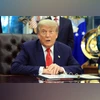
US President Donald Trump | Image: Bloomberg
Listen to This Article
H-1B visa holders and other immigrants—both legal and undocumented—are facing fresh uncertainty in the United States, following a Supreme Court ruling that could pave the way for ending birthright citizenship in parts of the country.
On June 28, 2025, the US Supreme Court restricted the power of lower-court judges to issue nationwide injunctions. That ruling has allowed President Donald Trump’s executive order to proceed—at least temporarily—in several states. The order, signed in January, seeks to end the automatic granting of US citizenship to children born to non-citizen parents.
This interpretation challenges a long-held understanding of the Fourteenth Amendment of the US Constitution, which guarantees citizenship to anyone born on American soil, regardless of the legal status of their parents.
Patchy rules and legal scramble
The immediate outcome is far from uniform. Legal experts say the ruling could create a fragmented map across the US, where the executive order is enforced in some states but not in others.
Also Read

 "US President Donald Trump")
 "US citizenship, Naturalisation")
 "Sheikh Hasina")
 "Statue of Liberty, US-France, US France, France US, US flag, America Franch")
 "US flag, US, united states")
“If the restrictions are not blocked nationwide, they could be applied in the 28 states that did not challenge them in court,” said Kathleen Bush-Joseph, policy analyst at the Migration Policy Institute. “That could create an extremely confusing patchwork.”
She questioned how the policy would play out in hospitals. “Would individual doctors, individual hospitals be having to try to figure out how to determine the citizenship of babies and their parents?” she asked.
Trump, speaking at a White House briefing on Friday, defended his stance: “Hundreds of thousands of people are pouring into our country under birthright citizenship, and it wasn’t meant for that reason.”
Legal challenges underway
The ruling hasn’t ended the legal battle. On the same day, plaintiffs filed an amended lawsuit in a federal court in Maryland, trying to convert their case into a nationwide class action. Their aim is to represent “all children who have been born or will be born in the United States on or after February 19, 2025,” who would be denied citizenship under Executive Order 14,160, and their parents.
Joel Yanovich, a US-based immigration attorney with Murthy Law, said litigation is far from over.
“The Supreme Court significantly limited the ability of lower courts to issue nationwide injunctions. But, the ongoing lawsuits challenging Trump’s executive order on this are continuing. And, there is good reason to believe that they ultimately will be successful,” Yanovich told Business Standard.
For now, he said, “The Fourteenth Amendment’s guarantee of birthright citizenship remains in effect,” although Trump’s order could come into force in some states while the lawsuits progress.
Class action or chaos?
The push for a class action could determine how the legal strategy plays out from here. If the class is certified, the case could offer wider protection. If not, thousands of individual lawsuits may be filed across the country.
“Legal protections for children of undocumented or temporary-resident parents will hinge on class-action certification or case-specific rulings,” Ketan Mukhija, senior partner at Burgeon Law told Business Standard. “The broader constitutional issue remains unsettled and subject to future judicial review.”
Who is affected, and who isn’t
Green card holders are unlikely to be affected, Yanovich said. However, the same cannot be said for most nonimmigrant workers, including those on H-1B visas.
“Most nonimmigrants, including H-1B workers, who have a child born in the United States would not automatically see US citizenship conferred to their children,” he said.
Concerns among Indian families have been growing since the executive order was signed. According to media reports, some expectant mothers in their final weeks of pregnancy had requested early C-section deliveries to ensure their child’s birth before the policy’s start date.
Even so, Yanovich added, “We still expect this executive order to ultimately be struck down by the federal courts. But, it may take a very long time to reach this point.”
More From This Section
 "Donald Trump, Alligator Alcatraz")
 "Donald Trump, Trump")
 "Donald Trump and Melania Trump")
 "White House")
 "Donald Trump")
Don't miss the most important news and views of the day. Get them on our Telegram channel
First Published: Jul 03 2025 | 12:27 PM IST