


US student visa slots still scarce; Indian students risk losing lakhs
Indian students face mounting stress as US visa slots remain scarce even after pause lifted; many risk losing lakhs in tuition, housing, and flights
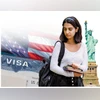 "US visa social media directive, US visa rules Indian students, Indian students US visa screening, F1 visa decline India, Indian non-immigrant visa trends, US visa approvals India FY25, Indian students US study 2025, F1 J1 M1 visa types India, US visa")
Current wait times for F-1 visa interviews in India range from 45 to 60 days depending on the city
Listen to This Article
It’s been nearly two weeks since the US consulates resumed student visa interviews on June 26, but for Indian applicants, the scramble hasn’t eased. Appointments remain scarce, delays continue, and growing uncertainty is throwing August travel plans into disarray.
“Right now, even though the US finally started releasing visa appointments again, it’s honestly a mess. Slots open at random times, and they’re gone in seconds,” Kajal Dave, co-founder of LaunchEd told Business Standard. “Students with courses starting in August are freaking out because they’ve already paid lakhs in tuition, booked flights, and arranged housing—but can’t get a visa appointment in time.”
According to her, the potential financial hit is huge. “We’re talking about ₹10–30 lakh in tuition, another lakh or two for housing deposits, and at least ₹75,000 on flights. If they can’t make it on time and the college won’t let them defer, that’s potentially ₹12–35 lakh down the drain. That’s a huge hit for any family,” she said.
Online panic mirrors real-world crisis
The anxiety has spilled over to online forums. One student posted on Reddit:
Also Read

 "US visa interview")
 "US visa social media directive, US visa rules Indian students, Indian students US visa screening, F1 visa decline India, Indian non-immigrant visa trends, US visa approvals India FY25, Indian students US study 2025, F1 J1 M1 visa types India, US visa")
 "Harvard University")
 "Donald Trump, Trump")
 "Donald Trump and Melania Trump")
“STILL NO F1 VISA SLOTS in INDIA. Guys, I am panicking so much right now. They are still not opening the visa slots in India. What do I do? My course starts August 20 and I have not even packed or bought airplane tickets. I feel so lost and hopeless right now.”
The post, now widely circulated among student communities, captured the broader mood. Another user replied, “My orientation is on August 15 and my tickets are for August 13. If I reschedule, the fare difference is almost double.”
Others highlighted a rising number of 221(G) notices issued to students whose interviews had already taken place. These administrative holds leave applicants waiting indefinitely, with little clarity on timelines.
One user wrote, “Even those who have given the interview are worried because they’re being issued 221(g)s, and no one knows when the visas will actually be approved.”
Another added, “I can’t find any available slots anywhere in India. The official US Embassy website even states, ‘We cannot guarantee that student or exchange visitor visa applicants without an existing appointment will be able to schedule an interview this summer.’ Does this mean there won’t be any more bulk slot openings before Fall 2025?”
US visa freeze during peak season caused cascading backlog
The freeze, which began on May 27, halted visa appointment scheduling during one of the busiest periods for US-bound students. The effects are now being felt across the education sector, from summer exchange programmes to postgraduate admissions.
“Several students are struggling to secure US visa appointments despite repeated attempts. Slots are either booked in seconds or unavailable,” Mamta Shekhawat, founder of Gradding.com told Business Standard. “This is not just a few isolated cases. It’s affecting students across India, regardless of their location or the university they plan to attend.”
Siddharth Iyer, chief operating officer at OneStep Global, confirmed that the problem extends to Tier 2 and Tier 3 cities, where access to alternate consulates is limited.
“Even in metro locations, the pace of slot release hasn’t matched the demand. This is particularly concerning given that most courses begin mid-August, and many students have already paid tuition and signed leases,” Iyer told Business Standard.
He described the delays as part of a larger pattern. “What we’re witnessing is less about individual delay and more about systemic bottlenecking,” he said.
Some avoided delays by applying early
Sanjog Anand, co-founder of Rostrum Education, said some students avoided the mess altogether.
“As soon as they received their acceptance letters, they immediately completed their visa applications and related paperwork. This proactive approach helped them bypass the uncertainty and delays that arose later in the season,” Anand told Business Standard.
What’s causing the continued shortage of student visa slots?
According to experts, the root of the problem lies in a combination of backlog and policy changes under the Trump administration.
“There are two layers to this,” said Iyer. “The immediate issue is the backlog created by the month-long freeze on new appointments during peak season no less. But the second, more structural issue is the evolving US visa adjudication policy. Increased scrutiny of digital footprints and social media history has introduced friction in processing timelines.”
Applicants are reportedly being asked to make their social media accounts public so consular officers can review them before granting entry. The increased vetting is labour-intensive and time-consuming.
“There’s a broader recalibration happening in how visas are being assessed globally. So, it’s not just about volume, but also the processing time per case,” Iyer added.
What can students do if they don’t get a visa in time?
Anand said students have a few options if they’re unable to secure an appointment in time.
Emergency appointment requests: Students can apply for expedited visa appointments through the UStraveldocs website, with documentation showing urgent need to begin a course.
University support: Students should notify their university’s Designated School Official (DSO) immediately to explore deferral, online study options, or temporary leave.
Updated I-20 and SEVIS records: If deferral is granted, the DSO can issue a new I-20 and update the SEVIS record.
“The best thing to do right now is to get in touch with your university’s international student office as soon as possible,” said Dave. “Explain what’s happening, ask if you can defer, and request an official letter explaining the urgency. That can support your emergency visa request, but don’t fall for agents promising guaranteed appointments—that’s just not how it works.”
She also advised students to check for slots late at night, between midnight and 3 am, when cancellations are sometimes released.
Iyer added that current wait times for F-1 visa interviews in India range from 45 to 60 days depending on the city, with Kolkata averaging 60 days and Chennai 45. This does not include any additional processing time after the interview.
What is the financial cost if a visa is not granted in time?
According to Anand, the potential losses vary but can be considerable:
Application fees: Non-refundable
Tuition deposits: Refund policies vary by university
Tuition fees: Partial or no refund depending on when the student withdraws
Housing deposits: Often non-refundable or charged with cancellation fees, especially in private rentals
Airfare: Non-refundable tickets usually incur cancellation charges or are converted into credits with added fees
Other expenses: Including F-1 visa fee ($205), SEVIS I-901 fee ($350), transcripts, and test costs
“The losses, unfortunately, depend on various factors,” Anand said.
Is there a legal or formal route for help?
“There are a couple of formal and legal methods by which students can address emergencies, especially visa procedures,” said Shekhawat.
Students can use the ‘Request Expedite’ option on the official US visa site, submit supporting documents from their university, and contact consulates through official channels. The Student and Exchange Visitor Program (SEVP) may also provide guidance, although it does not intervene in appointment scheduling.
“Credible education consultants should also be able to guide students, but they must steer clear of unofficial agents or promises of guaranteed slots. That’s where scams begin,” she warned.
More From This Section
 "cryptocurrency")
 "Australia education")
 "Keir Starmer")
 "UAE golden visa")
 "US visa, H4, H1B")
Don't miss the most important news and views of the day. Get them on our Telegram channel
First Published: Jul 07 2025 | 5:03 PM IST