


Harsh words not enough, must see economic cost of air pollution: Bombay HC
In 2023, the court had taken suo motu (on its own) cognisance of increasing air pollution and passed a slew of directions to civic bodies and other authorities to take steps to deal with the problem
 "Bombay High Court")
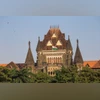
Bombay High Court (Photo: Shutterstock)
Listen to This Article
The Bombay High Court on Tuesday orally observed that the impact of air pollution on the economy needed to be examined and just uttering "harsh words will not yield any results".
During a hearing on the issue of air pollution, amicus curiae (friend of court) Darius Khambata cited former International Monetary Fund (IMF) chief economist Gita Gopinath's recent comments in Davos that "pollution is a major economic threat to India than trade-related challenges".
In 2023, the court had taken suo motu (on its own) cognisance of increasing air pollution and passed a slew of directions to civic bodies and other authorities to take steps to deal with the problem.
During the previous hearing on January 23, a bench led by Chief Justice Shree Chandrashekhar had slammed civic authorities for their "belligerent disregard" of its orders to mitigate air pollution and warned of halting salaries of top municipal officials.
When the matter was called on Tuesday, Amicus Darius Khambata, during his submissions, referred to Gopinath's comments on pollution being as a major economic threat to India.
Also Read

 "RBI")
 "Tata power")
 "Union Finance Minister Nirmala Sitharaman")
 "Meta")
 "aviation, aeroplane, flights, airport")
The former IMF chief economist made the remarks while speaking at the just concluded World Economic Forum meeting at Davos, Switzerland.
Khambata then asserted that the economic cost of pollution needed to be examined.
He submitted that "some shock treatment should be given to the authorities and the system" to effectively address pollution concerns.
The court-appointed amicus curiae underlined that there was no "quick-fix solution" and even a country like China took eight to ten years to achieve sharp reduction in air pollution levels.
It (solving air pollution problem) can be done, but "there has to be political will", the senior advocate argued.
Senior advocate Janak Dwarkadas, appearing for NGO Vanshakti, stressed that there must be compensation for the "person who suffers health setback due to pollution" and that the authorities must be held accountable.
Dwarkadas pointed out that "the pace of any action taken by the authorities is pathetically slow".
The bench posted the matter for further hearing on Thursday without passing any directions, but orally commented that "the economic impact of the pollution needed to be examined".
"Harsh words will not yield any results," it observed.
(Only the headline and picture of this report may have been reworked by the Business Standard staff; the rest of the content is auto-generated from a syndicated feed.)
More From This Section
 "Bank strike")
 "Supreme Court, SC")
 "Put together by the airline over eight decades, the collection, which also includes MF Husain's Horses (1977), will be open for viewing from Tuesday (Photo: NGMA)")
 "SC, Supreme Court")
 "Vote, Voter, Voting, Bihar Election, Election")
Don't miss the most important news and views of the day. Get them on our Telegram channel
First Published: Jan 27 2026 | 9:25 PM IST