


Groundwater in Punjab, Haryana contaminated with uranium, arsenic: Report
The Central Ground Water Board report attributes the rising uranium levels to leaching from agricultural land. Intensive use of fertilisers has exacerbated the problem
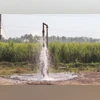 "groundwater, water")
Listen to This Article
Several districts in Punjab and Haryana have excessive levels of uranium, nitrates, arsenic, chloride, and fluoride – surpassing permissible limits – in their groundwater, according to the recently-released Annual Ground Water Quality Report-2024.
According to the report, accessed by The Financial Express, uranium concentrations exceed the safe limit of 30 parts per billion (ppb) in 20 districts of Punjab and 16 districts of Haryana, based on samples collected in May 2023. This reflects a rise in affected areas compared to 2019, when 17 districts in Punjab and 18 in Haryana reported similar issues.
The report, compiled by the Central Ground Water Board (CGWB), adds that exposure to uranium beyond this threshold can lead to severe health complications, including kidney damage and urinary tract cancer. The Punjab and Haryana High Court had previously directed an assessment of groundwater quality to evaluate risks from multiple contaminants, not just uranium.
Agricultural runoff and groundwater pollution
The report attributes the rising uranium levels to leaching from agricultural land. Intensive use of fertilisers has exacerbated the problem. Many of the affected districts are classified as "overexploited", "critical", or "semi-critical" groundwater zones. Additionally, the National Green Tribunal (NGT) has acknowledged a study by IIT-Mandi, which links agricultural runoff to groundwater contamination in Punjab.
Beyond uranium, the report highlights excessive nitrate levels in groundwater samples from both states. In Haryana, 14.56 per cent of tested samples surpassed the safe limit of 45 mg per litre, while in Punjab, 12.58 per cent exceeded the threshold. High nitrate exposure can lead to blue baby syndrome in infants. Arsenic contamination is also a concern, with concentrations above 10 ppb detected in groundwater samples from 12 districts in Punjab and five in Haryana.
More From This Section

 "Class, Classroom, Education, School")
 "Amanatullah Khan, Amanatullah")
 "Acharya Satyendra Das")
 "Ranveer Allahbadia and Samay Raina on India's Got Latent")
 "Supreme Court, SC")
Topics : Punjab Haryana Groundwater contamination Groundwater levels uranium Arsenic water pollution Environmental pollution Drinking water
Don't miss the most important news and views of the day. Get them on our Telegram channel
First Published: Feb 12 2025 | 1:25 PM IST