


India plans at least five indigenous small modular reactors by 2033
The Nuclear Energy Mission targets 100 GWe of nuclear capacity by 2047, with SMRs aimed at retiring fossil-fuel plants, captive industry and remote locations
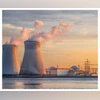 "nuclear reactor, nuclear power reactor")
Photo: Shutterstock
Listen to This Article
India plans to develop and operationalise at least five indigenous small modular reactors (SMRs) by 2033 as part of its push to expand nuclear power capacity to 100 GWe by 2047, the government told the Lok Sabha on Wednesday.
The Nuclear Energy Mission (NEM), announced in the Union Budget 2025-26, is pursuing a two-pronged strategy: deploying large reactors, including indigenous 700-MWe pressurised heavy water reactors (PHWRs), at greenfield sites, while developing SMRs for brownfield locations and other specialised applications.
The SMRs are being considered for repurposing retiring fossil-fuel power plants, supplying captive power to energy-intensive industries and providing electricity in remote, off-grid locations. Minister of State for Department of Atomic Energy (DAE), Jitendra Singh, said in a written reply that the mission is targeting at least five indigenous SMRs by 2033.
The Bhabha Atomic Research Centre (BARC) is developing three indigenous designs: the 220-MWe Bharat Small Modular Reactor (BSMR-200), the 55-MWe SMR-55 and a high-temperature gas-cooled reactor (HTGCR) of up to 5 MWth. The HTGCR can be coupled with a suitable thermochemical cycle for hydrogen production.
The government's nuclear expansion plan also seeks to bring private companies deeper into reactor manufacturing, engineering, research and development and supply chains. The Sustainable Harnessing and Advancement of Nuclear Energy for Transforming India (SHANTI) Act, 2025, provides for participation by public and private entities while retaining regulatory oversight and nuclear safety requirements.
Also Read

 "Parliament, Budget session, Lok Sabha")
 "kanwar yatra waste")
 "Tata Sons Chairman N Chandrasekaran had indicated last week that a call on renewal of his term shouldn't be taken without consensus between Tata Sons and Tata Trusts.")
 "US flag, USA")
 "emirates")
The DAE said it is working with the Indian industry on SMR technology through knowledge sharing and handholding to develop domestic nuclear vendors. Components including low-alloy steel forgings for reactor pressure vessels and reactivity-control drive mechanisms have already been developed domestically, while work on other critical equipment has begun with Indian industry and start-ups.
The SHANTI Act also provides statutory status to the Atomic Energy Regulatory Board, with the government saying the framework is intended to support greater private participation while maintaining nuclear safety, security, safeguards and regulatory oversight.
Thorium remains the long-term bet
Singh said the country’s nuclear strategy continues to be anchored in its three-stage programme, designed to make greater use of the country's thorium reserves while reducing dependence on imported nuclear fuel.
India’s three-stage nuclear programme is designed to eventually unlock its large thorium reserves. Thorium is a fertile material and must first be converted into fissile uranium-233. The programme envisages using natural uranium in PHWRs in the first stage, plutonium-fuelled fast breeder reactors in the second, and large-scale thorium utilisation only after sufficient breeder capacity is achieved.
According to the government, thorium oxide pellets have been used in the initial cores of operating PHWRs, while thoria-based fuels have been irradiated in BARC reactors. Irradiated thoria pins were reprocessed to obtain uranium-233, which was fabricated into fuel for the KAMINI reactor at IGCAR, Kalpakkam.
Alongside SMRs and thorium research, the government said it is continuing development of fast breeder reactor technology and associated closed fuel-cycle facilities through IGCAR. It is also expanding domestic isotope production through an Isotope Production Reactor to reduce dependence on imports of medical isotopes.
The government said the measures are intended to build a self-reliant nuclear ecosystem spanning reactor design, manufacturing, construction, research and the nuclear fuel cycle, while expanding the role of domestic industry in the sector.
More From This Section
 "Vijay, C Joseph Vijay, Tamil Nadu CM")
 "Supreme Court, SC")
 "Rupee")
 "Dominos")
 "Vijay, C Joseph Vijay, Tamil Nadu CM")
Topics : Nuclear reactors Nuclear energy BS Web Reports
Don't miss the most important news and views of the day. Get them on our Telegram channel
First Published: Aug 13 2026 | 1:26 PM IST