


Karnataka vs Andhra over HAL: Tracing the aerospace giant's flight path
HAL's major units in Karnataka produce Tejas, AMCA, helicopters and trainers, thus forming the backbone of India's defence and aerospace ambitions
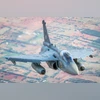 "Caption: Indian Air Force's Light Combat Aircraft (LCA) Tejas Mk-I. Image Credit: PIB")
Indian Air Force's Light Combat Aircraft (LCA) Tejas Mk-I. (Image Credit: PIB)
Listen to This Article
The Karnataka government has rejected speculation over any potential relocation of Hindustan Aeronautics Limited (HAL) production units to Andhra Pradesh, after Andhra Chief Minister N Chandrababu Naidu reportedly proposed setting up a greenfield HAL facility in his state.
Naidu, during recent discussions with the Union government, including a meeting with Defence Minister Rajnath Singh, reportedly suggested the establishment of a new HAL manufacturing unit in Lepakshi, Andhra Pradesh. The proposal included an offer of 10,000 acres of land near the Andhra–Karnataka border to house future production of platforms such as the Light Combat Aircraft (LCA) Tejas.
However, the Andhra Pradesh chief minister’s office has clarified that the proposal does not seek relocation of existing HAL facilities from Karnataka, according to an NDTV report.
HAL’s Karnataka units at the heart of India’s aerospace ecosystem
HAL’s main production units in Bengaluru and Tumakuru, central to the manufacture of Tejas, Advanced Medium Combat Aircraft (AMCA), helicopters, and trainer aircraft, have long been associated with Karnataka’s defence and aerospace ecosystem.
HAL is currently scaling up production to deliver 83 LCA Mk1A variants worth ₹6,500 crore to the Indian Air Force. Future platforms such as Tejas Mk2 and AMCA will require expanded infrastructure and trained manpower. While Andhra Pradesh’s land offer may support such expansion, the Ministry of Defence has not commented on whether the proposal is under active consideration.
Also Read

 "Indian Passport, Passport")
 "Supreme Court, SC")
 "online betting games")
 "indigo airlines, indigo")
 "Manipur Protest")
How HAL became India’s aerospace cornerstone
Founded on December 23, 1940, by industrialist Walchand Hirachand in collaboration with the then Government of Mysore, Hindustan Aircraft Limited began its operations in Bengaluru. The Government of India took control of the company in 1942, and it was brought under the Ministry of Defence in 1951.
HAL began with licensed production of aircraft like the Harlow Trainer, Curtiss Hawk Fighter, and Vultee Bomber, and later developed indigenous platforms such as the HT-2 trainer, Pushpak, Krishak, HF-24 Marut, and Kiran. Over the decades, it built aircraft like the MiG-21, Jaguar, MiG-27M, and Su-30MKI under licence, while also creating its own platforms and support systems.
Key milestones in HAL’s journey
> 1964: Formation of Hindustan Aeronautics Limited (HAL) through the amalgamation of Hindustan Aircraft Limited and Aeronautics India Limited
> 1970s–80s: Establishment of divisions for helicopters (Chetak, Cheetah), avionics, and accessories. Agreements with global manufacturers expanded HAL’s production base
> 1988: Formation of an Aerospace Division to support Indian Space Research Organisation (ISRO) programmes, including components for GSLV Mk-III, Mars mission, and cryogenic engines
> 1998–2000: Expansion into industrial gas turbines and airport services
> 2002 onwards: Licensed production of the Sukhoi Su-30MKI at an expanded facility in Nashik
HAL’s early decades were marked by licensed production—Vampire jets, Gnat fighters, and Chetak helicopters—but it soon pivoted to indigenous designs. The HT-2 trainer (1951) was its first homegrown aircraft, followed by the HF-24 Marut (1961), India’s first jet fighter. Though the Marut was hobbled by engine limitations, it laid the groundwork for future projects.
The 1970s–80s saw HAL diversify into avionics, instruments, and even space hardware (supplying structures for ISRO’s GSLV and Mars Orbiter). Landmark licences, like the Jaguar fighter (1979) and MiG-27 (1982), cemented its role as India’s defence backbone. By the 1990s, HAL was overhauling Western and Russian jets, a capability few nations possessed.
HAL’s 21st-century projects and global ambitions
The 2000s marked HAL’s leap into mega-projects:
> Su-30MKI: Nashik became a hub for 272 Russian-origin fighters, with HAL indigenising 51 per cent of components
> LCA Tejas: Conceived in the 1980s, the Tejas achieved operational status in 2016, with a ₹6,500-crore order for 83 Mk1A variants
> Helicopters: The Dhruv (2002), Light Combat Helicopter (2020), and LUH (2018, Tumakuru) showcased vertical-lift prowess
Today, HAL manufactures 85 per cent of India’s aerospace hardware, supports 20,000 direct jobs, and exports to Airbus, Boeing, and Israel Aerospace. Its R&D centres, working on the Advanced Medium Combat Aircraft (AMCA) and HTSE-1200 engine, are national assets.
HAL is currently involved in advanced aircraft projects including the LCA Tejas, AMCA, and helicopters such as the Light Combat Helicopter (LCH) and Light Utility Helicopter (LUH). It also contributes to defence exports and has partnered with multiple international defence OEMs.
More From This Section
 "Supreme Court")
 "Omar Abdullah, Omar")
 "Ashoka University Professor Ali Khan Mahmudabad")
 "Civil defence mock drills")
 "Crop, farming, woman farmer")
Don't miss the most important news and views of the day. Get them on our Telegram channel
First Published: May 28 2025 | 4:54 PM IST