


SC says multiple documents for citizenship in Bihar SIR are voter-friendly
Bench notes that allowing 11 documents to prove citizenship is less restrictive than earlier summary revisions; hearing to resume on Thursday
 "Supreme Court, SC")
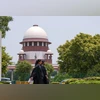
While acknowledging concerns around Aadhaar exclusion, Justice Bagchi said the broader set of documents available in Bihar makes the process “voter-friendly rather than restrictive.” .(Photo:PTI)
Listen to This Article
The Supreme Court on Wednesday observed that the option of 11 documents in Special Intensive Revision (SIR) of electoral rolls in Bihar to prove citizenship is “voter-friendly rather than restrictive”.
Justice Joymalya Bagchi made this observation while addressing senior advocate AM Singhvi, who is appearing for one of the petitioners challenging Election Commission’s (EC’s) SIR of Bihar’s electoral rolls.
A bench of Justice Surya Kant and Justice Joymalya Bagchi is hearing a clutch of petitions challenging the EC’s June 24 directive, ordering SIR of Bihar electoral roll. The directive requires voters not listed in the 2003 electoral roll to submit documents proving their citizenship. Those born after December 2004 must also furnish the citizenship documents of both parents, with additional requirements if a parent is a foreign national.
The court said that the ongoing SIR exercise in Bihar permits the use of any of 11 documents to establish citizenship, whereas the earlier summary revision of electoral rolls in Jharkhand allowed only seven documents as proof of identity.
The court noted that while the exclusionary argument from Aadhaar is understood, the availability of multiple documents to prove citizenship is seen as “voter-friendly rather than restrictive”.
Also Read

 "Election Commission of India, ECI")
 "Supreme Court, SC")
 "ECI, election commission of india, election commission")
 "Elections, voting, Lok Sabha elections")
 "Tej Pratap Yadav")
Singhvi then questioned the “compelling need” to conduct the SIR within such a short time, pointing out that it will lead to the exclusion of a large number of voters.
He argued that most women in Bihar do not have a matriculation or educational certificates issued by recognised boards or universities, which is one of the 11 documents specified by the ECI for verification.
During the hearing, Justice Bagchi noted that there is some “elbow room” given to the ECI in Section 21(3) of the Representation of the People(RP) Act. Section 21(3) says that the EC can conduct a special revision in “such manner as it may think fit” subject to certain restrictions.
The judge posed the question to the lawyers in the courtroom whether this provision gives EC some residuary discretion to bring additions/elements (enumeration forms, additional documents) to support its special revision exercise.
“21(3) cannot take away my right to adult suffrage under Article 326 at any cost. It cannot also take away my right to vote under Section 62 of the RP Act,” senior advocate Gopal Sankaranarayanan, appearing for one of the petitioners, argued.
“This is a battle between a Constitutional entitlement and Constitutional right,” Justice Bagchi noted.
Meanwhile, advocate Prashant Bhushan, appearing for Association for Democratic Reforms, which is one of the petitioners, claimed that the EC’s website removed a searchable list of electoral rolls after Rahul Gandhi made an allegation of vote theft against the poll body in a media conference on August 4.
“The searchable list was available till August 4,” he said.
During the hearing, the Supreme Court also said that it was not going to take up the issue regarding the SIR of the voter rolls in West Bengal. The Assembly election in West Bengal is due in 2026.
“Bengal can wait, nothing is happening now,” the bench said.
The court is likely to continue hearing the arguments on Thursday.
More From This Section
 "Traffic, Traffic jam, New Delhi Traffic Jam")
 "Road, road project")
 "Dogs, Stray dogs, Street Dogs, Dog")
 "Travel")
 "Independence Day 2025 rehearsal")
Don't miss the most important news and views of the day. Get them on our Telegram channel
First Published: Aug 13 2025 | 8:32 PM IST