


SC asks Centre, Delhi govt to submit action plan on CAQM's AQI measures
The top court made it clear that it will not entertain any objections to the recommendations
 "SC, Supreme Court")
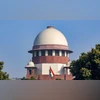
A view of Supreme Court of India. (File Photo: PTI)
Listen to This Article
The Supreme Court on Wednesday directed the Centre, the Delhi government and other stakeholders to submit within four weeks their action plan on the central pollution watchdog's recommendations for long-term measures to improve the worsening Air Quality Index (AQI) in Delhi-NCR.
A three-judge bench comprising Chief Justice of India Surya Kant and justices Joymalya Bagchi and Vipul M Pancholi took note of a status report filed by Additional Solicitor General Aishwarya Bhati, appearing for the Commission for Air Quality Management (CAQM).
"The CAQM has recommended 15 long-term measures. CAQM has also identified the concerned agencies who are the competent ones to give effect to these long-term measures." "While in addition to the aforesaid measures by the CAQM, there might be some additional long-term measures required to be adopted. There can be no doubt that these long-term measures recommended by CAQM are required to be given effect with no delay. We therefore call upon the stakeholders to submit their respective action taken plan to give effect to these measures. This court is not inclined to entertain any objections with respect to these measures." As the hearing commenced, Bhati apprised the apex court that CAQM has submitted detailed long-term measures, including phasing out polluting vehicles from Delhi-NCR based on emission, strengthening of Pollution Under Control regime, augmentation of rail transport and metro, revised electric vehicle policy among other measures.
Senior advocate Aparajita Singh, who is amicus curiae in the matter, said similar steps have been recommended in earlier plans as well and the court needs fix timelines fixed for the proposed recommendations.
Bhati told the court that agencies have been identified which can provide an environment compensation charge fund to ensure the smooth implementation of the measures.
Also Read

 "Aravalli range")
 "Rekha Gupta, Delhi CM")
 "Supreme Court, SC")
 "SC, Supreme Court")
 "Supreme Court, SC")
The top court made it clear that it will not entertain any objections to the recommendations.
Observing that the central pollution watchdog is "failing in its duty", the apex court on January 6 had rapped the authority for seeking a two-month adjournment on the issue of temporary closure or relocation of toll plazas at Delhi borders to ease traffic congestion.
It had criticised the CAQM for lack of "seriousness" in its approach and said it appears to be in no hurry to either identify the causes of the worsening AQI in Delhi-NCR or long-term solutions.
During the December 17 hearing, the court described the pollution crisis as an "annual feature" and called for pragmatic and practical solutions to tackle the menace.
It modified its own interim order of August 12 and permitted the authorities to take coercive action against older vehicles that do not meet Bharat Stage-IV (BS-IV) emission standards.
Vehicular pollution highest contributor to air pollution in Delhi-NCR: CAQM tells SC
The Commission for Air Quality Management (CAQM)told the Supreme Court on Wednesday that vehicular pollution is the highest contributor to air pollution in Delhi-NCR and recommended 15 long-term measures to improve the worsening Air Quality Index (AQI).
Appearing for CAQM, Additional Solicitor General Aishwarya Bhati told a bench comprising Chief Justice of India Surya Kant and Justices Joymalya Bagchi and Vipul M Pancholi that a meta-analysis of studies from 2015 to 2025 attributes PM2.5 in Delhi to a mix of primary emissions and secondary particulate formation from sources within the National Capital Region (NCR).
The CAQM recommended the following measures to be introduced in a phased manner: *Time-bound phasing out of polluted vehicles from Delhi-NCR based on emission potential.
*Strengthening of PUC 2.0 and monitoring of on-road vehicles with remote sensing devices.
*Augmenting Regional Rail Transport and Metro Rail network with more lines and stations in Delhi and NCR.
*Developing Multi-Modal Transport hubs connecting Metro, Regional Rapid Transit System.
*Ensuring last-mile connectivity along with a real-time passenger information system with location-based tracking of public transport.
*Reviewing and revising respective electric vehicle policies to accelerate the transition of all vehicles to zero tailpipe emission vehicles in Delhi-NCR. Giving higher incentives to owners for scrapping their old vehicles.
*Expanding EV charging infrastructure including swappable battery stations expeditiously commensurate with vehicle growth.
*Permitting retrofitting of vehicles to EV certification by ARAI/ICAT.
*Augmenting city public bus service through E-buses/ CNG according to model yardsticks and service level benchmark of Ministry of Housing and Urban Administration (MoHUA) based on population.
*Developing a plan for CNG/ LNG fuelling network in NCR and on highways to shift long-haul trucking and other commercial vehicles to gas.
*Installing ANPR cameras and automated RFID ensuring Multi-Lane Free Flow enabled Toll/ Cess collection at all border entry points of Delhi.
*Deploying integrated traffic management system in Delhi and other major urban agglomerates, particularly Noida, Greater Noida, Ghaziabad, Meerut, Gurugram, Faridabad and Sonipat for smooth and improved traffic movement.
*Implementing parking area management plans in Delhi and NCR.
*Imposing higher environmental protection charges.
*Intensifying enforcement through technology-based solutions such as automatic number plate recognition, radio frequency identification, remote sensing techniques, AI-driven surveillance etc.
(Only the headline and picture of this report may have been reworked by the Business Standard staff; the rest of the content is auto-generated from a syndicated feed.)
More From This Section
 "Delhi Winter, New Delhi Winter, Winter, Cold, Smog, Delhi Pollution, Delhi Air Quality, Pollution")
 "Amit Malviya")
 "IAF Aircraft")
 "sudha murty")
 "Brookfield (Photo: Bloomberg)")
Don't miss the most important news and views of the day. Get them on our Telegram channel
First Published: Jan 21 2026 | 5:17 PM IST