


SC sets aside HC order against Ambience Mall, rejects CBI probe plea
Supreme Court quashes 2020 HC order directing CBI probe into Ambience Mall, citing delay, lack of bona fides and forum shopping by petitioners
 "Supreme Court, SC")
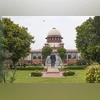
Allowing the appeals filed by Ambience group entities and their promoter, the Supreme Court restored the approvals granted to the project and brought closure to the long-running dispute. (Photo: PTI)
Listen to This Article
The Supreme Court of India on Tuesday set aside a 2020 judgment of the Punjab and Haryana High Court that had faulted the development of Ambience Mall and directed a Central Bureau of Investigation (CBI) probe into the construction of the mall and related commercial projects in Gurugram. The court held that the challenge suffered from gross delay, lack of bona fides, and repeated invocation of multiple forums, and therefore did not merit the exercise of extraordinary writ jurisdiction.
A Bench of Justice J B Pardiwala and Justice Sandeep Mehta ruled that the High Court erred in entertaining a writ petition filed in 2015, long after the commercial complex had been completed and made operational.
“The present writ petition came to be filed in the year 2015, that is, almost eight years after the Ambience Mall and the Leela Ambience Hotel had been constructed and had become fully operational,” the court said, and added:
“In this backdrop, the gross delay in approaching the High Court constituted a material and decisive factor, which by itself ought to have disentitled the writ petitioners to any sort of discretionary relief under Article 226 (writs) of the Constitution.”
The dispute arose from petitions filed by residents of the Ambience Lagoon Apartments, who alleged that the developer had illegally constructed commercial structures, including Ambience Mall and a hotel, on land earmarked for group housing. Among the reliefs sought were demolition of the commercial complex and a court-monitored CBI investigation into the alleged usurpation of land in collusion with public authorities.
Also Read

 "SC, Supreme Court")
 "Supreme Court, SC")
 "Embassy Developments")
 "real estate, realty sector")
 "Fashion, Indian Luxury Brands, Lifestyle, Designers")
Rejecting these pleas, the Supreme Court set aside the High Court’s direction for a CBI probe, holding that the writ petition itself was vitiated by delay and conduct, and that the High Court had ignored material aspects going to the root of maintainability. The court recorded that the conduct of the petitioners raised serious doubts about their bona fides.
“The rank silence and utter indifference shown by the flat owners in taking any action for a period of almost a decade for the alleged violation of their rights creates a serious doubt on the bona fides of the actions of the writ petitioners,” the court noted.
The Bench was also critical of the multiplicity of proceedings initiated by the same set of residents across forums, including civil courts, consumer fora, the High Court, and the National Green Tribunal (NGT). It noted that overlapping proceedings were repeatedly instituted and withdrawn, only to be revived later.
“The successive institution of proceedings by the same set of interested flat owners, choosing different forums at varying points of time, clearly demonstrates an intentional attempt at covering up for the delayed action and indulging in forum shopping.”
Referring to the NGT proceedings, the court recorded that environmental issues arising from the project had already been examined by the specialised tribunal.
“The Ministry of Environment, Forest and Climate Change has quantified the environmental compensation at Rs 68.51 lakh.”
The court noted that this process brought closure to the environmental aspect of the dispute and declined to permit its reopening through writ proceedings.
On merits, the Supreme Court accepted the findings of Haryana’s town planning authorities that the commercial complex stood on land governed by separate commercial licences, and not on land forming part of the original group housing licence.
“The approval of building plans for Plot No. 3 did not violate Licence No. 19 of 1993, as Plot No. 3 formed part of separate licences and not the original group housing licence,” the court held. The court further upheld the legality of the de-licensing and re-licensing process.
“The de-licensing … and its re-licensing for commercial use was legally permissible, being supported by prior legal opinion, Section 21 of the General Clauses Act, 1897, and expressly validated by the 2020 Amendment,” it said.
Allowing the appeals filed by Ambience group entities and their promoter, the Supreme Court restored the approvals granted to the project and brought closure to the long-running dispute.
More From This Section
 "PepsiCo chief Indra Nooyi (Photo: Indra Nooyi)")
 "sugar, sugar production, sugar output")
 "landfill, scrap cars")
 "biogas, biogas plants")
 "tourists, tourism")
Don't miss the most important news and views of the day. Get them on our Telegram channel
First Published: Jan 20 2026 | 8:16 PM IST