


SC restores 3-year minimum practice rule for judicial service aspirants
The Supreme Court ruled that legal experience is vital for the judiciary's functioning, reversing a 2002 decision that let fresh law graduates apply for entry-level posts
 "Supreme Court, SC")
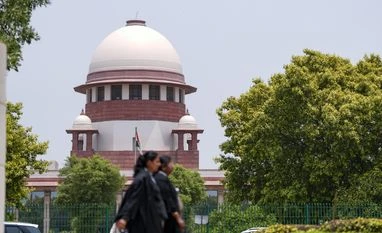
Supreme Court restores 3-year minimum practice rule for judicial service aspirants (Photo:PTI)
Listen to This Article
The Supreme Court on Tuesday reinstated the condition requiring a minimum of three years of legal practice to apply for entry-level judicial posts, Live Law reported.
A bench led by Chief Justice of India BR Gavai, along with Justices AG Masih and K Vinod Chandran, delivered the judgment in the All India Judges Association case. The court held that legal experience is essential for the efficient functioning of the judiciary.
Practical experience essential
The court held that the three-year practice period may begin from the date of provisional enrolment as an advocate. A certificate from a lawyer with a minimum of 10 years of standing, countersigned by a judicial officer from the relevant jurisdiction, will be accepted as proof of practice.
ALSO READ | Constitution of India supreme, its pillars must work together: CJI Gavai
For those practising at the Supreme Court or a high court, an endorsement from a similarly experienced advocate, attested by a designated court officer, will suffice.
The court had reserved its judgment on January 28, 2025, after staying a recruitment process by the Gujarat High Court that did not include the experience requirement. During the proceedings, Amicus Curiae Senior Advocate Siddharth Bhatnagar raised concerns over the lack of practical exposure among fresh graduates.
Also Read

 "Supreme Court, SC")
 "Vijay Shah, Sofiya Qureshi")
 "Supreme Court, Telecom industry, AGR, adjusted gross revenue, voda,")
 "Parliament Standing Committee on External Affairs Chairperson and Congress MP Shashi Tharoor (third from left) with other panel members and Foreign Secretary Vikram Misri in New Delhi on Monday | Photo: PTI")
The bench expressed similar apprehensions, highlighting how some aspirants may nominally sign vakalaths, a legal document that authorises an advocate to represent a party in court proceedings, without engaging in actual legal practice.
ALSO READ | 'It's about respect': CJI Gavai flags absence of officials in Maharashtra
2002 ruling overturned
This ruling overturns the relaxation introduced in 2002, which had allowed fresh law graduates to compete for Munsiff-Magistrate posts.
The 2002 judgment followed the recommendations of the Shetty Commission, which noted the judiciary’s struggle to attract top legal talent and believed the three-year experience clause to be a deterrent. At the time, it had instead recommended robust training for fresh recruits, proposing a minimum one-year, ideally two-year, induction programme.
More From This Section
 "Chhagan Bhujbal")
 "Jayant Narlikar")
 "Rain, Rainfall, monsoon")
 "Accident, road accident")
 "MR Srinivasan")
Topics : Supreme Court BS Web Reports
Don't miss the most important news and views of the day. Get them on our Telegram channel
First Published: May 20 2025 | 11:26 AM IST