


India-US trade deal: Farmer groups fear backdoor entry of GM crops via DDGS
Most farmer organisations and Opposition parties have sounded an alarm about the possible entry of GM products; Say could harm soy farmers in MP, Maharashtra, Rajasthan
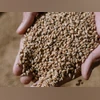 "Dried Distillers' Grains with Solubles")
Representative image from Pexels.
Listen to This Article
Farmer groups and opposition parties on Saturday expressed apprehensions over the permission for cheap imports of dried distillers’ grains with solubles (DDGS) under the India-USA interim framework agreement, terming it a 'backdoor entry' for genetically modified (GM) crops into India.
They claim this will harm soybean farmers despite Commerce Minister Piyush Goyal clarifying that DDGS will be imported under a quota and will be free of GM components post-processing.
The leaders also questioned whether the terminology in the joint statement, which says that India has agreed to address long-standing non-tariff barriers to trade in US food and agriculture, means that the country might lower its resistance to GM crops in the future.
Even as it welcomed some elements of the interim framework, the Rashtriya Swayamsesevak Sangh (RSS)-affiliated Bhartiya Kisan Sangh (BKS) said the government should provide more clarity regarding GM products from the US, which are commonly used there as animal feed.
BKS General Secretary Mohini Mohan Mishra in a statement said that the organisation's demand is clear: That such products should not be allowed into the country under any circumstances, under any name, or condition.
Also Read

 "trade talk, US India")
 "Ashwini Vaishnaw")
 "After deal, US trade body map shows PoK, Aksai Chin as part of India")
 "power, energy")
 "textile, textiles")
He said that GM crops are still not permitted in India, and that research and investigations are ongoing to collect information on their negative impact on human and animal health. He added that such research has shown that they have failed such tests.
“Therefore, there is opposition to them in the country. If India's public health, biodiversity, and research resources are to be protected, then GM crops must be stopped, a conclusion that can be drawn based on the current status of GM crops,” Mishra said.
He said BKS will express its formal reaction to the trade deal with the US only after the government provides complete clarity on these issues.
Meanwhile, the CPI (ML)-Liberation slammed the terms of the deal, questioning why the Modi government has "mortgaged India’s national interests, especially the interests of Indian farmers to Trump’s MAGA agenda?".
"If unrestricted entry of heavily subsidised American corn, ethanol, soyabean, dairy, meat, and processed food are allowed, it will have a devastating impact on Indian agriculture. Millions of small and marginal farmers, already reeling under rising input costs and declining state support, will be pushed further into crisis," the leftist party said in a statement.
The Samyukta Kisan Morcha, which spearheaded the year-long farmers’ agitation on Delhi's borders, said that the decision to allow free import of DDGS, soyabean oil, red sorghum for animal feed, tree nuts, fresh and processed fruits under trade deal's interim framework will impact Indian farmers. Congress Leader Jairam Ramesh also said that the joint statement has something called “additional products” that are not specified, calling it "far too open-ended" and that it suggested some facts were being hidden.
He also said that the statement says that India has agreed to address long-standing barriers to trade in US food and agricultural products. "What does this mean if not removal of restrictions on GM crops and dairy products?", he questioned.
Ramesh also claimed that too much is being made of how cheaper imports of DDGS from America will benefit India. “But DDGS is derived from GM corn. This is nothing but a backdoor entry. And lakhs of soybean farmers in Maharashtra, MP, and Rajasthan will be hit by imports of DDGS and soybean oil,” the Congress leader said in a post on X.
The Alliance for Sustainable and Holistic Agriculture (ASHA-Kisan Swaraj), a group working for the benefit of farmers, also raised serious concerns about the US-India trade deal’s impact on Indian farmers, and strongly opposed the import of GM food products, including soybean oil and DDGS.
It said the main point of concern was the wording of the joint statement that called for elimination of tariffs on imports of "a wide range of US food and agricultural products,” which will depress domestic prices, undermine Indian farmers, horticulturists, and oilseed growers, distort feed and livestock markets, and increase dependence on imports.
It said of particular concern is the import of DDGS and red sorghum, which will impact the incomes of millions of farmers growing maize, jowar, soybean and other crops used for fodder for animals and as feed for poultry.
The import of soybean oil will be particularly severe on millions of soybean farmers who are already facing a severe crisis this year, particularly in the states of Maharashtra, Telangana, MP, and Rajasthan.
It said the all-India weighted average of market price in October 2025 for soybean was Rs 3,942 which was 26 per cent below the Minimum Support Price (MSP) of Rs 5,328, while the market price for maize in October and November 2025 was Rs 1,821, which was 24 per cent below the MSP of Rs 2,400.
Despite the Central government promising procurement of soybean, the quantum of procurement has been abysmal, it alleged, pushing soybean farmers into heavy losses. The trade deal will make the situation worse, the group said, questioning how the government would stick to its commitment of MSP for Indian farmers.
It also strongly opposed the import of GM food and feed products from the US, particularly soybean oil and DDGS which, in the US, typically come from GM maize.
Echoing Ramesh's criticism, the alliance referenced India's acquiescence to remove non-tariff barriers, saying:
“This is coded language for lifting long-standing restrictions on GM food crops and products that have been in place in India, among other non-tariff barriers. Thus, we are concerned that the agreement is opening doors for import of a much larger spectrum of GM crops and food products going beyond soybean oil and DDGS."
It also highlighted that months before the announcement of the trade deal, the Indian government had made a major trade concession to the US by extending the zero tariff period on cotton imports from September 2025 to December 2025. “This led to a significant drop in cotton prices this season and heavy losses and deep distress among cotton farmers across India,” the alliance's statement said.
More From This Section
 "paddy straw")
 "fertilisers")
 "wheat, crop, farmer, agriculture, farming")
 "Shivraj Singh Chouhan, Shivraj Singh, Shivraj")
 "agroforestry, forest, agriculture (Photo: Pexels)")
Don't miss the most important news and views of the day. Get them on our Telegram channel
First Published: Feb 07 2026 | 6:45 PM IST