E2w registrations hit 162,321 in June, which is 10.36 per cent of the overall 1.56 million registrations of all two-wheelers, Vahan data shows. Their penetration was 7.28 per cent a year ago and 9.18 per cent in May.
Registrations follow sales of all new vehicles.
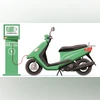
There is one gap in the market. So far, the bulk of the sales of electric two wheelers has been in scooters and not motorcycles, which is otherwise the better seller.
According to research by the Centre for Digital Economy Policy Research, in the overall
two-wheeler market in CY25, motorcycles with internal combustion engines (ICE) accounted for 64.4 per cent of all two-wheeler registrations while ICE scooters were at 30 per cent. Electric scooters came in at 5.5 per cent.
However, electric motorbikes accounted for a minuscule 0.1 per cent share, with most of them manufactured by companies that were outside the ambit of the
production linked incentive (PLI) scheme for electric vehicles. These include Ultraviolette, Simple Energy, Revolt, Kabira Mobility and Hop Electric.
But the scenario is changing as bigger electric EV companies are now making a push to get into the electric motorbike market. Ola Electric is already offering motorbikes at a value-for-money pricing, while Enfield is set to launch its electric motorbike in a few weeks and Ather has announced it too is in line. Bajaj and TVS are also working on their electric motorcycles.
The penetration of electric two-wheelers was only 0.34 per cent in FY 21 but got a push in FY 23 when it hit 4.54 per cent from only 1.87 per cent in the previous financial year.
While the electric two- wheeler market is on a roll – it is still far behind some of the optimistic assumptions made by the government. For instance, the Niti Aayog and TIFAC (Technology Information and Forecasting and Assessment Council), an autonomous body under the ministry of science and technology, had projected in 2022 that electric two wheelers will achieve 100 per cent penetration by FY27. Even if incentives were withdrawn by 2024 it would reach 72 per cent by 2031.
The federal think-tank has now moderated its projection to a more cautious target of 30 per cent EV penetration across all vehicle categories by 2030.
Mckinsey, however, sees electric two-wheelers growing faster to hit 50 per cent in 2030.


 "electric scooter")