The Maharashtra State Road Development Corporation (MSRDC) is anchoring development along the Samruddhi Mahamarg through industrial and logistics nodes at key interchanges, while planning hundreds of square kilometres near Mumbai, Vadhavan, and the new Navi Mumbai international airport to support freight, small businesses and manufacturing.
The City and Industrial Development Corporation (CIDCO) is scaling up Navi Mumbai, focusing on expanded cargo and multimodal connectivity, accelerated development of the inner city and Education City, and aviation-led commercial zones.
The Maharashtra Industrial Development Corporation (MIDC) is advancing the next phase of industrialisation through the Mumbai-Pune industrial corridor, new cluster-based industrial estates, and PPP-driven manufacturing hubs integrated with improved road and port infrastructure.
The Mumbai Metropolitan Region Development Authority (MMRDA) is working to connect the region with a 337-km metro network, the Alibaug–Virar multimodal corridor and bullet train connectivity. All that while unlocking new growth areas under Mumbai 3.0 and 4.0 — work that is expected to create jobs and investments.
The Maharashtra State Road Development Corporation (MSRDC) believes highways are instruments of economic growth. Anilkumar Gaikwad, managing director of MSRDC, said the corporation was set up in 1996 to build major roads but its work has expanded significantly. From early landmarks such as the Mumbai–Pune Expressway and the Bandra–Worli Sea Link, the focus has shifted to statewide connectivity. Referring to the 701-km Hindu Hridaysamrat Balasaheb Thackeray Maharashtra Samruddhi Mahamarg, Gaikwad said: “There are 26 interchanges … each covers about 8,000 hectares.” MSRDC will be the planning authority for 15 of the nodes. It plans development work across more than 7,000 sq km, including large areas in MMR and Vadhavan.
Vijay Singhal, managing director of City and Industrial Development Corporation of Maharashtra (CIDCO), said the state accounts for about 15 per cent of India’s exports and industrial output, 31 per cent of foreign direct investment, and nearly 70 per cent of the country’s data centre capacity. CIDCO’s most visible project, the Navi Mumbai International Airport, underlines the pace of execution.
“When we announced a year before that it [the airport] will be completed in eight months, nobody could believe it,” Singhal said. The airport started operations in December 2025 and has already attracted major cargo investments, including a Rs 25,000 crore FedEx hub. It will begin international operations soon. Navi Mumbai has two runways, four terminals and annual capacity of 90 million passengers, putting Maharashtra’s capital among a clutch of global cities with two international airports.
Maharashtra Industrial Development Corporation (MIDC) anchors the state’s industrial growth. Kunal Khemnar, joint chief executive officer of MIDC, said industrial growth is crucial to Maharashtra’s goal of becoming a $1-trillion economy by 2030. “We have more than 300 industrial areas all over the state,” he said, stressing MIDC’s role in balanced and equitable development. The agency is pushing cluster-based industrial zones, land acquisition for new industries, and PPP-led projects, while acting as a single-window nodal agency for approvals. Dedicated support desks for foreign investors are meant to ease entry and speed up decisions.
MMRDA knits together the efforts of various agencies. Shankar Deshpande, MMRDA’s chief investment and planning officer, described the Mumbai Metropolitan Region as four overlapping growth phases: From the old city to emerging zones near the airport and the Palghar–Wadhwan belt.
“We are working on an infrastructure stack — physical, digital, social, blue and green — to attract global capital,” he said. A 337-km metro network, roads and bullet train connectivity intend to speed up travel and unlock new manufacturing and employment hubs in the region.


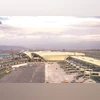 "Navi Mumbai International Airport, Navi Mumbai Airport")