


India charts its own high-speed rail path beyond Japanese Shinkansen
India plans to deploy indigenous train sets and globally interoperable signalling systems as it recalibrates its high-speed rail strategy beyond the Mumbai-Ahmedabad corridor
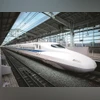 "bullet train")
premium
Between 2010-11 and 2016-17, almost a quarter of the $70 billion-odd in external assistance received by India from foreign governments and multilateral agencies came from Japan
6 min read Last Updated : Jul 21 2026 | 11:09 PM IST
Listen to This Article
Japan's former minister for justice Hideki Makihara last week kicked the metaphorical beehive when he described the Indian team negotiating the Mumbai-Ahmedabad Shinkasen rail project as 'reckless' and given to breaking promises, and put the blame on the delay in the project entirely on the Indian side. In particular, he noted that the Japanese side had been excluded from the signalling system for the project, one that he maintained was the key to the rail line's safety, an USP of the Shinkasen system, which boasts of zero fatalities.
Following Makihara's online outburst, a spokesperson of the Ministry of Railways noted in response to media queries that India-Japan discussions on the Mumbai-Ahmedabad high-speed train corridor “are progressing well. The construction work is rapidly progressing. The first section will be opened in 2027”. The first section is expected to run between Surat and Vapi.
However, India has also decided that it will operate only semi-high-speed trains on the Mumbai-Ahmedabad High-Speed Rail (MAHSR) corridor, as well as the seven more such corridors to be developed soon. These will not be the much-touted bullet trains or, as they are more properly known, the Shinkansen network.
As for the signalling issue, Indian officials reiterated that the equipment has already been ordered in line with international specifications and construction is progressing steadily. India, it is learnt, is deploying the European Train Control System, which is a modern, radio-based digital signalling architecture. “The radio-based system represents a significant upgrade over legacy Second World War-era coaxial copper cable systems, which suffer from signal leakage and are highly vulnerable to localised copper cable theft,” a Railway Ministry source said.
“We are clear about what we need. We need a high-speed train link but not necessarily above the 300 km per hour speed to bring our metros closer," said Arunendra Kumar, former Railway Board chairman.
Other railway and government officials Business Standard spoke to also maintained that this is the best course for India to adopt.
Explaining the challenge, Kumar said the Railways need dedicated passenger route networks, which are not available at present. It does not matter if Mumbai and Ahmedabad are connected in a travel time of less than two hours, which the bullet train envisaged, or at a slightly slower pace of two and a half hours, he said.
As a result, India and Japan are reported to have agreed to begin rolling out the use of indigenously-developed high-speed train sets. The Ministry of Railways said the move reflects a shared commitment by both countries to prioritise timely commissioning of the corridor. Alongside indigenous train sets, the project will deploy globally interoperable signalling systems instead of the Japanese ones, ensuring compatibility with international high-speed rail standards and allowing flexibility for future upgrades.
The reasons why the two countries have differed at this stage also have a lot to do with fundamental differences on the conception of the engineering protocol for the network. Kumar said the Japanese protocol was suitable for the earthquake-prone soil structure of the island country with sharp curves and other measures that are not necessary for India. “India," he said, "needs a high-speed train, not necessarily a Japanese one”.
Government officials in the Ministry of Railways said Japan has insisted for a long time that the discussion on the train sets should be linked to the capacity of the tracks. A brochure on the Japanese high-speed trains issued by the Japanese government notes, “particularly in matters of public safety, Japan is known for its uncompromising stance and its perennial drive to improve. Japan takes pride in the Shinkansen’s record of zero fatal passenger accidents. Everyone concerned will strive to maintain this unblemished record”.
In response to a Business Standard query, a Japanese official said: “The track that India has engineered has never been tested for these high-speed trains, so the speed of trains on the tracks has to be ramped up gradually”. He said this is the reason the Japanese government has offered the earlier generation engines before the E10 Shinkansen is brought in.
The crux of the issue is whether the Indian tracks could handle the demands of the E10 trains, which are the latest-generation train sets, even for Japan. The full range of these trains will go into commercial operation only by 2030. Shinkansen trains are electric multiple units, offering fast acceleration, deceleration and reduced damage to the track because of the use of lighter vehicles compared to locomotives or power cars. At meetings with Rail Bhawan, executives from Japanese Railways have emphasised this issue. Tokyo has emphasised that while they are deeply committed to the development of the high speed trains, they would want their Indian counterparts to also recognise their concerns.
Indian government officials point out that there have been two major changes on the domestic front since the bullet train project took off in 2016. First, the Vande Bharat train sets have been launched with speeds ranging between 150 kms per hour (kmph) to 170 kmph. They are manufactured in India at prices of about Rs 12 crore per unit. European companies offer similar engines at prices of Rs 22 crore, whereas the Shinkansen bids begin at over Rs 50 crore. Even though the Vande Bharat fleet does not qualify as 'high speed', which means a train that can run at over 250 kmph, Indian Railway officials feel they will soon get close to that mark.
Second, the Indian government has established the National High Speed Rail Corporation Limited (NSRCL), which was initially meant to act as the facilitator for the high-speed corridor between Mumbai and Ahmedabad. Now, however, it feels confident that it can undertake turnkey projects for the other seven corridors. “When the MAHSR project was signed and now, India’s demands for high-speed trains have changed. There is more depth to the demand now”, a railway official involved with the developments said.
Based on these developments, India has decided that it while it will continue with the Japanese loan for the MAHSR project, the others will be financed with debt from domestic and foreign markets. About 81 per cent of the total cost of the MAHSR project is being funded by the Government of Japan through JICA.
Nonetheless, Indian officials insist there is no concern within India or in the Japanese government about the possible transfer of technology to India. Those have been addressed in the contracts signed between New Delhi and Tokyo and are robust enough to protect all interests. The government of India has also scotched reports of any rift, maintaining that bilateral discussions have depth and that officials on both sides continue to work closely toward the successful completion of the high-speed rail corridor.
But the decision to use domestically manufactured trains to serve the corridors will not be a stop-gap arrangement but is a demonstration that highlights India’s growing capability in advanced rail engineering while preserving the long-standing technology partnership with Japan.