


India's steel demand to triple by 2050 as China's share contracts: WoodMac
India's steel demand is forecast to grow strongly as China's share falls to 31% by 2050, with rising consumption in India and Southeast Asia reshaping global trade flows
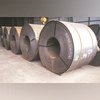 "steelmakers, steel")
India’s outlook remains robust. The country recorded 8 per cent steel demand growth in 2024 and is expected to grow more than 7 per cent in 2025.
Listen to This Article
India is expected to emerge as a major growth centre for global steel demand over the coming decades, even as China’s dominance wanes. China, which accounted for 49 per cent of world steel consumption in 2024, is projected to see demand fall by an average of five to seven million tonnes (Mt) annually over the next decade.
China’s share of global demand is forecast to fall sharply to 31 per cent by 2050. India, by contrast, is expected to nearly triple its demand over the same period, lifting its share from 8 per cent in 2024 to 21 per cent by mid-century, according to research firm Wood Mackenzie.
“The Chinese economy’s transition away from infrastructure-heavy growth models creates sustained headwinds for steel demand,” said Charvi Trivedi, senior research analyst at Wood Mackenzie. Real estate, once the backbone of steel consumption in China, is in prolonged decline. Overcapacity is expected to intensify, with surplus output climbing from 50 Mt in 2025 to more than 350 Mt in the long term, even as key provinces such as Shandong and Jiangsu cut production.
India’s outlook remains robust. The country recorded 8 per cent steel demand growth in 2024 and is expected to grow more than 7 per cent in 2025. Long-term growth of 4–5 per cent annually is supported by government investment in transport corridors, renewable energy and urban development, along with a stronger manufacturing base in automobiles and machinery. “India alone is projected to triple its demand, raising its market share from 8 per cent to 21 per cent by 2050,” Trivedi said.
Southeast Asia is also gaining ground, with 6 per cent growth in 2024 and a projected 4 per cent increase in 2025. The region is expected to sustain 3–4 per cent annual growth through 2050, doubling its global demand share from 5 per cent to 10 per cent, led by Vietnam, Thailand and Indonesia.
Global trade flows are shifting as well. Mounting protectionist measures and carbon taxes are limiting Chinese exports and pushing supply chains toward regionalisation. Wood Mackenzie estimates that only 12 per cent of global steel output will be traded in the long term, down from 25 per cent today, strengthening regional markets such as India and Southeast Asia as growth pivots.
More From This Section

 "Vikram 32-bit")
 "Injections, Injection syringe")
 "Renewable energy, climate")
 "realty sector, real estate")
 "diamond industry")
Don't miss the most important news and views of the day. Get them on our Telegram channel
First Published: Sep 03 2025 | 4:37 PM IST