


Proposed nuclear energy Bill caps operator's liability at ₹3,000 crore
Govt introduces SHANTI Bill in Parliament after amending provisions dealing with thorny issues
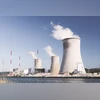 "Nuclear energy")
The Sustainable Harnessing and Advancement of Nuclear Energy for Transforming India (SHANTI) Bill 2025 proposes to repeal the Atomic Energy Act, 1962, and the Civil Liability for Nuclear Damage (CLND) Act, 2010.
Listen to This Article
The government on Monday introduced in Parliament a Bill that seeks to finally open up the Indian civil nuclear energy sector to private sector players, except in uranium mining, after amending specific provisions dealing with thorny issues like the supplier's liability and compensation in case of a nuclear accident.
The Sustainable Harnessing and Advancement of Nuclear Energy for Transforming India (SHANTI) Bill 2025 proposes to repeal the Atomic Energy Act, 1962 and the Civil Liability for Nuclear Damage (CLND) Act, 2010.
The Bill essentially proposes two major changes. One, it allows private sector entry into key areas like building, owning, and operating nuclear plants, uranium enrichment, and transportation and storage of nuclear fuel, apart from import and export of equipment and technology. The Bill has also omitted a provision in the existing CLND Act that allowed right of recourse to the operator in case a nuclear incident results from an act of supplier including the supply of defective equipment or sub-standard services.
“It is desirable to harness the potential of nuclear energy through active involvement of both public and private sectors, and to leverage the participation of the domestic industry to contribute to and benefit from the global nuclear energy ecosystem, including research, technology, manufacturing, finance, insurance, and skill development," the Bill states.
The draft legislation is part of the government's efforts to align the country’s nuclear power legislation with internationally accepted norms, and remove key bottlenecks that have deterred private sector involvement so far.
Also Read

 "exports, imports, trade")
 "Suresh Goyal")
 "Rabi crops, agriculture")
 "Nuclear")
 "power, grid, discoms, electricity")
The larger aim is to ramp up domestic nuclear power generation capacity from the existing 8,900 megawatt (Mw) to 100,000 Mw by 2047.
The Bill caps the operator's liability at the rupee equivalent of 300 million Special Drawing Rights (SDRs), supplementary foreign exchange reserve assets defined and maintained by the International Monetary Fund (IMF). The existing legislation, too, has the same provision. However, the SHANTI Bill has added a new clause, stating that in case the compensation amount exceeds the rupee equivalent of 300 million SDRs, the central government may take additional measures, including seeking funds under the Vienna Convention (convention on supplementary compensation for nuclear damage signed at Vienna in October, 2010). India is a signatory to the convention.
The Bill stated that the operator's liability in the case of an incident is limited to ₹3,000 crore for reactors with thermal power above 3,600 Megawatt; ₹1,500 crore for reactors with thermal power between 1,500 Mw and 3,600 Mw; ₹750 crore for reactors with thermal power between 750 Mw and 1,500 Mw; ₹300 crore for reactors with thermal power between 150 Mw and 750 Mw; and ₹100 crore for reactors having thermal power up to 150 Mw, fuel cycle facilities other than spent fuel reprocessing plants and transportation of nuclear materials.
Introducing the SHANTI Bill in Parliament, Minister of State for Science and Technology Jitendra Singh said it proposes a revised and pragmatic civil liability framework for nuclear damage, confers statutory status on the Atomic Energy Regulatory Board, and strengthens mechanisms related to safety, security, safeguards, quality assurance, and emergency preparedness.
"It provides for the creation of new institutional arrangements, including an Atomic Energy Redressal Advisory Council, designation of Claims Commissioners, and a Nuclear Damage Claims Commission for cases involving severe nuclear damage, with the Appellate Tribunal for Electricity acting as the appellate authority," Singh said.
Speaking at a media briefing, Commerce and Industry Minister Piyush Goyal said the Bill would encourage private participation, and boost public-private partnership in the nuclear energy sector. He also said nuclear energy would be key to the government’s ambition of increasing the country’s capacity of data centres, which require both reliable power and renewable source of energy.
Experts hailed the SHANTI Bill as a move towards energy security. "India’s energy transition cannot rely on intermittency alone. A reformed Atomic Energy Act that enables private investment and rationalises nuclear liability is critical to building safe, scalable nuclear capacity and strengthening long-term energy security," said Debasish Mishra, Chief Growth Officer, Deloitte South Asia.
More From This Section
 "air conditioner, ACs")
 "Prestige Estates Projects, Real Estate")
 "Apple")
 "Piyush Goyal, Piyush")
 "Golden growth fund, GGF")
Topics : Industry News Nuclear energy energy sector
Don't miss the most important news and views of the day. Get them on our Telegram channel
First Published: Dec 15 2025 | 7:00 PM IST