


Best of BS Opinion: Cleaning the systems that power India's future
Here are the best of Business Standard's opinion pieces for today
 "stubble burning")
Illustration: Ajay Mohanty
Listen to This Article
If you’ve ever handled a rifle or seen a movie with lots of gunfights, you know that even the sharpest bullet won’t find its mark if the barrel is clogged. The residue of old shots, the metal’s fatigue, all blur precision. In many ways, today’s India is that rifle. Its barrels, including tax systems, factories, courts, and even its fields are powerful, but clogged. To hit the mark of growth, fairness, and innovation, the nation must first clean its barrels before firing again. The trigger is ready but the question is whether we’ll aim with precision or keep misfiring through the fog. Let’s dive in.
Take the tax system. With 539,000 appeals worth Rs 16.6 trillion stuck in endless loops of delay, the barrel of justice has long gathered rust. As our first editorial notes, over 12,000 tax cases have been pending in High Courts for more than a decade. These are not just numbers, they are years of lost revenue, businesses hanging in limbo, and investors losing faith in India’s ability to enforce its own rules. The new tax law may promise a simpler future, but without structural cleaning it risks being another misfired round in an already jammed chamber.
In another corner of the global factory, Amazon is reengineering its gun altogether. By 2027, it aims to automate three-fourths of its logistics operations, cutting 160,000 jobs and saving $12 billion in fulfilment costs. It’s efficient at ballistic speed. Yet, as our second editorial warns, such precision can wound if they remain aloof of empathy. The bullets of automation must be aimed wisely towards productivity, not unemployment.
Meanwhile, Jayant Sinha argues that India’s prosperity depends on cleaning and calibrating its innovation engine. To reach the “Green Frontier,” India needs Bell Labs-like institutions that turn ideas into industrial might. He urges corporations to fund serious R&D, pay researchers competitively, and let innovation flow from labs to launchpads. Without strong institutions and sustained execution, our scientific ambition will remain powder without spark.
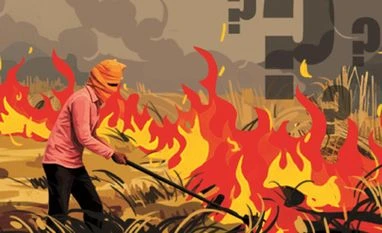
And then, there’s the smoke that clouds our literal skies. Arunabha Ghosh and Kurinji Kemanth insist that stubble burning can end by 2028 if Punjab and Haryana synchronise policy, technology, and political will. Reforming custom hiring centres, scaling farmer education, and building biomass markets could clear the air, quite literally. It’s the same lesson again. Clean the barrel of the land itself so the air can breathe freely and our shots at sustainability find their mark.
Finally, Sanjeev Ahluwalia reviews After the Spike by Dean Spears and Michael Geruso, a book that scrubs the moral lens through which we view population. Rejecting old fears of overpopulation, the authors see people not as burdens but as potential. They argue for balance. Neither control nor chaos, but humane management grounded in freedom, dignity, and welfare. Because even in demography, a steady hand and a clean aim can decide the future.
Stay tuned!
More From This Section

 "initial public offering, IPO")
 "national politics, Bihar Elections 2025, Nepal")
 "Election")
 "Investors, mutual fund")
 "illustration")
Topics : BS Opinion BS Special Curated Content
Don't miss the most important news and views of the day. Get them on our Telegram channel
First Published: Oct 29 2025 | 6:15 AM IST