


Govt bans lithium-ion battery black mass exports to aid domestic recyclers
The government has prohibited exports of lithium-ion battery black mass to secure critical mineral feedstock for domestic recyclers, improve capacity utilisation and cut import dependence.
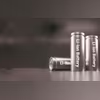
The government’s export ban on lithium-ion battery black mass aims to strengthen domestic recycling capacity, secure supplies of critical minerals and reduce dependence on imported raw materials.
Listen to This Article
In a move to ensure domestic availability of critical minerals and strengthen India’s battery recycling industry, the Centre on Wednesday said it banned the export of lithium-ion battery black mass with immediate effect.
The Directorate General of Foreign Trade (DGFT) of the Ministry of Commerce issued a notification late on Tuesday to implement the ban.
The export policy for lithium-ion battery black mass, classified under ITC (HS) Code 85491400, has been changed from ‘Free’ to ‘Prohibited’ until further orders, the notification said.
“The notification specifically describes the item as lithium-ion battery black mass. Black mass is the powdery material obtained from shredding end-of-life lithium-ion batteries and battery manufacturing waste,” the Department of Commerce said in a press release. “It contains recoverable quantities of critical minerals, including lithium, cobalt, nickel and manganese,” it added.
India depends substantially on imports for several of these minerals. While the country's capacity to recycle battery waste and recover critical minerals has grown, it is not being fully utilised because of inadequate availability of feedstock, the release said.
Also Read


“The measure complements the government's initiatives under the National Critical Mineral Mission (NCMM), including the ₹1,500 crore incentive scheme approved by the Union Cabinet in September 2025 to develop recycling capacity for the separation and production of critical minerals from secondary sources such as battery waste and e-waste,” the release added.
“Retaining black mass within the country will help ensure that the recycling capacity being developed under the scheme has access to adequate domestic feedstock.”
Meanwhile, experts pointed out that India recorded zero exports of the product worldwide in 2025-26 (FY26).
The government has acted to prevent future shipments and keep the material available to domestic refiners, Global Trade Research Initiative (GTRI) founder Ajay Srivastava said.
“India has more capacity to process black mass than it generates, leaving refiners short of raw material. Recovering more of these materials at home could reduce battery makers’ reliance on imports,” Srivastava said.
“Black mass can also contain toxic electrolyte residues and heavy metals that require further treatment. Hazardous-waste rules require prior permission for such shipments, but exporters can evade scrutiny by declaring the material as cobalt powder, a nickel intermediate or another industrial product,” Srivastava added.
“Effective enforcement will depend on Customs checking how the material was produced as well as how it was declared since a different name or tariff code can conceal the same waste,” he said.
The government’s release also mentioned that the exports of domestically generated black mass divert the secondary resource overseas, even as some domestic recyclers have had to import material to meet their requirements.
The export prohibition is expected to ensure that black mass generated in India is processed domestically, improving feedstock availability and capacity utilisation at recycling and refining units.
It could also encourage fresh investment and employment in the sector, while increasing domestic recovery of critical minerals and reducing dependence on imports and the associated foreign exchange outgo.
The government also expects the move to strengthen supply chains for battery manufacturing, electric vehicles, energy storage and clean-energy technologies. It would also promote a circular economy through recovery of minerals from discarded products.
More From This Section


Don't miss the most important news and views of the day. Get them on our Telegram channel
First Published: Nov 11 2026 | 5:38 PM IST