


Formula 1 2025: The season that rewrote the script for the circuit
How McLaren took control, Red Bull lost certainty, and Hamilton's Ferrari debut played out in a season without early answers
 "Formula 1")
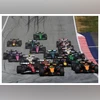
If McLaren’s season was about arrival, Lewis Hamilton’s first year at Ferrari unfolded in reverse. Expectation travelled with the move everywhere | Image: Bloomberg


Listen to This Article
As the five red lights went out at the final Grand Prix on December 7, Abu Dhabi’s Yas Marina Circuit transformed into a battleground. Three cars, three strategies, two teams, and one goal — the World Drivers’ Championship. Across pit wall screens, the focus narrowed on to three drivers, and conversations were no longer about lap times or targets. For the first time in years, Formula One arrived at its final round without a champion crowned, with Lando Norris, Oscar Piastri and Max Verstappen all still in play.
That tension sat alongside another storyline that had shadowed the season from its opening lap. Ever since the 2025 campaign began on March 16 in Australia — with Lewis Hamilton debuting in Ferrari red — Formula One refused to settle into anything familiar. Just as teams began to fathom the shape of the year, it shifted again. Safety cars and late-race resets became part of the arithmetic, compressing gaps that once would have stayed settled. By the time the grid reached Abu Dhabi, it was clear this was no longer a championship moving towards an expected conclusion, but one in which old advantages were thinning and long-held assumptions were being tested week after week.
Unlike recent seasons, strategies changed mid-race, mid-stint, sometimes within a handful of laps. Reliability and race-ending incidents began to matter again, turning small errors and marginal failures into championship-shaping moments. Twenty four races later, it was the only ending this season could have had.
When Red Bull stopped being inevitable
The six-time Constructors’ Championship holders entered 2025 in a position that felt familiar, yet altered. They had missed out on a seventh title the previous season to McLaren, but still retained the Drivers’ Championship through their four-time world champion, Max Verstappen. The air around the paddock had shifted slightly. What had changed was not speed, but certainty. Margins around Verstappen narrowed, and that made everything else possible.
Red Bull were no longer the immovable force they once were — but neither were they collapsing. They remained quick, and Verstappen continued to extract wins when opportunity appeared. Races no longer unfolded solely on Red Bull’s terms. Strategy calls invited discussion rather than assurance. Verstappen carried the title fight deep into the season, but the quiet inevitability that once hovered over Red Bull weekends had slipped. Dominance did not vanish. It wore down.
Also Read

 "Lewis Hamilton")
 "Formula 1 race, racing (Photo: Reuters)")
 "protein food-boiled eggs")
 "Jyotiraditya Scindia, Jyotiraditya, Scindia")
 "Housing")
That fragility extended beyond the track. Mid-season, Christian Horner’s long tenure at Red Bull came to an abrupt end, closing one of the most influential chapters in the team’s history. The timing mattered. Leadership changed as competitive pressure tightened, reinforcing how even the sport’s most successful operations were being forced to recalibrate.
McLaren’s rise to authority
“We were never the underdogs,” Zak Brown said, pushing back against the idea of McLaren as an unlikely champion. At the time, it sounded like a correction. Over the season, it came to read as a statement of intent. McLaren arrived in 2025 having already ended a 26-year wait for the Constructors’ Championship at the close of the previous season. This was not a team learning to believe; it was one extending a process already underway.
That showed early. What many expected to be a tight contest hardened quickly into something more controlled. Wins arrived without spectacle. When races became messy elsewhere, McLaren’s radio traffic stayed calm. Decisions were taken early, often conservatively, and then defended across stints rather than chased late.
With Lando Norris and Oscar Piastri in the car, weekends settled into a familiar rhythm — clean launches, tidy tyre phases, little need for recovery drives. McLaren did not attempt to replicate Red Bull’s old model of dominance. They operated differently, leaning on preparation more than reaction. By the time rivals adjusted, McLaren were already managing outcomes.
They did not chase Red Bull. They outgrew them.
Hamilton and Ferrari: The lost glory
If McLaren’s season was about arrival, Lewis Hamilton’s first year at Ferrari unfolded in reverse. Expectation travelled with the move everywhere. Results did not. The season closed without a win or a podium — a statistic that once would have seemed implausible for a seven-time world champion.
When the signing was announced, it landed as a moment of realignment for the grid, a move that demanded attention across the paddock. What followed was quieter and more uneven. There were weekends when Hamilton looked close, when the gap to the front felt manageable, but the release never came. Promise surfaced in fragments, rarely long enough to hold.
Hamilton remained competitive, often in the thick of battles just outside the podium places, but the SF-25 rarely gave him a stable platform to build on. Balance shifted race to race. Set-ups were adjusted incrementally. Conversations over the radio were measured, procedural, sometimes unresolved. It was not a season of decline, but of limits — performance present, reward absent.
In a year defined by momentum swings and shifting authority, that absence lingered.
Where the grid refused to stay in place
The pressure in 2025 did not come only from the front. The midfield tightened, reshaping how races unfolded. Williams and Haas found themselves in regular points contention as qualifying gaps narrowed and race pace converged. That progress mattered because it interfered — with strategy, with timing, with margins teams once relied on to protect themselves.
From that restlessness came moments that captured the season’s unsettled character. Nico Hülkenberg finally stood on an F1 podium after more than 200 starts, ending the longest wait of its kind in a year that seemed determined to revisit old narratives. Carlos Sainz carried credibility to Williams, returning the historic team to the podium and underlining how fluid the competitive order had become. At Haas, Ollie Bearman’s breakthrough performances — including a near-podium finish — showed how little patience the new generation had for apprenticeship.
None of these moments stayed at the centre of the championship conversation for long. Together, they suggested a grid quietly rearranging itself, resisting the roles it had been assigned.
A sport in transition, on and off the track
The sense of movement extended beyond race weekends. Team structures shifted. Leadership changed. Conversations increasingly drifted towards what lay ahead rather than what had already been secured. The paddock felt transitional even as the title fight remained unresolved.
By Abu Dhabi, it was clear the tension was not accidental. Competitive pressure and institutional change were moving in parallel. For once, the radios were not just managing races; they were managing uncertainty.
That uncertainty now carries forward. Formula One turns towards 2026, when new power-unit regulations come into force, an eleventh team — Cadillac — joins the grid, and Audi enters as a full works manufacturer. Red Bull will begin a new chapter without Christian Horner, while other teams continue reshaping leadership and technical direction ahead of the reset.
With regulations, personnel and power structures all in motion, the hierarchy established in 2025 may not travel far. The sport is preparing for change while still absorbing the consequences of a season that never quite settled.
When the 2025 season is replayed, it will not feel like a straight march to a champion. It will feel jagged, unsettled, alive — shaped as much by interruption as by pace. A season where dominance wore thin and authority shifted faster than expected.
In a sport built on familiar racing lines and known faces, this was the year that rewrote the script — both on and off the grid.
More From This Section
 "Carlos Alcaraz, Carlos, Alcaraz")
 "Messi India tour")


Don't miss the most important news and views of the day. Get them on our Telegram channel
First Published: Dec 20 2025 | 6:00 PM IST