


Apple to introduce advanced Siri features in 2026 with iOS 19.4: Report
With iOS 19, Apple reportedly aims to rebuild Siri's underlying system from the ground up, a move expected to finally unlock the three major capabilities promised earlier
 "Siri, Apple Intelligence, Apple")
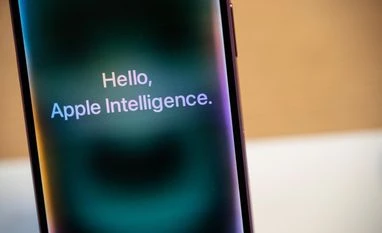
Siri with Apple Intelligence (Image: Bloomberg)
Listen to This Article
Apple Intelligence-powered advanced Siri abilities are now expected to roll out in spring next year, likely alongside the iOS 19.4 update. According to Bloomberg’s Mark Gurman, Apple is currently building a new architecture for its digital assistant, which could be ready by spring 2026. This means the delayed features—such as personalised responses, on-screen awareness, and cross-app functionality—may finally arrive on compatible devices next year.
Gurman noted that Apple could announce the new Siri architecture as early as the Worldwide Developers Conference (WWDC) in June 2025 — “with a launch by spring 2026 as part of iOS 19.4.”
New Siri architecture: Details
In his report, Gurman explained that the current version of Siri operates with “two brains”—one handling legacy Siri commands like setting timers or making calls, and another managing more advanced queries. While these systems currently work together for certain tasks, like changing a request mid-command, the integration is not seamless.
Also Read

 "Apple")
 "iPhone, apple Iphones")
 "apple, apple logo")
 "Apple, Apple Inc")
 "AI powered Siri")
Apple had initially planned to merge these systems for iOS 18.4 to enable more powerful Siri features but ran into major challenges. Limited development time led to a "rash of bugs," with Apple’s Senior Vice President of Software Engineering, Craig Federighi, reportedly raising concerns that the features weren’t performing reliably.
With iOS 19, Apple aims to rebuild Siri’s underlying system from the ground up, a move expected to finally unlock the three major abilities promised earlier. Internally, Apple has also restructured leadership in its AI division, hoping to speed up development and improve stability. Notably, Siri oversight has reportedly been handed to Vision Pro chief Mike Rockwell, who is reorganising teams focusing on speech, understanding, performance, and user experience.
ALSO READ | Apple to move entire US-bound iPhones' assembly from China to India by 2026
Advanced Siri features
Several new Siri abilities announced at WWDC 2024 are now expected to debut during the iOS 19 cycle:
- On-screen awareness: Siri will recognise what’s currently displayed on the screen and act accordingly. For example, if a friend sends you their new address in Messages, you can ask Siri to "Add this address to their contact," and it will complete the task without needing more details.
- In-app actions: Powered by the App Intents framework, Siri will be able to perform complex, multi-step tasks across both Apple and third-party apps—without having to open them. For instance, you could ask Siri to find a photo, edit it, and save it to a specific folder in the Files app.
- Personalisation: Thanks to an on-device semantic index enabled by Apple Intelligence, Siri will gain deep contextual awareness. It will be able to pull information from apps like Messages, Mail, Calendar, Photos, and Files to assist with tasks—such as retrieving your driver's licence number from a stored image to autofill a form.
More From This Section
 "Microsoft Copilot Plus Click to Do feature (Image: Microsoft)")
 "CMF Phone 2 Pro")
 "App store, apple")
 "Battlegrounds Mobile game India, BGMI")
 "Garena Free Fire Max")
Don't miss the most important news and views of the day. Get them on our Telegram channel
First Published: Apr 28 2025 | 12:23 PM IST