


Paris Riots
France steps up security, deploys military to contain fresh protests
There will be 20% more police on the ground than last Saturday, according to the Interior Ministry


Thousands gather in Paris after court lifts protest ban amid unrest
Thousands of protesters took to the Paris streets on Thursday while other cities banned demonstrations following a weekend of clashes and widespread looting that marked France's most violent unrest in years. Organisers of the Paris protest said an administrative court overturned a ban issued by police after they challenged it. The Paris prefecture previously said the ban was necessary, given the risk of street violence after groups of masked youth clashed with officers, looted shops and torched cars over the weekend. The Paris court ruling was not immediately made public. Protesters, including many youngsters, gathered peacefully and chanted in a southeastern part of the city amid heavy police presence. "We don't need tear gas for our future to look bleak," read a banner they unfurled. Organisers signed a police document stating that the protest would remain stationary due to the risk of violence. More bans were expected in the coming days. French President Emmanuel Macron said su

The French fantasy of equality and prosperity is coming to an end
Protests over living costs, inequality and failing public services have exposed wider anxieties about climate change, artificial intelligence and economic insecurity

France unrest: Macron urges calm after 2,400 arrests amid riots, looting
The unrest spread across Paris, Marseille, Lyon, Bordeaux, Lille and Limoges, where masked groups attacked public buildings, set fires and looted shops
France reels after riots leave one dead, over 2,000 arrested nationwide
Riots over high prices and declining public services damaged hundreds of shops and injured more than 600 police officers, as Macron prepared to address the nation on Sunday

2 dead, 550 held after PSG's Champions League win leads to chaos in France
Celebrations in French capital take a chaotic turn after PSG secures a 5-0 win over Inter Milan in the Champions League final

A year in politics: A recap of all key global events that shaped 2023
From geopolitical conflicts to historic political shifts, 2023 has been a year of significant milestones. Dive into the key political events that left an indelible mark on the world stage

France implements fireworks ban for Bastille Day celebration after riots
The ban does not extend to professionals or municipalities organising traditional fireworks displays for France's national day

Unrest grips France's countryside as rioting now spread to small towns
After a pleasant evening of wine-tasting joyfully billed Grapes and Friends! with a hundred or so people and oysters, charcuteries and cheeses, the mayor of the picturesque French town of Quissac was on his way home. Then his phone rang: Urban unrest that was engulfing France after the deadly police shooting of a teenager on Paris' outskirts, hundreds of kilometers (miles) and a world away to the north, had careened into Quissac's tranquility, too. In a quick hit-and-run, a small group of people seemingly no more than four, the mayor says bombarded the local gendarmes' barracks on Quai de la Gare road with powerful fireworks, denting its metal shutters and setting fire to a cypress tree. In the grander scheme of things, it wasn't much compared to orgies of destruction, arson, looting and rioting unleashed on multitudes of other communities across France in six nights of mayhem. Still, for the town of 3,300 people in the Gard region of southern France, it was a first. Quissac's

Why is France burning? Know about riots in France after police shooting of 17-year-old
A week of violence has rocked France. Tens of thousands of police have been deployed in cities across the country and more than 3,000 people have been detained.


Turmoil in France continues as grandmother of slain teen calls for peace
The 17-year-old teen was shot and killed by a police officer on June 27 during a routine traffic check in Nanterre in Paris
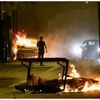
France arrests 1,300 after 4th night of riots over teen's killing by police
France's Interior Ministry said Saturday that 1,311 people were arrested around the country during a fourth night of riots triggered by the deadly shooting of a 17-year-old by police. The government deployed 45,000 police around the country to try to quell violence. Overnight young protesters clashed with police, set some 2,500 fires and ransacked stores. The funeral ceremony for Nahel, who was killed by police in the suburb of Nanterre on Tuesday, began Saturday with a visitation, to be followed by a mosque ceremony and burial in a cemetery there.

Paris police use water cannon, tear gas as yellow vests mark anniversary
Some were seen throwing stones at officers and setting fire to street trash cans, a motorcycle and other urban equipment on Place d'Italie, in the southeast of the city

The ever-changing meaning of violence
Depending on the community involved, violence is classified differently in India and given different names

Vote on Brexit deal: With sleeping bags and mini golf, traders gear up
France is the latest place where platforms like Facebook and Twitter, but also messaging software like Whatsapp and Telegram, are being used by protesters to organise and coordinate
