


Chicken burger on EMIs? Buy now, pay later signals a global debt crisis
From Malaysia's chicken burgers on credit to the US' DoorDash EMIs, Buy Now, Pay Later is creeping into daily essentials, raising alarms over rising household debt and a worsening global cash crunch
 "Debt")
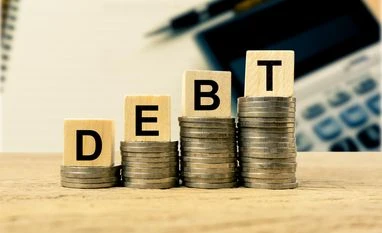
From Malaysia’s chicken burgers on credit to the US’ DoorDash EMIs, Buy Now, Pay Later is creeping into daily essentials, raising alarms over rising household debt and a worsening global cash crunch. (Photo: Shutterstock)


Listen to This Article
Imagine financing a bucket of fried chicken over three months. That’s exactly what Malaysian fast-food lovers were offered last week when KFC’s local franchise rolled out a 'Buy Now, Pay Later' (BNPL) scheme for its meals. A social media campaign targeted those who were “waiting for salary” or “never have cash,” positioning deferred payments as a solution to daily financial struggles, according to a report by the South China Morning Post.
Now, Malaysian authorities have been urged to address the rapid rise of online credit schemes, as millions of low-income individuals delay payments on essentials ranging from fast food to homeware to manage daily financial strain—raising concerns about a growing debt burden.
The KFC campaign was met with fierce backlash, forcing the company to take down the promotional posts, but the message had already landed: BNPL is no longer just for furniture or gadgets—it has crept into daily essentials, including food.
Malaysia’s central bank, Bank Negara Malaysia (BNM), has flagged BNPL as a growing concern. A recent report found that 3.7 million of Malaysia’s lowest-income earners—those earning less than 5,000 ringgit ($1,130) per month—are using BNPL services. That accounts for over 20 per cent of the country’s 17.3 million working population. Malaysians spent 12 billion ringgit ($2.7 billion) on BNPL purchases in 2024, nearly double the previous year.
With wages growing at just 2.9 per cent in 2024 and food prices up 2.5 per cent in February, the financial strain is evident. Young workers, particularly those between 21 and 45, are the largest users, often turning to BNPL for everyday purchases simply to bridge the gap between paycheques.
Also Read

 "Dry Day, Alcohol, Hard drinks, No alcohol")
 "Renault")
 "House rent")
 "artificial intelligence, AI, GenAI")
 "Raj Thackeray, Raj, Thackeray")
In the US, you can ‘finance’ a burger through DoorDash
Across the United States, BNPL for food is not just an experiment—it has become an expansion strategy. Last week, CNN reported that DoorDash has partnered with Klarna, a Swedish fintech firm, allowing customers to split food delivery bills into four interest-free instalments or defer payments until their paycheque arrives.
BNPL, once reserved for big-ticket items such as furniture and electronics, is now reshaping spending habits for everyday essentials. An Adobe report released in January noted that BNPL use for groceries and essentials surged 40 per cent in 2024 in the US, outpacing its use for traditional high-value purchases.
Many US economists have pointed out that people are no longer just financing discretionary purchases — they are financing survival.
And they are doing so while carrying record levels of debt. The Federal Reserve Bank of New York reported in February that total US household debt reached $18.04 trillion in the last quarter of 2024. Credit card balances alone hit a record $1.2 trillion, and delinquencies on auto loans and credit cards are at 14-year highs.
BNPL’s explosive growth has been lucrative for fintech firms, with Klarna reporting a 24 per cent surge in revenue as it prepares for a New York Stock Exchange listing.
India: BNPL and credit card debt—A ticking time bomb
In India, the story follows a similar trajectory, but with a sharper edge—BNPL is not just expanding; it is colliding with an already surging credit card debt crisis.
Between March and June 2024, India’s credit card outstanding amounts jumped from ₹2.6 lakh crore to ₹2.7 lakh crore ($32.5 billion). That figure has grown at a staggering 24 per cent annual rate since 2019.
Young millennials and Gen Z have embraced EMI-based purchases and BNPL schemes without fully considering their repayment capacity, analysts have cautioned. As a result, credit card defaults climbed to 1.8 per cent in mid-2024, up from 1.7 per cent at the end of 2023.
To counterbalance rising risks, the Reserve Bank of India (RBI) has tightened BNPL regulations, capping late fees and requiring greater transparency in repayment structures. However, balancing financial inclusion and consumer protection remains a challenge.
A warning sign, not a convenience
The shift towards BNPL for necessities is reflective of a larger economic reality, economists note. More consumers are living paycheque to paycheque, and many cannot afford unexpected costs. Financial experts warn that when people begin financing fast food and groceries, it signals more than just evolving payment methods—it highlights deeper economic cracks.
More From This Section
 "Donald Trump, Trump")
 "Putin, Trump")
 "Kremlin, Russia, Moscow,")
 "Marine Le Pen")
 "Gaza conflict, Hamas, Israel, Palestine")
Topics : BS Web Reports Malaysia Credit card loans Credit cards Household debt India Household wealth
Don't miss the most important news and views of the day. Get them on our Telegram channel
First Published: Mar 31 2025 | 4:24 PM IST