


China's space station taikonauts now have an AI assistant: Meet Wukong
China's Tiangong station has deployed Wukong AI, its first large-scale artificial intelligence assistant, to support taikonauts during missions and spacewalks
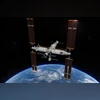 "Chinese Tiangong Space Station, China Space Station, Chinese Space Station")
China’s Tiangong space station gets first AI assistant Wukong, named after Monkey King | Photo: Wikimedia Commons
Listen to This Article
The three taikonauts aboard China’s Tiangong space station have completed their third spacewalk, this time with the assistance of an artificial intelligence (AI) system, Chinese state media Xinhua reported on Friday.
The model, called Wukong AI, was delivered to the station on July 15, 2025, by the Tianzhou-9 cargo craft. Alongside the AI system, the spacecraft also carried new-generation spacesuits, fresh fruit, and other supplies for the Shenzhou-20 crew.
This marks the first time that a large-scale AI model has been applied and verified in orbit aboard China’s space station.
Who are the taikonauts?
The word “taikonaut” is commonly used to describe Chinese astronauts, derived from the Mandarin word “taikong” (space) and the Greek root “naut” (sailor).
The Shenzhou-20 mission crew consists of Commander Chen Dong, Chen Zhongrui, and Wang Jie.
Also Read

 "China Flag, China")
 "real estate, realty firms")
 "Nikki Bhati")
 "Bhajanlal Sharma, Bhajanlal, Rajasthan CMBhajanlal Sharma, Bhajanlal, Rajasthan CM")
 "Canada")
On August 15, Commander Chen Dong and Wang Jie carried out a 6.5-hour spacewalk with support from ground teams and the station’s robotic arm.
What is Wukong AI?
Wukong AI is a large-scale artificial intelligence model that has been built on China’s homegrown open-source AI model. Wukong AI has been trained on aerospace flight standards to directly meet the needs of manned space missions.
It has also been designed to assist with mission planning, data analysis, troubleshooting, and forecasting.
The AI assistant was named after Sun Wukong, the Monkey King from the classic Chinese novel Journey to the West. The AI system's name is meant to reflect qualities of agility, intelligence, and adaptability.
How was Wukong AI used in practice?
Before their recent spacewalk, Chen Dong and Wang Jie asked Wukong AI for the work schedule. The system provided quick responses, complete with relevant links and guidance.
Taikonaut Wang Jie described the AI’s output as “highly comprehensive”. According to the China Astronaut Research and Training Centre, as reported by Xinhua, the system has been running stably for one month, and astronauts have given positive feedback.
How does Wukong AI work?
Wukong AI operates through a dual-module system:
- Orbiting module: Onboard the station, giving immediate mission-critical responses.
- Ground module: Earth-based, conducting deeper analysis.
Together, the modules function as an intelligent question-answering system, able to:
- Deliver fast and accurate responses through scenario-based data processing.
- Use optimisation techniques and customised search strategies to adapt to the needs of the crew.
- Be reconfigured and expanded for different tasks, from mission planning to smart forecasting.
Why Wukong AI matters
This deployment represents the first verified use of a large-scale AI system aboard China’s space station. According to Zou Pengfei of the Astronaut Research and Training Center, Wukong AI improves:
- Operational efficiency during complex missions.
- Fault handling when problems arise.
- In-orbit psychological support, by giving astronauts a responsive assistant.
- Coordination between crew and ground teams.
What does Wukong look like?
Chinese media released footage of Wukong AI’s user interface. It features a cartoon Monkey King wearing a spacesuit, floating above Earth with Tiangong station nearby. A friendly message reads: “Hello, I’m Wukong.”
India’s human spaceflight ambitions
While China has already placed an AI system aboard its space station, India is preparing for its first crewed mission under the Gaganyaan mission. The Indian Space Research Organisation (Isro) has been conducting a series of tests, including crew escape demonstrations and systems validation, to send astronauts into low-Earth orbit.
Isro is gearing up for the first uncrewed mission under its Gaganyaan program. The mission, labelled G1, is slated to launch in December 2025 and will carry Vyommitra, a half-humanoid robot, to test critical spacecraft systems. The first crewed missions are planned for the first quarter of 2027.
More From This Section
 "Typhoon KajikiTyphoon Kajiki, Vietnam, typhoon")
 "Benjamin Netanyahu, Benjamin, Netanyahu, Israel PM")
 "Israel, Yemen, airstrike")
 "typhoon podul")
 "Benjamin Netanyahu, Israeli Prime minister")
Topics : Artificial intelligence Chinese space station Chatbots artificial intelligence and robotics BS Web Reports Chinese astronauts
Don't miss the most important news and views of the day. Get them on our Telegram channel
First Published: Aug 25 2025 | 5:12 PM IST