


Dire wolves are back - or maybe not. What does Colossal Biosciences claim?
The first dire wolf pups, Romulus and Remus, born in October, plus a third pup, Khaleesi, born in January, are the results of efforts by bioscience towards de-extinction.
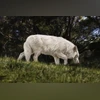 "Dire wolves")
Dire wolves return, claims Colossal Biosciences
Listen to This Article
Dire wolves, who went extinct 12,000 years ago, are set to return, claims Dallas-based biotech company Colossal Biosciences.
The biotech company has unveiled three genetically engineered pups with signature traits of Aenocyon dirus, the fabled Ice Age predator.
Sharing a video on social media, the company wrote, "SOUND ON. You’re hearing the first howl of a dire wolf in over 10,000 years. Meet Romulus and Remus—the world’s first de-extinct animals, born on October 1, 2024.”
The company so far has given birth to two male pups and a female pup named Khaleesi, born in January this year.
Dire wolves were real and not the Game of Thrones lore
This is a bigger surprise for those who used to believe that dire wolves are the brainchild of Game of Thrones. However, the writer of Game of Thrones, George R. R. Martin, corrected this assumption multiple times. While talking to Rolling Stone, he said, “You’d be surprised at how many people seem to think I invented the dire wolf.”
Also Read

 "PM Modi, Narendra Modi")
 "Stock markets")
 "apple, apple logo")
 "Delhivery")
 "Bank Holidays")
“Much as I would love to take credit for that, it’s just not so. Dire wolves were real, one of the apex predators of the Ice Age,” he added.
What’s happened?
Colossal scientists have created three dire wolf pups by using ancient DNA, cloning and gene-editing technology to alter the genes of a gray wolf, the prehistoric dire wolf’s closest living relative.
The result is essentially a hybrid species similar in appearance to its extinct forerunner.
The three dire wolves (Romulus, Remus and Khaleesi) are living on a 2,000-acre site at an undisclosed location enclosed by 10-foot-tall zoo-grade fencing, where they are monitored by security personnel, drones and live camera feeds. Colossal said the facility had been certified by the American Humane Society and registered with the US Department of Agriculture.
Are Grey wolves and Dire wolves genetically different?
Beth Shapiro, Colossal, says her team has sequenced the complete genome of the dire wolf and will release it to the public in the near future.
He also could not tell New Scientist how many differences there are; however, he said the two species share 99.5 per cent of their DNA.
De-extinction: If true, is a scientific revolution
De-extinction is a revolution in science, reshaping how humans used to think about extinction.
Dire wolves, who became extinct 12,500 years ago, used to rule Ice Age North America, hunting mammoths, bison and giant sloths. They were way bigger and robust than today's grey wolves and had powerful jaws, thick coats, and broad skulls.
De-extinction is nothing less than revolution. Colossal's researchers used fossilised remains to bring back the species extinct thousands of years ago. They used fossilised remains like a 13,000-year-old tooth and a 72,000-year-old inner ear bone and reconstructed the dire wolf genome with unprecedented precision.
Then the team edited the DNA of grey wolf cells using CRISPR and targeted 14 genes in 20 distinct sites to replicate the physical features of dire wolves like their muscular frame, head shape, and pale fur.
From there, the team edited the DNA of grey wolf cells using CRISPR, targeting 14 genes across 20 distinct sites. These were chosen to replicate the dire wolf’s physical features, such as its muscular frame, head shape, and pale fur.
Colossal’s co-founder and CEO, Ben Lamm, said, “Our team took DNA from a 13,000-year-old tooth and a 72,000-year-old skull and made healthy dire wolf puppies.”
What Colossal claims?
Colossal claims that they have made 20 edits to turn the grey wolves into dire wolves. The five of those 20 changes are based on mutations which are known to produce light coats in grey wolves, Shapiro told New Scientist.
The remaining 15 edits are based on the genome of the dire wolf directly, intended to alter the animals’ size, musculature and ear shape.
Shapiro says it will take around a year or more to clear if those changes have had the intended effects on the genetically modified animals.
Are these pups dire wolves or not?
Shapiro said that it depends on how you define species. She called the species concepts, a human classification system, where he believes everybody can disagree and everyone can be right.
“You can use the phylogenetic [evolutionary relationships] species concept to determine what you’re going to call a species, which is what you are implying… We are using the morphological species concept and saying, if they look like this animal, then they are the animal,” she added.
Additionally, Colossal has been working toward resurrecting the mammoth, dodo and Tasmanian tiger since 2021.
More From This Section
 "Yoon Suk Yeol, Yoon Suk")
 "Donald Trump, Trump")
 "Elon Musk, Musk")
 "US President Donald Trump")
 "US flag, US, united states")
Topics : Wolves howl Science extinct species
Don't miss the most important news and views of the day. Get them on our Telegram channel
First Published: Apr 08 2025 | 11:33 AM IST