


Trump sets nuclear talks with Iran; Tehran says negotiations 'indirect'
Donald Trump says nuclear talks with Iran; warns of 'great danger' if they fail. Iran confirms participation but insists negotiations will be indirect via Oman
 "Donald Trump, Trump")
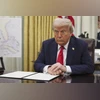
US President Donald Trump (Photo: PTI)
Listen to This Article
US President Donald Trump announced on Monday that Washington would hold talks with Iran regarding its nuclear programme. However, he warned that Iran would face “great danger” if the negotiations did not yield a positive outcome.
Iranian Foreign Minister Abbas Araqchi confirmed Iran’s participation but emphasised that the talks would be “indirect”. In a post on X, he stated, “It is as much an opportunity as it is a test. The ball is in America's court.”
Talks to begin this saturday, says Trump
Following a meeting with Israeli Prime Minister Benjamin Netanyahu, Trump told reporters that negotiations were set to begin on Saturday. Emphasising the stakes, he said, “Tehran can’t get nuclear weapons.”
“We're dealing with them directly, and maybe a deal is going to be made,” the US President added. “Doing a deal would be preferable to doing the obvious.”
When asked about potential military action should the talks fail, Trump issued a stark warning: “Iran is going to be in great danger, and I hate to say it.” He added, “If the talks aren't successful, I think it’s going to be a very bad day for Iran.”
Also Read

 "Iran, Iran flag")
 "Tulsi Gabbard, Tulsi, Gabbard")
 "US Iran,")
 "US President Donald Trump and Iran's Supreme Leader Ayatollah Ali Khamenei")
The announcement follows heightened tensions last month, when Trump hinted at possible military action after Iran’s Supreme Leader, Ayatollah Ali Khamenei, rejected a proposal for direct dialogue.
Trump’s reversal from Obama-era nuclear deal
During his presidency, Trump withdrew the US from the 2015 Iran nuclear agreement brokered under then-President Barack Obama. That accord—backed by China, France, Germany, Russia, and the UK—had imposed restrictions on Iran’s nuclear activities in exchange for the lifting of economic sanctions.
In March, Trump reportedly sent a letter to Iran’s leadership via a mediator from the UAE, expressing a willingness to negotiate. Although that offer was declined, Iranian officials signalled openness to discussions through third-party channels.
Iran insists on indirect talks
Shortly before Trump’s statement, Iranian Foreign Ministry spokesperson Esmail Baghaei said that Tehran was awaiting a US response to its proposal for indirect talks, calling the offer generous and honourable. After Trump’s announcement, a senior Iranian official told Reuters that negotiations would take place via Oman’s mediation, not directly.
Oman has historically acted as a diplomatic conduit between Iran and the US. Meanwhile, Iran’s Nournews dismissed Trump’s claim of direct talks as a psychological tactic. Another Iranian official suggested a two-month window to reach an agreement, warning that Israel might take military action if discussions drag on.
More From This Section
 "Elon Musk, Musk")
 "US President Donald Trump")
 "US flag, US, united states")
 "US China flag, US-China flag")
 "Gaza conflict, Hamas, Israel, Palestine")
Don't miss the most important news and views of the day. Get them on our Telegram channel
First Published: Apr 08 2025 | 10:10 AM IST