


Trump hints at regime change, says 'Make Iran Great Again': Top points
Donald Trump hints at 'regime change' in Iran after the US' strikes on Tehran's nuclear sites; war escalates as Iran vows revenge, activates air defences, and threatens Strait of Hormuz
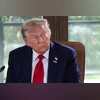 "US President Donald Trump")
US President Donald Trump (Image: Bloomberg)
Listen to This Article
US President Donald Trump has made another U-turn on his stance on the Israel-Iran conflict, suggesting the possibility of a regime change in Tehran days after denying it.
In a post on X, Trump wrote: "It’s not politically correct to use the term, 'Regime Change,' but if the current Iranian Regime is unable to MAKE IRAN GREAT AGAIN, why wouldn’t there be a Regime change??? MIGA!!!"
On Sunday, the US launched strikes on three key nuclear programme sites in Iran, with Trump saying that the sites were “completely and fully obliterated”. Iran vowed retaliation, with the country's parliament approving the closure of the Strait of Hormuz to Western ships.
Here are the top developments on the Israel-Iran conflict:
1. Hostilities between Israel and Iran continued on Monday, with both countries exchanging missile strikes. According to an Israeli military spokesperson, Israeli fighter jets targeted military positions in western Iran. Earlier, Iranian missile attacks caused significant damage in Tel Aviv, injuring numerous civilians and destroying buildings.

 "Stock broker, broker, trader, market, markets, stock markets, stock, market crash, market fall, loss")
 "Rupee, Indian Rupee")
 "Antonio Guterres")
 "Demonstrators hold a banner as they march against the upcoming NATO summit")
 "Iran's Ambassador and Permanent Representative to the United Nations Amir Saeid Iravani addresses delegates")
2. The Israeli military announced that its forces had targeted several Iranian military locations on Sunday. "Approximately 20 (Israeli air force) fighter jets conducted intelligence-based strikes using over 30 munitions on military targets in Iran," the Israeli army stated on Telegram, as reported by AFP.
The strikes focused on 'storage and missile launching infrastructure sites', in addition to 'military satellites and radar sites'. Amid reports of strikes in Tehran, air defence systems were activated in central areas of the Iranian capital, according to local media cited by Reuters.
3. At a UN Security Council emergency session, Acting US Ambassador Dorothy Shea reiterated Trump’s warning that any Iranian aggression — either direct or through its proxies — against American personnel or assets would result in strong retaliation.
4. Russia's UN envoy Vassily Nebenzia condemned the US airstrikes on Iran’s nuclear facilities, warning they had opened a “Pandora’s box” with unpredictable outcomes. He said Moscow had offered to mediate but claimed the US showed no interest in peaceful dialogue. Nebenzia warned of a potential large-scale conflict with dangerous global consequences if de-escalation efforts failed.
5. Iran accused the US of derailing diplomatic efforts by bombing its nuclear infrastructure. Amir Saeid Iravani, Iran’s envoy to the UN, said the Iranian military would determine the “timing, nature and scale of Iran’s proportionate response". He also alleged that Israeli Prime Minister Netanyahu had influenced President Trump to escalate tensions and involve the US in another costly regional conflict.
6. International Atomic Energy Agency (IAEA) Director General Rafael Grossi voiced concern over the rising tensions, warning that the US strikes could worsen the Israel-Iran standoff. However, he said that diplomacy remained possible and called on Iran to permit inspectors to verify the country’s 4,400 kg stockpile of uranium enriched to 60 per cent. 7. Amid growing regional instability, India’s evacuation drive continued. The Ministry of External Affairs confirmed the safe return of 311 Indian nationals from Mashhad to New Delhi on June 22. This brings the total number of evacuated citizens to 1,428.
8. Global oil markets reacted sharply, with Brent crude prices surging up to 5.7 per cent, hitting $81.40 a barrel. The US strikes on Iran’s main nuclear sites sparked fears of potential disruptions in energy supply from West Asia.
9. US Vice President JD Vance said that the United States was targeting Iran’s nuclear programme — not the country itself. “We’re not at war with Iran. We’re at war with Iran’s nuclear programme,” Vance said on NBC’s Meet the Press with Kristen Welker.
He credited the strikes with setting Iran’s nuclear ambitions back by several years and criticised Tehran for failing to negotiate in good faith.
10. On Saturday, Iran's Health Ministry reported that Israeli strikes had resulted in around 400 deaths and left around 3,056 people injured.
(With agency inputs)
More From This Section
 "Tetsuya Shimizu")
 "Benjamin Netanyahu, Benjamin, Netanyahu, Israel PM")
 "Israel-Iran conflict, Israel, Iran")
 "US President Donald Trump")
 "Tesla robotaxi")
Topics : Donald Trump Israel Iran Conflict BS Web Reports Tehran israel Iran nuclear agreement Nuclear treaty United States US Iran tensions
Don't miss the most important news and views of the day. Get them on our Telegram channel
First Published: Jun 23 2025 | 9:16 AM IST