


Here's why Giorgia Meloni's Nato-light Ukraine plan is worth trying
The cleverness of Meloni's proposal lies in the way it would test to destruction Putin's rationale for his invasion of a sovereign neighbour
 "Giorgia Meloni, Zelenskyy")
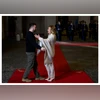
Italian Prime Minister Giorgia Meloni welcomes Ukraine President Volodymyr Zelenskyy. Image: Bloomberg
Listen to This Article
By Marc Champion
There is both desperation and brilliance to Italian Prime Minister Giorgia Meloni’s proposal to provide Ukraine with postwar security by offering to cover it with the umbrella of Nato’s Article 5 Security guarantee, but not membership itself.
It’s loopy, because it would commit the US and Europe to precisely the risk of direct military engagement with Russia, a nuclear superpower, that they’ve been trying to avoid ever since President Vladimir Putin sent troops into Georgia in 2008. It seems as unlikely that Donald Trump would agree to such a move as his predecessor, Joe Biden, who meticulously (and for Ukraine disastrously) drip fed the provision of arms to avoid an assessed nuclear escalation risk.
But Meloni’s idea also has a kind of genius. She has thought this through at least as clearly as France and the UK, with their troubled proposal to put troops on the ground as behind-the-lines peacekeepers. That’s a hard to understand concept and faces a plethora of challenges, from a dearth of the airlift, troops and artillery needed sustain a war-fighting force big enough to deter Russia, to an over-dependence on the US for critical intelligence, surveillance and reconnaissance assets, or ISR. And that's if the Kremlin agreed and the US provided the necessary backstop should Russia decide to attack the peacekeepers. Neither seems likely.
Also Read

 "landslide, Solan landsliide")
 "Russia Ukraine conflict, Russia Ukraine")
 "Russia Ukraine flag, Russia-Ukraine flag")
 "Vladimir Putin, Putin")
The cleverness of Meloni’s proposal lies in the way it would test to destruction Putin’s rationale for his invasion of a sovereign neighbour, one that so many in the West – including Trump – have swallowed whole. This is that Putin acted to counter a threat posed to Russia by the North Atlantic Treaty Organization’s eastward expansion.
There’s no question that Putin attacked Ukraine in significant part in response to Nato’s open-door policy — the alliance hadn’t actually done any expanding toward Russia since 2004; subsequent additions were to the south, in the Western Balkans, while Finland and Sweden joined only after the Ukraine invasion. The important question – the one that Meloni’s proposal would test – is the nature of the threat Putin saw.
Was it that Putin felt Nato would be able to use newly acquired bases to attack Russia? This is what Kremlin officials routinely say or imply, and Nato’s critics assume. Or was it because even the promise of Nato, and, equally, European Union membership threatened his plans to force those neighbors into a renewed sphere of control? This was the belief, born of centuries of experience with Russian domination and expansion, of the countries that began pounding on Nato’s door for admission as soon as the Soviet Union collapsed.
The evidence all points to the latter, as I’ve argued in detail here. Indeed, when Putin annexed Crimea in 2014, Ukraine’s constitution excluded joining any military alliance and Nato had stood by the terms of the 1997 Nato-Russia Founding Act. This committed the alliance to not station nuclear weapons, bases or troops on the territories of its new members. It wasn’t until 2017 that the first Nato soldiers moved to Poland, for example.
The net effect of the Founding Act was to grant new members the security they craved under Nato’s Article 5 collective defense pledge, but without provisions that Russia could legitimately consider provocative. Meloni’s proposal for Ukraine would have the same result, but from the opposite starting point: non-membership. This would offer much clearer assurance to Moscow that it wouldn’t end up with Nato bases on another 1,974 kilometers (1,426 miles) of its land borders, in addition to the roughly 2,500 kilometers it already has.
It's because all evidence points to the motive for Putin’s aggressive policies toward the Baltic States, Belarus, Georgia, Moldova, Ukraine and others as a desire force them into his own Nato and EU sound-alikes - the CSTO (Collective Security Treaty Organization) and EU (Eurasian Union) – that he’d likely refuse Meloni’s proposal. If his goal were peace and the security of Russia’s borders, rather than its expansion as a great power by force if necessary, he’d surely accept.
It's worth testing Meloni’s idea. Putin’s refusal could then provide a clarifying moment, putting into context his invasions of Ukraine, as well as demands such as Kyiv’s disarmament and Nato’s roll-back from all former Soviet-bloc nations. So, too, his latest proposal for regime change, which is to place all of Ukraine under transitional United Nations control, remove President Volodymyr Zelenskiy and “finish off” Ukraine’s armed forces. That earned a public rebuke from Trump on Sunday. He told NBC he was “very angry” and threatened tough oil sanctions if Putin blew up US peace-making efforts.
This clarity could at the same time shine a useful light on those US efforts. Depite Trump’s threats on Sunday, there has been a deep and cynical gulf between the new administration’s stated goal of saving lives and ending an unwinnable war, and its actions. Those have been to cede most of Russia’s key demands, exclude Ukraine from the negotiation, and coerce Zelenskiy into granting the US control over all of his nation’s mineral resources and infrastructure, in perpetuity.
As Bloomberg News reported on Saturday, Kyiv is now trying to secure less usurious terms, without causing a rift that leads to a further suspension of US military aid.
If this clarity were all that adopting Meloni’s proposal achieved, it would be well worth the effort as we are drowning in Russian and now US disinformation.
Under the guise of self-defense, Russia is engaged in a classic, colonial war of territorial expansion as it tries to regain control over a lost empire. Meanwhile, the Trump administration is exploiting Kyiv’s moment of greatest dependency to impose a resource-extraction contract. That deal was recently revised into a form worthy of Belgium’s 19th century exploitation of the Congo, while offering Ukraine no security guarantees whatsoever. This is done in the name of helping Ukraine, yet the net effect of the deal would be to exclude Europe from Ukraine’s economic future and cripple its postwar reconstruction, while taking no responsibility for its defense.
Such is the untrammeled rule of the strong. The savage intent of both powers now pawing at Ukraine is worthy of the opening passages of Heart of Darkness, the novel Joseph Conrad set in the Belgian Congo. “They grabbed what they could get for the sake of what was to be got. It was just robbery with violence, aggravated murder on a great scale,” says the narrator, Marlow, adding that conquest of the world “is not a pretty thing.”
(Disclaimer: This is a Bloomberg Opinion piece, and these are the personal opinions of the writer. They do not reflect the views of www.business-standard.com or the Business Standard newspaper)
More From This Section
 "Giorgia Meloni")
 "Elon Musk, Musk")
 "Ali Khamenei, Donald Trump")
 "earthquake, Thailand, earthquake in Thailand")
 "Donald Trump, Trump, Volodymyr Zelenskyy, Zelenskyy")
Don't miss the most important news and views of the day. Get them on our Telegram channel
First Published: Mar 31 2025 | 12:11 PM IST