


How Altman sidestepped Musk to win over President Trump
Since Trump's election, the billionaires of Silicon Valley have jockeyed to influence the new administration. None of them have been more successful than Musk
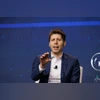 "Sam Altman")
Photo: Bloomberg
Listen to This Article
Cecilia Kang & Cade Metz
At President Trump’s inauguration, Sam Altman, the chief executive of OpenAI, was relegated to the overflow room while other tech billionaires like Elon Musk and Mark Zuckerberg took prime spots on the dais under the Capitol rotunda.
But days earlier, before flying into Washington, Altman was on the phone with Trump, preparing an announcement that would outflank Musk and put Altman’s company at the centre of the new administration’s agenda for artificial intelligence.
On the 25-minute call, Altman appealed to Trump’s love of a big story and of a big deal. Altman told the then president-elect that the tech industry would achieve artificial general intelligence — the hypothetical moment when technology matches human intelligence — during the Trump administration, according to three people familiar with the call.
And to get there before competitors from China, OpenAI, Oracle, and SoftBank had completed a $100 billion deal to build data centres across the country. The day after the inauguration, Altman stood behind Trump in the Roosevelt Room of the White House as Trump announced the deal, called Stargate, and described it as the “largest AI infrastructure project by far in history.”
Stargate had been in the works for months, but Altman and his partners timed the announcement to allow Trump to take credit for it in his first days in office.
Also Read

 "Artificial intelligence, AI")
 "Narendra Modi, Donald Trump")
 "ARTIFICIAL INTELLIGENCE")
 "Google")
 "Piyush Goyal, Piyush")
“We wouldn’t be able to do this without you, Mr. President,” Altman said in front of a gathering of reporters.
Since Trump’s election, the billionaires of Silicon Valley have jockeyed to influence the new administration. None of them have been more successful than Musk, who backed the Trump campaign with more than $250 million of his own money and now apparently has the power to slash jobs and budgets across the federal government.
Trump’s election and Musk’s insider status with the new administration could have shut the door on Altman’s influence in Washington. Altman, 39, was a longtime Democratic donor and loud critic of Trump during his first term. What’s more, he was near the top of Musk’s enemies list. The two had once fought for control of OpenAI, and are still battling it out in court. Musk also created his own AI firm to compete head on with Altman’s company.
That Altman managed to outflank Musk and make OpenAI the centrepiece of the new administration’s nascent AI agenda to stay ahead of China was a testament to Altman’s talent for shape shifting and nearly 20 years of deal making in Silicon Valley. It also offered a view of Trump’s flexible loyalties when it comes to being wooed, as well as the limits of Musk’s ability to influence tech policy.
Even before the presidential election, Altman quietly worked his way into Trump’s inner circle, according to interviews with more than a dozen people familiar with Altman’s drive to win over Trump. Many of the details of that courtship, which went on for months, have never been reported before.
In a statement emailed to The New York Times, OpenAI spokeswoman Liz Bourgeois said the firm looked forward to working with Trump to ensure AI’s “potential for driving economic growth and advancing scientific discovery that benefits as many people as possible.”
Altman leaned on relationships with Doug Burgum, the governor of North Dakota and Trump’s eventual nominee for interior secretary, and two other Trump allies: Larry Ellison, co-founder of the software company Oracle, and Masayoshi Son, founder of SoftBank.
More From This Section
 "Britain, UK, UK flag")
 "Sheikh Hasina")
 "United Nations")
 "US Russia Summit , US, Russia, donald trump, vladmir putin, US politics, kremlin,Helsinki summit , NATO summit, European Union President Donald Tusk ,")
 "Tesla CEO and X owner Elon Musk")
Don't miss the most important news and views of the day. Get them on our Telegram channel
First Published: Feb 09 2025 | 10:28 PM IST