


'We must end this crisis': Macron reappoints Lecornu as prime minister
French President Emmanuel Macron reappointed Sebastien Lecornu days after his resignation, tasking him with forming a new government and delivering a budget to end France's political stalemate
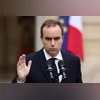 "Sebastien Lecornu")
France Prime Minister Sebastien Lecornu (Photo/PTI)


Listen to This Article
French President Emmanuel Macron on Friday reappointed Sebastien Lecornu as prime minister, just days after his resignation. Macron has tasked him with forming a new government and preparing the national Budget in a bid to end France’s ongoing political deadlock, the Associated Press reported.
The reappointment follows days of intense backroom discussions, coming less than a week after Lecornu quit amid internal clashes within his newly named Cabinet. France is facing mounting economic pressure and record debt levels, and Macron’s latest move is being seen as a last attempt to stabilise his second term, which runs until 2027.
‘A duty to serve France’
The president’s office issued a brief one-line statement announcing Lecornu’s reappointment — similar to the one released when he was first appointed last month, and only four days after his resignation.
Accepting the post, Lecornu said on social media that he agreed to return out of “duty”. He added that his mission was “to do everything to give France a budget by the end of the year and respond to the daily problems of our compatriots”.
Also Read

 "Emmanuel Macron, Emmanuel, Macron")
 "Emmanuel Macron, Emmanuel, Macron")
 "Sebastien Lecornu")
 "France, France Flag")
 "Sbastien Lecornu")
Lecornu also made it clear that ministers in his new government must give up any ambitions to contest the 2027 presidential election. The Cabinet, he said, would “incarnate renewal and a diversity of skills”.
“We must put an end to this political crisis that exasperates the French and to this bad instability for France’s image and its interests,” he added.
Shock resignation deepened crisis
Lecornu’s surprise resignation earlier this week came only hours after unveiling a Cabinet that was immediately rejected by a key coalition partner. The sudden move triggered demands for Macron to resign or dissolve parliament again — calls that the president ignored.
Instead, Macron promised to name a replacement within 48 hours before deciding to bring Lecornu back. Political leaders who met him for over two hours on Friday said they left the meeting uncertain about his next steps.
Marine Tondelier, leader of the Ecologists party, questioned Macron’s leadership approach. “How can one expect that all this will end well? The impression we get is that the more alone he is, the more rigid he becomes,” she said.
Mounting worries over economy and debt
Over the past year, France’s successive minority governments have collapsed rapidly, leaving Europe’s second-largest economy paralysed by political instability. The country’s public debt stood at €3.346 trillion ($3.9 trillion) at the end of the first quarter of 2025 — equivalent to 114 per cent of GDP, according to official data.
The poverty rate rose to 15.4 per cent in 2023, its highest level since records began in 1996, according to the national statistics institute. The worsening financial situation has sparked concern among investors, credit rating agencies, and the European Commission, which has urged France to meet EU debt limits.
Lecornu: France’s youngest defence minister
At 39, Sebastien Lecornu became France’s youngest defence minister and has spearheaded a major military modernisation plan through 2030. Originally a conservative, he joined Macron’s centrist movement in 2017 and has served in several roles, including local administration and overseas territories.
During Macron’s “great debate” following the yellow vest protests, Lecornu played a key role in mediating public anger through dialogue. In 2021, he led talks on autonomy in Guadeloupe amid civil unrest, the Associated Press reported.
More From This Section
 "Harvey Weinstein")

 "The Bose SoundTouch music system")
 "Gazans, Gaza aid, Israel-Gaza war, Palestinians")
 "federal workers, us govt shutdown")
Topics : Emmanuel Macron France BS Web Reports
Don't miss the most important news and views of the day. Get them on our Telegram channel
First Published: Oct 11 2025 | 9:52 AM IST