


Myanmar earthquake released energy of '334 atomic bombs', says geologist
The earthquake has left over 1,600 people dead and more than 3,400 missing, with numbers expected to rise as search and rescue efforts continue
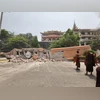 "Myanmar earthquake")
The earthquake has left over 1,600 people dead in Myanmar. (Photo: X/@UNHABITAT)


Listen to This Article
A powerful 7.7-magnitude earthquake that struck Myanmar on Friday released energy equivalent to 334 atomic bombs, according to geologist Jess Phoenix. She warned that aftershocks could persist for months as the Indian tectonic plate continues to collide with the Eurasian plate.
The disaster has left over 1,600 people dead and more than 3,400 missing, with numbers expected to rise as search and rescue efforts continue. In Myanmar's second-largest city, Mandalay, many residents have been left homeless, either due to structural damage or fear of collapsing buildings from aftershocks. A 5.1-magnitude aftershock on Sunday sent panicked citizens screaming into the streets.
Civil war hampers rescue efforts
The ongoing civil war in Myanmar has further complicated rescue operations. "What would normally be a difficult situation becomes almost impossible," Phoenix told CNN. Myanmar has been embroiled in civil conflict since gaining independence in 1948, with various ethnic groups seeking autonomy. The situation intensified after the military coup on February 1, 2021, which ousted the elected government and led to widespread protests and armed resistance from over 2,600 rebel groups.
Access to many areas remains limited, leaving local volunteers as the primary responders. Hospitals are overwhelmed, facing severe shortages of medical supplies, including trauma kits, blood bags, anesthetics, and essential medicines.
Mandalay airport has sustained damage, and Naypyitaw’s airport control tower has collapsed, halting commercial flights. However, international assistance has begun to arrive.
International aid and rescue operations intensify
Several nations have mobilised aid. India dispatched two C-17 military transport aircraft carrying a field hospital and emergency medical personnel. China has sent over 135 rescue personnel and committed $13.8 million in emergency relief. Russia has deployed 120 rescuers and medical teams. The UN Office for the Coordination of Humanitarian Affairs has reported widespread destruction of healthcare facilities, worsening the crisis.
The opposition National Unity Government, loyal to Myanmar’s pro-democracy forces, announced a partial ceasefire to aid rescue efforts. However, Myanmar's military regime has yet to respond, and airstrikes have continued despite the disaster.
(With inputs from agencies)
More From This Section

 "Russia Ukraine conflict, Russia Ukraine")
 "Gaza conflict, Hamas, Israel, Palestine")
 "Gaza conflict, Hamas, Israel, Palestine")
 "Pope Francis")
 "Elon Musk, Tesla CEO")
Don't miss the most important news and views of the day. Get them on our Telegram channel
First Published: Mar 30 2025 | 3:43 PM IST