


Nasa Rover finds Mars rocks that may be signs of ancient microbial life
In a new paper published in Nature, researchers offer up different explanations for a group of Martian rocks that Perseverance uncovered and sampled in July 2024
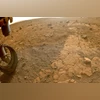 "mars")
The researchers say they can’t rule out the chance that the spots were created by other processes that didn’t involve biological life, which makes it important to study a sample of material from this area in a lab on Earth.
Listen to This Article
By Loren Grush
NASA’s Perseverance rover on Mars stumbled upon rocks last year that scientists think may show signs that Mars once hosted microbial life.
In a new paper published in Nature, researchers offer up different explanations for a group of Martian rocks that Perseverance uncovered and sampled in July 2024. Located in an ancient river valley called Neretva Vallis, the rocks are mudstones with unique, textured spots that NASA called “intriguing” and have been nicknamed “poppy seeds” or “leopard spots.”
After reviewing images and data, scientists think that the spots could be the byproducts of microbes. Potentially, ancient microbes could have been living in the sediment long ago, munching on organic materials. And that process turned the organic matter into these spotted minerals the rover found.
NASA representatives plan to go into detail about the findings at a press conference at 11 a.m. New York time.
Also Read

 "Nasa acting administrator, Sean Duffy, Nasa")
 "Amit Kshatriya")
 "Donald Trump, Trump")

 "Shubhanshu Shukla")
The microbial option is just one possible explanation, though. The researchers say they can’t rule out the chance that the spots were created by other processes that didn’t involve biological life, which makes it important to study a sample of material from this area in a lab on Earth.
“The sample that we collected, I think, has all of the ingredients needed to address the question of whether or not life was responsible for forming the features that we see in those rocks,” Joel Hurowitz, a planetary scientist at Stony Brook University and lead author on the Nature paper, told Bloomberg.
Mars program in doubt
These rocks initially captured scientists’ attention last year when Perseverance found them, with speculation starting quickly that they could’ve been caused by ancient life. But now, NASA faces an uncertain future regarding its Mars exploration programs. The Trump administration has proposed canceling an ambitious NASA program to transport samples of Martian soil to Earth – a project known as Mars Sample Return – calling it “unaffordable.”
The Perseverance rover was designed to be the first phase of the Mars Sample Return initiative. The car-sized robot has been drilling into the soil in various locations on the Martian surface, collecting samples of dirt and rocks in containers that are being left behind on the ground. The goal is that eventually a suite of robots will be sent to Mars to collect the samples and rocket them back to Earth.
But the future of that return is now in question with the recent attempt to cancel the program. Prior to Donald Trump taking office, NASA revealed that the Mars Sample Return budget had grown to as much as $11 billion and had requested ideas from the commercial space industry for ways to bring back the samples more economically. However, NASA ultimately didn’t decide on a new path forward before the Trump administration proposed cancellation.
Senator Ted Cruz did try to salvage Mars Sample Return with the recent One Big Beautiful Bill Act. As chair of the Senate Commerce Committee, he included money for NASA in the bill to develop a new Mars telecommunications spacecraft that could be used for the Mars Sample Return program. However, the program still remains on shaky ground.
Ultimately Hurowitz hopes that the science community will continue to analyze the information Perseverance gathered, but he says the rover isn’t capable of determining if life truly formed these rock formations. The ideal scenario would be to get the sample Perseverance batched to an Earth laboratory where it can be studied in greater detail, he said.
“If we aren’t able to retrieve the samples, then we’ll just be left sort of pondering this question,” Hurowitz said. “Is the answer to that question sitting in a tube somewhere on Mars that we haven’t retrieved yet?”
More From This Section
 "Nepal Protest")
 "US President Donald Trump")
 "Airports, Airline, air passenger, flights")
 "Fundraising via QIPs gains traction in '24 market")
 "Nepal Protest")
Don't miss the most important news and views of the day. Get them on our Telegram channel
First Published: Sep 10 2025 | 9:41 PM IST