


Earth braces for major solar storm; NASA warns of GPS outages, blackouts
NASA and NOAA issue global alerts after the year's most powerful solar flare triggers radio blackouts; satellite and power grid disruptions may follow as solar activity intensifies
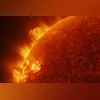 "Solar Flares")
Solar flares are classified into five strength categories — A, B, C, M, and X — with each step representing a tenfold increase in energy. | Representational
Listen to This Article
Nasa has issued a high-level warning following an explosive surge in solar activity, cautioning that powerful solar storms could disrupt GPS systems, radio communications, and even power infrastructure in the coming days. The alert follows an X2.7-class solar flare — the strongest of 2025 so far — erupting from a newly active sunspot, captured by Nasa’s Solar Dynamics Observatory.
The intense flare peaked on May 14, causing temporary radio blackouts across Europe, Asia, and parts of the Middle East. According to the US National Oceanic and Atmospheric Administration (NOAA), high-frequency communications were knocked out for up to ten minutes in some areas.
With the Sun approaching the peak of its 11-year solar cycle, scientists are monitoring several volatile sunspot regions that could unleash further solar storms. The severity of the recent eruption has prompted multiple global space weather agencies to raise alert levels, warning that more disruptive events may follow.
In the coming days, experts anticipate satellite glitches, navigation interruptions, and communication blackouts as solar turbulence intensifies.
What are solar flares?
According to Nasa, a solar flare is a sudden burst of particles, energy, magnetic fields, and material blasted into the solar system by the Sun. The recent X2.7-class solar flare ranks among the most powerful eruptions on record, with the potential to immediately impact Earth’s upper atmosphere.
Also Read

 "NASA")
 "Credit: NASA/JPL-Caltech")
 "Axiom 4 mission, Ax-4 mission, Ax4 mission, Axiom, Axiom Space, Axiom 4, Ax4, Ax-4, Shubhanshu Shukla")
 "Shubhanshu Shukla")
 "NASA")
Travelling at the speed of light, these bursts can reach Earth in just eight minutes, disrupting high-frequency radio signals, GPS systems, and aviation operations — particularly on the sunlit side of the planet.
X-class flares, the most dangerous type, can cause global technological fallout. “When directed toward Earth, a solar storm can create a major disturbance in Earth’s magnetic field, called a geomagnetic storm, that can produce effects such as radio blackouts, power outages, and beautiful auroras,” NASA explained.
While Earth’s atmosphere and magnetic field shield us from harmful radiation at ground level, strong flares can interfere with radio transmissions in the upper atmosphere and damage satellites and spacecraft operating beyond this protective barrier.
Solar flares are classified into five strength categories — A, B, C, M, and X — with each step representing a tenfold increase in energy. While C-class flares are considered minor, M-class are moderate, and X-class events can trigger significant global disruptions.
World’s first space emergency drill
In a global first, the United States has conducted a space weather emergency drill to test preparedness for extreme solar storms. Led by NOAA, the exercise brought together multiple federal agencies to simulate the fallout from a powerful solar superstorm.
The drill assessed how government bodies would coordinate a response, communicate across sectors, and safeguard critical infrastructure. Simulated scenarios included radiation hazards to satellites, astronauts, and commercial aircraft, widespread power outages affecting railways and pipelines, and disruption of satellite-based communications.
The exercise marks a major step in acknowledging the growing threat of space weather in a tech-reliant world—and preparing for it.
More From This Section
 "Giorgia Meloni, Pope Leo XIV")
 "Bill Gates, Elon Musk")
 "Keir Starmer, Keir, Starmer, UK")
 "Vladimir Putin, Putin")
 "Marks & Spencer")
Topics : NASA Solar system United States Earth
Don't miss the most important news and views of the day. Get them on our Telegram channel
First Published: May 21 2025 | 4:58 PM IST