


No passports, no study abroad: China limits public employees' travel
Across China, similar warnings are spreading as the authorities tighten control over state employees' contacts with foreigners
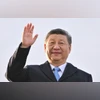 "Chinese President Xi Jinping")
Chinese President Xi Jinping | Photo via Reuters


Listen to This Article
Vivian Wang
When Tina Liu was hired to teach literature in a public elementary school in southern China, her contract included the usual warnings about absenteeism and job performance.
Then came another line: Travelling abroad without the school’s permission could get her fired. The rule was reinforced in a staff group chat. “According to regulations from higher-ups, teachers need to strengthen their disciplinary awareness,” the message said. “We will currently not permit any overseas vacations.”
Across China, similar warnings are spreading as the authorities tighten control over state employees’ contacts with foreigners. Some kindergarten teachers, doctors and even government contractors and employees of state-owned enterprises have been ordered to hand in their passports. Some cities make retirees wait two years to reclaim their passports.
In many cities, travel overseas by public employees, even for personal reasons, requires approval. Business trips abroad for “ordinary research, exchange and study” have been banned. And in most provinces, those who have studied abroad are now disqualified from certain public positions. Officials cite various reasons, including protecting national security, fighting corruption and cutting costs. But the scope of the restrictions has expanded rapidly, sweeping up employees who say they have no access to sensitive information or government funds. The New York Times spoke to public employees, including an elementary school music teacher, a nurse and a literature professor, who confirmed the restrictions.
Also Read

 "Artificial Intelligence")
 "Taiwan flag, Taiwan")
 "Iran Pakistan")
 "China-Taiwan drills, China-Taiwan, Taiwan")
 "Fertilisers, farming")
The rules are part of a push by the central authorities to impose greater so-called political discipline and ideological loyalty on government workers. Some local governments have banned civil servants from eating out in groups of more than three, measures that came after several reports of excessive drinking at official banquets.
ALSO READ: No H-1B visa, study and get out: Trump aide's message to foreign students
But the authorities are especially vigilant about overseas contact. The Chinese government has long been wary of the threat of espionage and what it sees as hostile foreign forces seeking to sow discontent. In July, People’s Daily, the Chinese Communist Party’s mouthpiece, published an article declaring that people-to-people diplomacy “exists because of the party” and should be led by the party. The result is that even as Beijing advertises itself as eager to attract foreign businesses and tourists, it is preventing many of its own people from leaving. “On the one hand, you want foreigners to come to China. You advertise Chinese culture and hope they’ll boost the economy,” Liu, who is in her 20s, said. “But on the other hand, why are you trapping us here, rather than letting us see more of the world?”
Travel restrictions for some state employees are not new. Since 2003, high-ranking officials or those handling state secrets must report foreign travel in advance. Their names are given to border officials to prevent unauthorised exits. But under Xi Jinping, the controls have extended to far lower-level workers. Full-time officials at six fishing villages near the city of Zhoushan, in coastal Zhejiang Province, were told to surrender their documents, a local government notice shows. In a city in Jiangxi Province, a public health agency also told employees to report any overseas trips they’d taken since 2018. A nurse at a hospital in Zhejiang said she would need four layers of approvals to travel abroad. The restrictions, she said, seemed to show a fear that even ordinary workers might flee with sensitive information or illicit funds.
More From This Section
 "donald trump")
 "gaza")
 "volcano")
 "Narendra Modi, Vladimir Putin")
 "Sheikh Hasina")
Topics : China Passport Xi Jinping diplomacy
Don't miss the most important news and views of the day. Get them on our Telegram channel
First Published: Aug 03 2025 | 11:06 PM IST