


Ships avoid Hormuz as Iran raises threats and conflict in West Asia spreads
The Strait of Hormuz is a crucial chokepoint for energy markets because a fifth of the world's seaborne oil and liquefied natural gas typically passes through each day
 "Budget 2026, container manufacturing scheme, shipping sector, inland waterways, coastal shipping, Atmanirbharta, IFSC tax reforms")
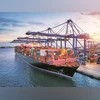
Representative Picture


Listen to This Article
Oil and gas shipping remains largely paused in the Strait of Hormuz that links the oil-rich Persian Gulf to the open seas, as a regional conflict escalates and Iran cranks up threats to vessels transiting through the chokepoint.
On Sunday, a trickle of vessels were moving out of the waterway, which is crucial for the flow of oil and gas, according to ship-tracking data, even if none appeared to be entering. A small oil tanker, which appears to be sanctioned by the US for helping Iran export fuels, was targeted off Oman’s northern coast, though it was unclear who was behind the attack.
Mohsen Rezaei, a member of the Expediency Discernment Council that advises Iran’s supreme leader, said on state TV that “no American ship is allowed to enter the Persian Gulf.” Multiple ships have reported a day earlier hearing radio broadcasts purporting to come from the Iranian navy announcing that transit through the waterway was banned, although no official communication was made.
The Strait of Hormuz is a crucial chokepoint for energy markets because a fifth of the world’s seaborne oil and liquefied natural gas typically passes through each day. It’s unclear how long the disruption may last, and some vessels are continuing to sail through, though far fewer than would be normal.
Iran’s semi-official Tasnim news agency, describing the waterway as effectively shut, said on Saturday that the country’s Revolutionary Guard warned ships that transiting Hormuz is not safe. German container liner Hapag-Lloyd AG subsequently said it is suspending transits through Hormuz due to its “official closure.” France’s CMA CGM SA, the world’s third-largest container line, told vessels in the Persian Gulf to take shelter immediately and suspended passage through the Suez Canal.
Also Read

 "US President Donald Trump")
 "stock market, BSE")
 "Ayatollah Ali Khamenei, Ayatollah Ali, Ayatollah")
 "US Israel strike Iran")
 "Iran-Israel conflict")
Traffic had already reduced significantly in the wake of the attacks, and Bloomberg reported earlier that tankers were piling up both inside and outside of the entrance into the strait. The US issued a warning to shipping that vessels in the region should stay 30 nautical miles away from its military assets.
Japanese giant Nippon Yusen KK has told its fleet not to navigate Hormuz, while Greece told its vast merchant fleet to reassess passage, according to a circular seen by Bloomberg. One owner had said they interpreted the US advisory as effectively closing the waterway.
The warning from Greece’s shipping ministry also told ships to be ready to use “conventional” navigation methods that don’t use electronics, citing the risk of interference while sailing in the region. The UKMTO and the multinational Joint Maritime Information Center had also warned of electronic interference to navigational systems.
A prolonged disruption would be seismic for the global oil trade. Futures markets are closed on Saturday and Sunday, giving reduced insight into how traders are really pricing risk. However, a retail trading product, run by IG Group Ltd., was pricing West Texas Intermediate roughly 9% higher on Sunday.
Hormuz is also a vital transit rout for LNG. Qatar is the world’s second-largest LNG exporter, making up 20% of supply last year, and the country’s shipments must pass through the Strait to reach buyers in Asia and Europe.
Several container ships have also either halted, or U-turned while transiting, ship tracking data showed.
Some shipowners were considering canceling already-fixed voyages into the Middle East, shipbrokers said, citing a war clause that gives them the right to do so should hostilities break out between a list of countries including the US and Iran. This could tighten the supply of vessels in the region, further supporting high freight rates that have recently soared to the highest level in years.
A build-up in vessels halting voyages toward Hormuz from the east had been going on for most of the week, tanker tracking data compiled by Bloomberg show.
More From This Section
 "US personnel, US military")
 "pakistan Flag")
 "Masoud Pezeshkian, Masoud, Pezeshkian, Iran President")
 "US-Israel strikes, Iran")
 "rice export")
Topics : West Asia Shipping Trade route Israel Iran Conflict
Don't miss the most important news and views of the day. Get them on our Telegram channel
First Published: Mar 01 2026 | 11:12 PM IST