


South Korean court says impeached President Yoon Suk Yeol can leave prison
The initial decision to release Yoon from detention in his criminal case comes as a verdict approaches in his impeachment trial
 "Yoon Suk Yeol, Yoon Suk")
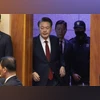
South Korea's impeached President Yoon Suk Yeol, top left, attends a hearing of his impeachment trial at the Constitutional Court in Seoul, South Korea, Thursday, Feb. 13, 2025. (Photo: PTI)


Listen to This Article
By Sam Kim, Shinhye Kang and Soo-Hyang Choi
A South Korean court has decided to release President Yoon Suk Yeol from prison, potentially providing the impeached leader with a rare victory as he awaits a separate verdict on whether he should be permanently ousted from office over his brief imposition of martial law.
The Seoul Central District Court said Friday that it accepted Yoon’s complaint against the validity of his arrest. Yoon will be released unless prosecutors challenge the decision, Yoon’s lawyer, Seok Dong-hyeon, said in a separate message.
The initial decision to release Yoon from detention in his criminal case comes as a verdict approaches in his impeachment trial. The Constitutional Court is mulling whether to remove Yoon from the presidency or reinstate him.
The final impeachment hearing took place on Feb. 25 and a decision is expected within weeks if not days. A snap election will be held within 60 days should the judges confirm Yoon’s removal.
Also Read

 "South Korea flag")
 "Yoon Suk Yeol, Yoon Suk, South Korea President")
 "Donald Trump, Trump")
 "steel, steel exports")
Yoon, 64, has denied wrongdoing, defending his martial law move in December as a desperate bid to deal with North Korea sympathizers trying to paralyze his administration. He contended his deployment of troops to the National Assembly on Dec. 3 was to ensure peace and order rather than to block lawmakers from voting to annul the martial law.
The overturning of his arrest, pending any appeals, will likely embolden his supporters and strengthen the view among some of them that the action taken against Yoon has been unfair.
“This ruling will help vindicate anger among Yoon supporters over the insurrection charges,” said Kim Man Heum, former head of the National Assembly Research Service and a political commentator. “It could even influence some of the judges on the Constitutional Court who may already have been mulling a favorable decision toward the president.”
The president was suspended from power by the opposition-controlled parliament in December. His dramatic arrest followed in January. That made Yoon the first sitting president in the country to be taken into custody. He was later indicted on criminal charges of insurrection over his martial law decree.
Yoon’s lawyers had said his arrest was illegal and invalid, arguing that the court issuing the warrant didn’t have jurisdiction and that the indictment took place after the expiration of his arrest. Prosecutors rejected the claims and said they followed due process.
The court ruling on Friday showed the judge raised questions over the validity of the arrest, echoing some of the argument from Yoon’s lawyers. Even if Yoon secures his release, he can still end up back in prison if he’s convicted over his insurrection charges.
The decision comes as the government appeared to climb down over a high profile Yoon reform on increasing the number of doctors. The concession suggests the administration wants to take action to clear up an issue that has divided some of the president’s supporters.
The government said it will scrap its plan to expand medical school quotas if students end their boycotting of classes by the end of the month. The plan had fueled an extended protest over the past year from medical trainees and students, leading to the shutdown of many emergency rooms.
South Korea has been reeling from the shock of Yoon’s high-stakes gamble, which created a leadership vacuum at a time when the country faces growing threats from North Korea and tariffs under President Donald Trump.
Finance Minister Choi Sang-mok has led the government as acting president since Yoon was suspended from office and his first stand-in, Prime Minister Han Duck-soo, was also impeached.
Yoon’s martial law imposition whipsawed financial markets, battered economic confidence and disrupted high-level diplomacy. It’s also divided the South Korean public, with rallies staged every week across the nation both for and against him.
Violence erupted in January when a mob broke into a court that extended Yoon’s arrest. Some people climbed over the wall and others broke barricades to make their way into the Seoul Western District Court.
Live television footage on Friday showed Yoon supporters gathering in front of the detention center just outside of Seoul where Yoon has been held.
A Gallup Korea opinion poll published earlier Friday showed that 60% of respondents favor the impeachment of Yoon. The survey showed that while the opposition Democratic Party holds only a slight advantage over Yoon’s People Power Party in public support, DP leader Lee Jae-myung still has a clear lead over other potential presidential candidates should an election take place.
More From This Section
 "Donald Trump, Justin Trudeau")
 "Hedge funds, Market")
 "US-Russia, US Russia flag")
 "US Fed Rate Cut News,Jerome powell")
 "Starship, Rocket Launch, SpaceX")
Topics : South Korea Seoul Politics
Don't miss the most important news and views of the day. Get them on our Telegram channel
First Published: Mar 07 2025 | 7:24 PM IST