


Thailand halts Trump-brokered deal with Cambodia after landmine blast
According to the Royal Thai Army, one of the injured soldiers lost his right foot after stepping on a mine during patrol, while another suffered chest pain from the impact
 "Thailand")
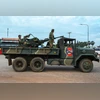
Thailand and Cambodia have long disputed parts of their 817-kilometre border, with the most recent military confrontation erupting on July 24 this year. (Photo/Bloomberg)


Listen to This Article
Thailand has announced that it will suspend all commitments made under a ceasefire agreement with Cambodia after two Thai soldiers were injured in a landmine explosion near the border, Associated Press reported. The deal was brokered by US President Donald Trump.
Prime Minister Anutin Charnvirakul said the explosion, which took place on Monday in Thailand’s Sisaket province, shows that “the hostility towards our national security has not decreased as we thought it would". He added that all actions under the truce will be paused until Thailand’s demands are met.
According to the Royal Thai Army, one of the injured soldiers lost his right foot after stepping on a mine during patrol, while another suffered chest pain from the impact. Both are being treated at a hospital.
Ceasefire terms and disagreements
Thailand and Cambodia signed the truce in Malaysia last month, following a five-day border conflict in July that killed dozens. The agreement required Thailand to release 18 Cambodian soldiers held captive and for both sides to begin clearing heavy weapons and land mines from the area.
However, tensions have continued. Several similar landmine incidents occurred both before and after the clashes, including one in August that injured three Thai soldiers.
Also Read

 "IGI Airport")
 "Thailand, bars")
 "identify thief, hacking, scam, fraud")
 "Xi Jinping, Jinping, China President")
 "Donald Trump, Trump")
Thai Defence Minister Natthaphon Narkphanit said the army is investigating whether the latest mine was old or newly planted. He also confirmed that the release of the detained Cambodian soldiers, originally planned for later this week, has been postponed.
Thailand has accused Cambodia of laying new land mines in violation of the truce. Cambodia denies the charge, saying it remains committed to all provisions of the agreement, including demining operations, and has urged Thailand to release its soldiers soon.
US pressure and regional mediation
The ceasefire was initially mediated by Malaysia, with Trump later pressuring both countries to agree by threatening to withhold trade privileges. The deal was finally signed during the Asean summit in October.
Thailand-Cambodia dispute
Thailand and Cambodia have long disputed parts of their 817-kilometre border, with the most recent military confrontation erupting on July 24 this year.
The conflict between Thailand and Cambodia centres on overlapping territorial claims around the Preah Vihear Temple, an ancient Hindu shrine dedicated to Lord Shiva. The temple sits atop a cliff that marks part of the border between the two countries and has become a powerful symbol of national pride and contention for both sides.
The dispute dates back to the early 20th century, when France, then the colonial ruler of Cambodia, created a border map placing the temple within Cambodian territory. Thailand, however, has long challenged this boundary.
In 1962, the International Court of Justice (ICJ) ruled in Cambodia’s favour, declaring that the temple belonged to Cambodia. The decision settled ownership of the shrine itself but left the surrounding territory undefined, keeping the dispute alive.
Decades later, in 2013, Cambodia again approached the ICJ, which clarified that areas adjoining the temple’s cliff also fell under Cambodian sovereignty. Thailand rejected this interpretation, questioning the ICJ’s authority and maintaining that such matters should be settled through direct bilateral negotiations.
(With agency inputs)
More From This Section
 "Donald Trump, Trump")
 "food, food items")
 "us china, china us, china flag, us flag")
 "COP30, COP30 COP30 U.N. Climate Summit")
 "Kherson")
Don't miss the most important news and views of the day. Get them on our Telegram channel
First Published: Nov 10 2025 | 4:29 PM IST