


Trump seeks new nuclear arms treaty with Russia as New START expires
The deal expired on Thursday, raising the possibility that US and Russia could potentially pursue new nuclear weapons unhindered by any diplomatic agreement while geopolitical tensions rise
 "Donald trump at UNGA")
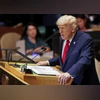
The US and Russia signed the New START in 2010 to replace the START treaty of 1991, which came into effect on Feb. 5, 2011, with an initial duration of 10 years that was extended for another five years in 2021 (File Photo: Reuters)
Listen to This Article
By Hadriana Lowenkron
US President Donald Trump called for the creation of a new nuclear arms treaty with Russia, as the existing New START agreement between the two nations expires and fuels concern about the possibility of a new arms race.
“Rather than extend ‘NEW START’ (A badly negotiated deal by the United States that, aside from everything else, is being grossly violated), we should have our Nuclear Experts work on a new, improved, and modernized Treaty that can last long into the future,” Trump posted Thursday on social media.
The pact — formally known as the New Strategic Arms Reduction Treaty — built on efforts to reduce the nuclear weapons arsenals amassed during the Cold War. The deal expired on Thursday, raising the possibility that the US and Russia could potentially pursue new nuclear weapons unhindered by any diplomatic agreement while geopolitical tensions between Washington and Moscow rise.
The US and Russia signed the accord in 2010 to replace the START treaty of 1991. New START took effect on Feb. 5, 2011, with an initial duration of 10 years that was extended for another five years in 2021.
Also Read

 "Donald Trump, Trump")
 "Indian imports of Russian crude oil fell by only 3.5 per cent in 2025 at 1.73 million bpd from 2024, Kpler data showed")
 "US flag, US, united states")

 "Donald Trump, Trump")
White House Press Secretary Karoline Leavitt said Thursday she’s unaware of any temporary agreement to abide by the terms of New START as the US seeks negotiations on a new accord. In September, Russian President Vladimir Putin said he would adhere to the terms of the treaty for another year once it expired if Washington did the same. Trump did not formally respond to that idea.
Putin suspended formal participation in 2023, halting inspections and exchanges following his full-scale invasion of Ukraine. Since the war began, Putin has repeatedly threatened to use tactical nuclear weapons — which unlike “strategic” nuclear weapons are not governed by the New START agreement — and went as far as stationing tactical nuclear weapons in neighboring Belarus.
New START is the last remaining major arms-control treaty between the US and Russia. Under its terms, the two countries committed to reducing the number of deployed “strategic” nuclear warheads — long-range weapons that can reach each other’s territory — to 1,550 each. They also agreed to limit their number of warhead delivery platforms, such as intercontinental ballistic missiles and heavy bombers, to no more than 700.
Russia’s Foreign Ministry said in a statement late Wednesday that it assumed the two sides “are no longer bound by any obligations or symmetrical declarations within the context of the treaty” and are “free to choose their next steps.” Still, Moscow “remains open to the search for political and diplomatic ways to comprehensively stabilize the strategic situation,” it said.
Further complicating any potential negotiation, Trump has previously called for including China — the main geopolitical and military competitor to the US — in any new nuclear agreement. Secretary of State Marco Rubio reiterated that view earlier this week.
“Obviously, the president’s been clear in the past that in order to have true arms control in the 21st century, it’s impossible to do something that doesn’t include China because of their vast and rapidly growing stockpile,” Rubio told reporters on Wednesday in Washington.
Beijing has pushed back against that idea.
“China’s nuclear strength is by no means at the same level with that of the US,” Lin Jian, a Chinese Foreign Ministry spokesperson, told reporters at a Feb. 3 briefing. “It is neither fair nor reasonable to ask China to join the nuclear disarmament negotiations at this stage.”
More From This Section
 "US immigration")
 "Buildings, Thailand, Bangkok")
 "Jeffrey Epstein")
 "united states, european union, us-eu, us, eu")
 "Russian oil")
Don't miss the most important news and views of the day. Get them on our Telegram channel
First Published: Feb 06 2026 | 9:22 AM IST