


William Webster, only person to lead both FBI and CIA, dies at 101
Appointed judge by Nixon, FBI chief by Carter, and CIA head by Reagan, Webster was retained by George HW Bush until his retirement in 1991
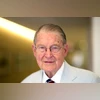 "William Webster")
Webster was FBI director for almost a decade, from February 1978 through May 1987 | Image: Bloomberg


Listen to This Article
By Laurence Arnold
William Webster, the only person to lead both the Federal Bureau of Investigation and the Central Intelligence Agency and, very briefly, the first head of the US accounting oversight board, has died. He was 101.
His family announced his death in a statement that called him an “extraordinary man” who “spent a lifetime fighting to protect his country and its precious rule of law.”
Webster was appointed a federal judge by Richard Nixon, FBI director by Jimmy Carter and CIA director by Ronald Reagan. George H.W. Bush kept him on at the CIA until his retirement in 1991. Throughout his career, he preferred to be addressed as “Judge.”
In 2002, the US Securities and Exchange Commission named him chairman of the Public Company Accounting Oversight Board, which Congress had created to restore investor confidence after corporate and accounting scandals at Enron Corp. and WorldCom Inc. and the collapse of Arthur Andersen LLP.
Also Read

 "Jane Street Sebi case, Sebi trading surveillance, high-frequency trading India, quant firms India, Sebi index manipulation, Sebi derivatives regulation, algorithmic trading scrutiny, Bank Nifty manipulation, Jane Street India probe, intraday index ma")
 "book")
 "John Ratcliffe")
 "Virat Kohli")
 "Farooq Abdullah")
He quit after just one month amid revelations that, as chairman of the audit committee of US Technologies Inc., he had been warned about a lack of accounting controls at the company, which wound up being sued by shareholders for fraud. The political furor surrounding his appointment, which was made in a 3-2 party-line SEC vote, led then-SEC Chairman Harvey Pitt to resign as well.
In a 2002 oral-history interview with the University of Virginia’s Miller Center of Public Affairs, Webster said, “The private man in public life is not an elected official, he is not a bureaucrat, he is one that has been called in to do a job and when he’s done the job he will leave.”
Hoover’s Legacy
Webster was FBI director for almost a decade, from February 1978 through May 1987, stabilizing a post that had seen a succession of leaders since 1972, when J. Edgar Hoover ended his 48-year tenure.
Carter chose Webster in part to lead the bureau beyond controversies over the secret and sometimes illegal surveillance it had carried out under Hoover. Congressional committee investigations led by Senator Frank Church of Idaho and Representative Otis Pike of New York had produced reports in the mid-1970s detailing abuses by the FBI and CIA.
“When I swore in William Webster as FBI director in 1978, I gave him a copy of our committee report and told him to read it before he did anything else,” Carter’s vice president, Walter Mondale, wrote in his memoir, referring to the Church committee. “I think it had an impact on his tenure.”
Webster said one of his challenges was facing down the “Hoover hard hats” — FBI veterans still devoted to the ways of their old boss. He expanded efforts to increase the number of Black, Hispanic and female agents.
Iran-Contra
In 1987, after an ailing William Casey stepped down as director of central intelligence, Reagan asked Webster to take over the CIA. Webster walked into an agency under siege from the Iran-Contra affair, the secret US effort to aid guerrilla fighters in Nicaragua with money raised by selling arms to Iran.
“While Webster lacked experience in intelligence matters and foreign affairs, he had a reputation for uncompromising integrity,” said a 2008 report by the Center for the Study of Intelligence, part of the CIA.
After an internal CIA review, Webster disciplined several agency officers for their actions in Iran-Contra, including withholding information from congressional intelligence committees. He was credited with helping to restore the CIA’s public image.
His efforts on behalf of the agencies he led continued into his 90s during the presidential administration of Donald Trump, who was highly critical of FBI leadership.
Rule of Law
“I know firsthand the professionalism of the men and women of the FBI,” Webster wrote in the New York Times in 2019. “The aspersions cast upon them by the president and my longtime friend, Attorney General William P. Barr, are troubling in the extreme. “
The rule of law, Webster wrote, “is the principle that protects every American from the abuse of monarchs, despots and tyrants.”
William Hedgcock Webster was born on March 6, 1924, in St. Louis. He graduated from Amherst College in Massachusetts in 1947 and earned a law degree from Washington University School of Law in St. Louis in 1949. He served in the US Navy in World War II and in the Korean War.
He practiced law in St. Louis, got involved in Republican politics and served as US Attorney for the Eastern District of Missouri from 1960 to 1961. He was back in private practice when, in 1970, Nixon appointed him a District Court judge. Three years later he was promoted to the US Court of Appeals for the Eighth Circuit.
Griffin Bell, President Carter’s attorney general, ran the search that resulted, in 1978, in Webster’s nomination to run the FBI.
Under Webster, the agency’s priorities shifted from traditional areas such as bank robbery to political corruption, illegal drugs and espionage.
Abscam Case
Among the cases he oversaw was Abscam, the sting that caught seven lawmakers accepting cash bribes from an undercover agent posing as a fictitious sheik. Against some cries of entrapment, Webster defended such undercover work as “an indispensable tool in certain kinds of cases.”
Webster was a partner at the law firm Milbank, Tweed, Hadley & McCloy LLP in 2002 when he was appointed to what turned into his short, stormy stint at the accounting industry oversight board.
Webster and his first wife, Drusilla Lane Webster, who died in 1984, had three children. He married Lynda Jo Clugston in 1990.
More From This Section
 "A US Army tank at the US-Mexico border wall in Juarez, Chihuahua state, Mexico")
 "Shooting, Gun")
 "Prison, Justice, Punishment, Criminal, Law, Arrest, Cage, Jail")
 "Gaza, Gaza strike")
 "Quadrantids Meteor Shower 2025")
Don't miss the most important news and views of the day. Get them on our Telegram channel
First Published: Aug 09 2025 | 10:18 AM IST