The Maker of Filmmakers: How Jagat Murari and FTII Changed Indian Cinema Forever
by Radha Chadha
Published by
Penguin/ Viking
534 pages ₹1,299
This book traces the first two decades of a unique Indian institution — a government-funded school for training young Indians (and some foreigners) in the art and craft of cinema. This story of the Film and Television Institute of India (FTII) is told here through the biography of its second principal, Jagat Murari, who, in its first decade, took the institution to its greatest heights.
The author, Radha Chadha, is Murari’s daughter. She has shaped her narrative by using a treasure trove of journals, official papers, news reports and photographs that Murari left behind in three packed cupboards. She has given life to these documents by interviewing more than a hundred people over the last 10 years — students, teachers, officials, journalists — who have given first-hand accounts of their life at the institute.
After over a decade as a documentary filmmaker, Murari came to the institute in 1961 and became its head a year later. This was in every sense a pioneering venture — no such institute existed in India and those working in the film industry usually had no formal training. Ms Chadha describes her father as “an idealistic man consumed by a passion to create the school of his dreams” as he painstakingly developed the syllabus, appointed faculty, and acquired expensive facilities for the diverse courses.
The students who joined in this early period had hardly any knowledge of cinema. Murari’s instruction to his students was simple; they had “to think in original terms and give full expression to their individual personalities” and develop their own “directorial style”.
The students enthusiastically devoured films such as Battleship Potemkin, Citizen Kane, Bicycle Thieves, Rashomon, Wild Strawberries, Breathless, La Dolce Vita, that had been made by some of the greatest directors of all time — Sergei Eisenstein, Orson Welles, Vittorio De Sica, Akira Kurosawa, Ingmar Bergman, Jean Luc Godard, and Federico Fellini — besides the masterpieces of Indian masters Satyajit Ray, Ritwik Ghatak, and Mrinal Sen. Many of these stalwarts visited the FTII and held lectures.
The impact of this teaching and exposure changed the face of Indian cinema as the institute’s graduates — Mani Kaul, Kumar Shahani, Adoor Gopalakrishnan, Girish Kasaravalli, John Abraham — shaped the “new wave” with films reflecting a creative understanding of the human spirit along with a command over the latest cinematic technology. The institute’s graduates also impacted mainstream (Hindi) cinema and regional cinema; these included: Vidhu Vinod Chopra, Saeed Akhtar Mirza, Subhash Ghai, and actors such as Jaya Bachchan, Shatrughan Sinha, Sadhu Meher, Shabana Azmi, Mithun Chakraborty, Naseeruddin Shah, Om Puri, and many more.
Ms Chadha also discusses some of the issues that unsettled the institute. Towards the end of the first decade, direction students, heavily influenced by some aspects of world cinema, insisted they would not use the acting students in their diploma films — the latter, they said, were influenced by mainstream cinema and hence not suited for their endeavours that required “authenticity”, largely by using non-professional actors. This led to frequent unrest and strikes, the last of which caused Murari’s departure from the institute in 1971.
This also caused a prolonged malaise in the institution as a clueless government deployed one ill-chosen head after another, which only worsened the situation. Administration collapsed, examinations were seriously delayed, diploma films remained incomplete, teaching was deficient — and admissions dropped drastically. The government sent Murari back to the institute to improve matters in 1976, but it was too late. He described the situation as “someone [having] taken aim and wielded a wrecking ball” at the institution he had so lovingly nurtured.
The last 50 pages make very painful reading. The film institute now manifested the rot that characterises several institutions of higher learning in India — an incompetent faculty more intent on political mischief than academic excellence, an undisciplined student body whose gang leaders usually went unpunished due to political intervention, and frequent governmental interference based on quick appeasement rather than seriously addressing complex issues with patience and gravitas.
In 1979, Murari resigned from government service after experiencing a humiliating gherao in his office, surrounded by students who shamelessly blew cigarette smoke into his face and denied him drinking water. The shock of his departure speeded up urgently needed reforms: The institute was made autonomous; the old syllabus, which had been tinkered with several times, was restored, and new and well-qualified faculty was brought in.
This book is an excellent study of the early period of a major national institution. But it is also valuable for the light it sheds on how institutions, built over years, can decay quickly due to the venal conduct of its guardians. Looking back, we can see Murari as the pioneer who traversed pathways that he had to create himself. And, like most pioneers, he got little understanding or backing from an untutored and sceptical bureaucracy and political leadership, and inadequate support from ill-qualified colleagues, many of whom fomented intrigue and discord.
Today, four decades later, we recognise Murari’s extraordinary achievement in shaping a world-class film school and opening vistas of artistic achievement to hundreds of filmmakers who have transformed cinema in India and obtained plaudits the world over. Murari is now justly recognised as “the maker of filmmakers”.
The reviewer is a former diplomat who is also an incorrigible film buff

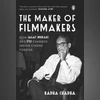 "The Maker of Filmmakers: How Jagat Murari shaped filmmaking culture")


