Air India crash: Voice recording suggests captain may have cut fuel supply

US assessment indicates pilot error in deadliest Indian aviation disaster in a decade
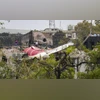
Ahmedabad Plane Crash, Plane Crash
The AAIB’s initial findings revealed that fuel switches on both engines were toggled from “RUN” to “CUTOFF” seconds after take-off (Photo: PTI)
Apexa Rai New Delhi
4 min read Last Updated : Jul 18 2025 | 7:27 AM IST

Don't want to miss the best from Business Standard?

A voice recording from the cockpit of the Air India aircraft that crashed on June 12 suggests it was the captain who cut off the fuel supply to the engines, according to a report by Reuters. The claim, based on information from US officials involved in the probe, adds a new dimension to the ongoing investigation.

Preliminary findings

Although the findings are not part of any formal documentation, the US assessment has emphasised the probable cause of the crash of flight AI171, which killed more than 260 people. The incident is still under investigation.

Inside the cockpit

According to the Reuters report, the first officer was in control of the Boeing 787 during take-off when he questioned the captain over moving the fuel switches from ‘RUN’ to ‘CUTOFF’—a condition that stops fuel flow, starving the engines. The officer also reportedly urged the captain to immediately restore the supply.
 
A preliminary report released by the Aircraft Accident Investigation Bureau (AAIB) on July 12 confirmed that one pilot had asked the other why the fuel was cut off. The response was a denial. The report did not specify which pilot made which statement. The two pilots were Captain Sumeet Sabharwal and First Officer Clive Kunder, who had logged 15,638 and 3,403 total flying hours, respectively. 
While there is no video footage from inside the cockpit to verify which pilot moved the switches, the US analysis, supported by other investigative leads, suggests the captain may have done so.

Technical details

The AAIB’s initial findings revealed that fuel switches on both engines were toggled from “RUN” to “CUTOFF” seconds after take-off, though the reason remains unclear.
 
Closed-circuit TV footage from the airport showed the deployment of the ram air turbine—a backup power source—indicating a loss of engine thrust. The London-bound aircraft climbed to 650 feet before beginning to lose altitude. The switches were later returned to “RUN” mode, triggering an automatic restart attempt. 
The plane eventually clipped treetops and a chimney before crashing into a building at a nearby medical college, killing 19 people on the ground in addition to the 241 out of the 242 passengers onboard.

AAIB slams western media for biased coverage

On July 17, the AAIB criticised parts of the international press for "drawing conclusions through selective and unverified reporting." The agency reiterated that the investigation remains ongoing and that it is premature to speculate on causes. 
It further noted that air crashes often result from a combination of factors, and a comprehensive final report is expected within a year, in line with international norms.

No safety recommendations to Boeing and GE

Air India CEO Campbell Wilson, in an internal memo issued on July 14, confirmed that no mechanical or maintenance lapses had been identified in the preliminary findings. Consequently, the AAIB report did not include any safety recommendations for Boeing or the engine manufacturer, General Electric (GE).
 
Following the report’s release, the US Federal Aviation Administration (FAA) and Boeing reaffirmed the safety of fuel switch locks on the 787 aircraft. 
The US National Transportation Safety Board (NTSB) has been actively supporting the AAIB in the investigation. A spokesperson said NTSB Chair Jennifer Homendy had been fully briefed on the cockpit voice recordings and flight data readings that NTSB experts helped extract.

Renewed debate on cockpit cameras

The crash has reignited debate in aviation safety circles over the need for cockpit image recorders on commercial aircraft, with many arguing that video footage could be crucial in uncovering the causes of such accidents.
   
*Subscribe to Business Standard digital and get complimentary access to The New York Times

Smart Quarterly

₹900

3 Months

₹300/Month

SAVE 25%

Smart Essential

₹2,700

1 Year

₹225/Month

SAVE 46%
*Complimentary New York Times access for the 2nd year will be given after 12 months

Super Saver

₹3,900

2 Years

₹162/Month

Subscribe

Renews automatically, cancel anytime

Here’s what’s included in our digital subscription plans

Exclusive premium stories online

  • Over 30 premium stories daily, handpicked by our editors

Complimentary Access to The New York Times

  • News, Games, Cooking, Audio, Wirecutter & The Athletic

Business Standard Epaper

  • Digital replica of our daily newspaper — with options to read, save, and share

Curated Newsletters

  • Insights on markets, finance, politics, tech, and more delivered to your inbox

Market Analysis & Investment Insights

  • In-depth market analysis & insights with access to The Smart Investor

Archives

  • Repository of articles and publications dating back to 1997

Ad-free Reading

  • Uninterrupted reading experience with no advertisements

Seamless Access Across All Devices

  • Access Business Standard across devices — mobile, tablet, or PC, via web or app

More From This Section

Topics :ahmedabad plane crashAir IndiaBoeingplane crashBS Web Reports

First Published: Jul 18 2025 | 7:25 AM IST

Next Story