


A financial alchemist's roller-coaster story
Mr Hands describes some of his early deals, which reflect the essence of his approach
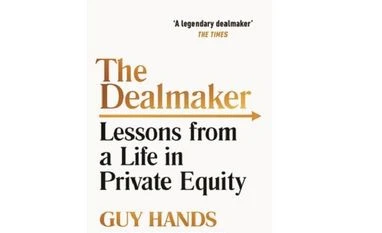 "Book Cover")
premium
Book Cover (The Dealmaker: Lessons from a life in private equity)
5 min read Last Updated : Jan 20 2022 | 12:16 AM IST
The Dealmaker: Lessons from a life in private equity
Author: Guy Hands
Publisher: Penguin Random House
Pages: 350
Pages: 350
Price: Rs 650
How do private-equity (PE) investors strike those headline-grabbing deals and earn eye-popping amounts? If you are curious to learn the secrets of these financial alchemists, here is your chance to do so from the very best—Guy Hands, founder of Terra Firma, at one time among the world’s top PE firms.
At the very start of his schooling, Mr Hands encountered difficulties in reading and spelling and was found to be dyslexic. When people read, the words signify something. For dyslexics the written word is like a secret code that they struggle to interpret. Thankfully, he possessed a gift for numbers that compensated for his struggles with languages.
While at college, Mr Hand set up a business that sold artwork door to door. One misstep, however, left him with a crushing debt. As he wondered how he could find a high-paying job, his college counsellor pointed him towards Goldman Sachs. Despite his poor grades, he landed a job in London in the fixed-income division.
In 1990, he pulled off one of the earliest deals securitising low-credit quality bonds. While at Goldman Sachs, Mr Hands realised that management teams of many traditional companies were inefficient in utilising capital. He was convinced there was a lot of money to be made by restructuring such companies. Thus began his pivot towards PE investing. When his superiors at Goldman Sachs showed their reluctance to provide him with the capital for such deals, he joined Nomura and in December 1994 set up a London-headquartered division called the Principal Finance Group (PFG).
Mr Hands describes some of his early deals, which reflect the essence of his approach. One of the earliest involved buying a pub chain called Phoenix Inns. His team visited hundreds of pubs, understood the changing demographics and client needs, after which they reviewed the business plan of each pub. While the pubs enjoyed a low valuation on the basis of their beer sales, many were sitting on valuable real estate. By selling off the pubs that could not be turned around, Mr Hands gathered enough money to repay Nomura’s investment. He sold the restructured, and much improved, business a few years later at a handsome profit. A key point Mr Hands makes is that every deal that he and his team scrutinised in granular detail before buying went well. Those where he took shortcuts were the ones that went awry.
In the chapter titled “Maths maketh the money”, Mr Hands elaborates on his methods. Doing a leveraged buyout, he says, is akin to buying a house on loan, except that here a company serves as the collateral. He says if you can ensure that the bank’s interest cost is lower than the return on your investment, you can make a great deal of money. For that to happen, the purchase price must be right. Mr Hands would often securitise the cash flows of the entities he took over. The money so generated paid for the purchase. Mergers and acquisitions are a powerful tool in the PE investor’s arsenal. For instance, consider the merger of two businesses trading at a similar multiple. The merged entity commands a higher multiple since larger businesses are deemed to be safer.
In 2000, Mr Hands set up his own PE firm, Terra Firma. He next dwells on the herculean challenges a new firm faces in raising money from sceptical institutional investors. But Mr Hands persisted and the money came in. In the initial years, his funds did very well. But then he goofed up on the purchase of the music company EMI. A lot of money had come in, so he was impatient to deploy even though valuations were elevated. He alleges he was misled by his investment banker, Citigroup, into believing there was another bidder in the fray, which led him to bid at a high price. He committed money from two of his funds to the deal, leading to high concentration risk. He also took a massive loan from Citigroup to fund the purchase. And since EMI was a publicly-listed company, his team was unable to do the in-depth due diligence they normally carried out when purchasing a private company.
To make matters worse, the 2008 financial crisis hit. All banks, including Citigroup, sustained massive losses. According to Mr Hands, Citigroup did not allow him enough time to restructure EMI, even though he says a turnaround was underway. Instead, it took control of EMI and sold it.
Instead of cutting his losses, Mr Hands chose to engage in a costly, long-drawn court battle with Citigroup, which he ultimately lost. Though it was a devastating blow, he survived, but was no longer in the same league as earlier.
Those keen to learn about the highs and lows of the unforgiving world of PE investing will find Mr Hands’ autobiography unputdownable.
Topics : BOOK REVIEW Literature