


Dilip Kumar: The sole supernova in Galaxy Bollywood
Yusuf Khan from Peshawar, aka Dilip Kumar, was completely believable in a wide range of roles in a span of 12 years at the height of his career covering 62 films in nearly 50 years
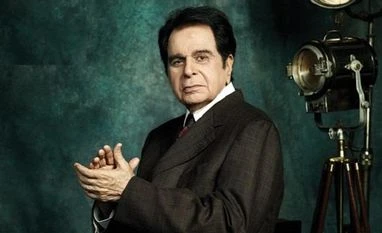 "Dilip Kumar, Bollywood")
premium
From the time films began to be made in 1900, stars the world over assiduously cultivated distinctive images. In the Golden Age of Hindi cinema Raj Kapoor was always a Chaplinesque innocent. And Dev Anand was ever the happy-go-lucky urban imp. But there was one outlier. Picture these vignettes:
Yusuf Khan from Peshawar, aka Dilip Kumar, was completely believable in all these roles – arguably his best – in Andaz (1949), Mughal-e-Azam (1960) Ganga Jumna (1961), and Devdas (1955), in a span of 12 years at the height of his career covering 62 films in nearly 50 years.
He was dubbed the tragedy king, but that was only a part of his repertoire. He was more than adequate as a swashbuckling hero (Aan, Azaad, Kohinoor), an upstanding tongawalla fighting greedy contractors (Naya Daur), a Roman (Yahudi), simpering/dare-devil twins (Ram Aur Shyam), a martinet of a father (Shakti) and a patriarch (Kranti, Saudagar) in some of his famous films. But his Gothic portrayals of conflicted characters in lesser films – Heathcliff in Emily Bronte’s Wuthering Heights (twice, in Arzoo and Hulchal), Edward Rochester in Charlotte Bronte’s Jane Eyre (Sangdil) and Victor Stowell in Hall Caine’s The Master of Man (Amar) – testify to his range as well as courage in playing characters with deep negative traits in an age when romance alone was king.
Legend credits Thespis the Greek poet of sixth century BC to be the first actor, who actually became a different character on stage at a time when theatre entirely comprised chorus performances. Aristotle called these new dramas tragedies. No one deserves the title thespian, the adjectival or noun form of Thespis, than Dilip Kumar.
- A debonair young man at a piano sings “aaj kisi ki haar hui hai, aaj kisi ki jeet” (somebody lost today, somebody won). He has just learnt that the heiress he loved is actually long enamoured of someone else.
- The heir to the Mughal throne runs a feather along the face of an incredibly beautiful courtesan he passionately loves but cannot marry. Only the court musician’s aalaps are heard in the background.
- A farm labourer cavorts with his friends, singing “nain lad jaihein” until his fresh-faced beloved appears. He ends up a dacoit trying to save her from the clutches of the evil moneylender, only to die at the hands of his policeman brother.
- A scion of landed gentry tells a Calcutta courtesan who loves and cares for him, “kaun kambakht bardasht karne ke liye peeta hai” (I want to drink beyond tolerance). However much he drinks, he says, a sliver of consciousness reminds him of the pain (of separation from his childhood sweetheart, now married to someone else).
Yusuf Khan from Peshawar, aka Dilip Kumar, was completely believable in all these roles – arguably his best – in Andaz (1949), Mughal-e-Azam (1960) Ganga Jumna (1961), and Devdas (1955), in a span of 12 years at the height of his career covering 62 films in nearly 50 years.
He was dubbed the tragedy king, but that was only a part of his repertoire. He was more than adequate as a swashbuckling hero (Aan, Azaad, Kohinoor), an upstanding tongawalla fighting greedy contractors (Naya Daur), a Roman (Yahudi), simpering/dare-devil twins (Ram Aur Shyam), a martinet of a father (Shakti) and a patriarch (Kranti, Saudagar) in some of his famous films. But his Gothic portrayals of conflicted characters in lesser films – Heathcliff in Emily Bronte’s Wuthering Heights (twice, in Arzoo and Hulchal), Edward Rochester in Charlotte Bronte’s Jane Eyre (Sangdil) and Victor Stowell in Hall Caine’s The Master of Man (Amar) – testify to his range as well as courage in playing characters with deep negative traits in an age when romance alone was king.
Legend credits Thespis the Greek poet of sixth century BC to be the first actor, who actually became a different character on stage at a time when theatre entirely comprised chorus performances. Aristotle called these new dramas tragedies. No one deserves the title thespian, the adjectival or noun form of Thespis, than Dilip Kumar.
Topics : Dilip Kumar Bollywood Obituary Cinema Hindi cinema theatre