


Margin pressure may continue for MRF led by raw material costs, product mix
Analysts at Anand Rathi Research are positive on the outlook for the company as demand in TBRs, PCRs and two wheelers has started to pick up
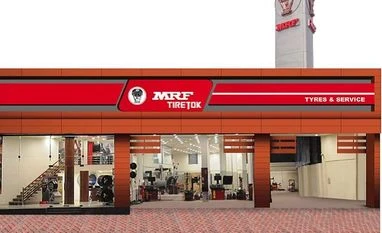 "MRF tyres")
premium
As far as demand is concerned, brokerages expect a recovery of volumes from auto-makers as well as the replacement market which bodes well for MRF
MRF’s June quarter (Q1) performance was broadly in line with the Street’s expectations. While revenues were up 70 per cent year-on-year (YoY), they declined by 13 per cent sequentially. However, it trailed rival Apollo Tyres, which reported a 80 per cent YoY growth and a 11 per cent sequential decline.
The sequential drop was caused by double-digit decline in demand from automakers, but the replacement segment fared better. Both companies, though, benefited from a strong recovery in exports.
In terms of revenue growth, MRF trailed peers Apollo Tyres and Ceat in financial year 2020-21 (FY21) and that appears to be continuing in FY22. Analysts at Motilal Oswal Research, led by Jinesh Gandhi, say MRF’s competitive positioning within the sector has weakened over the past few years, reflected in the dilution of pricing power in the passenger car radial (PCR) as well as truck and bus radial (TBR) segments. This, coupled with the impact of capex over the last three years, has resulted in substantial dilution in its superior return ratios.
On the demand front, brokerages expect a recovery of volumes from automakers and the replacement market, which bodes well for MRF. Analysts at Anand Rathi Research are positive on the company’s outlook as demand in TBRs, PCRs and two-wheelers has started to pick up. They expect demand momentum to pickup in subsequent quarters, led by a surge in the replacement segment. This should help drive volumes, improving utilisation given additional capacity in Gujarat.
The sequential drop was caused by double-digit decline in demand from automakers, but the replacement segment fared better. Both companies, though, benefited from a strong recovery in exports.
In terms of revenue growth, MRF trailed peers Apollo Tyres and Ceat in financial year 2020-21 (FY21) and that appears to be continuing in FY22. Analysts at Motilal Oswal Research, led by Jinesh Gandhi, say MRF’s competitive positioning within the sector has weakened over the past few years, reflected in the dilution of pricing power in the passenger car radial (PCR) as well as truck and bus radial (TBR) segments. This, coupled with the impact of capex over the last three years, has resulted in substantial dilution in its superior return ratios.
On the demand front, brokerages expect a recovery of volumes from automakers and the replacement market, which bodes well for MRF. Analysts at Anand Rathi Research are positive on the company’s outlook as demand in TBRs, PCRs and two-wheelers has started to pick up. They expect demand momentum to pickup in subsequent quarters, led by a surge in the replacement segment. This should help drive volumes, improving utilisation given additional capacity in Gujarat.
Topics : MRF Tyre makers MRF MRF Tyres