


PLI scheme: Auto component companies hope to pare imports
It would also reduce imports from countries like China, Taiwan and South Korea and facilitate foreign collaborators to set up manufacturing footprint in India
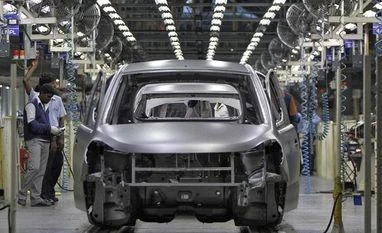 "auto components")
premium
India imported parts worth $13.8 billion in FY21 while it exported $13.3 billion worth of parts in the same year, according to Automotive Component Manufacturers Association (ACMA).
The productivity-linked incentive (PLI) scheme for the automotive sector, which got notified last week, would help manufacturers introduce new technologies with higher local content.
It would also reduce imports from countries like China, Taiwan and South Korea and facilitate foreign collaborators to set up manufacturing footprint in India, said executives of auto component firms. This, in turn, could also make India an export hub, they added.
India imported parts worth $13.8 billion in FY21 while it exported $13.3 billion worth of parts in the same year, according to Automotive Component Manufacturers Association (ACMA). The PLI is expected to bridge the trade deficit, which reduced to $0.5 billion in FY21, said experts.
China’s share in the overall import pie was the highest at 29 per cent, followed by South Korea at 13 per cent and Germany 10 per cent. The remaining 48 per cent came from Japan, the US, Thailand, Singapore and others. The department of heavy industries (DHI) is expected to notify, in a few days, a detailed list of parts that are eligible for PLI. After this, component makers can initiate work on applying for the scheme. Once an application is approved, investment decisions can be firmed up.
“We expect to complete the whole process by the end of this year,” said Nirmal K Minda, chairman, Minda Industries. Minda, which makes a diversified range of auto parts, including alternative fuel systems, air filtration systems, switches, sensors actuators and advanced driver assistance systems (ADAS), among others, is expected to be among the key beneficiaries of the PLI scheme. The scheme will speed up the localisation of new technologies and promote exports, he said, citing an instance of battery charger and controller and various other parts that are used in electric vehicles (EVs).
Deepak Jain, chairman and managing director at Lumax Industries, said, “It would facilitate investments in the joint ventures we have forged in the recent past. It only helps that the scheme has revenue-linked targets,” said Jain. Lumax controls 60 per cent share in the automotive segment. With its wide range of lighting products and shifters, it is well positioned to benefit from the scheme.
It would also reduce imports from countries like China, Taiwan and South Korea and facilitate foreign collaborators to set up manufacturing footprint in India, said executives of auto component firms. This, in turn, could also make India an export hub, they added.
India imported parts worth $13.8 billion in FY21 while it exported $13.3 billion worth of parts in the same year, according to Automotive Component Manufacturers Association (ACMA). The PLI is expected to bridge the trade deficit, which reduced to $0.5 billion in FY21, said experts.
China’s share in the overall import pie was the highest at 29 per cent, followed by South Korea at 13 per cent and Germany 10 per cent. The remaining 48 per cent came from Japan, the US, Thailand, Singapore and others. The department of heavy industries (DHI) is expected to notify, in a few days, a detailed list of parts that are eligible for PLI. After this, component makers can initiate work on applying for the scheme. Once an application is approved, investment decisions can be firmed up.
“We expect to complete the whole process by the end of this year,” said Nirmal K Minda, chairman, Minda Industries. Minda, which makes a diversified range of auto parts, including alternative fuel systems, air filtration systems, switches, sensors actuators and advanced driver assistance systems (ADAS), among others, is expected to be among the key beneficiaries of the PLI scheme. The scheme will speed up the localisation of new technologies and promote exports, he said, citing an instance of battery charger and controller and various other parts that are used in electric vehicles (EVs).
Deepak Jain, chairman and managing director at Lumax Industries, said, “It would facilitate investments in the joint ventures we have forged in the recent past. It only helps that the scheme has revenue-linked targets,” said Jain. Lumax controls 60 per cent share in the automotive segment. With its wide range of lighting products and shifters, it is well positioned to benefit from the scheme.