


Praj Industries to tie up with PEs for its green fund
Plans investment in biomass-based ethanol
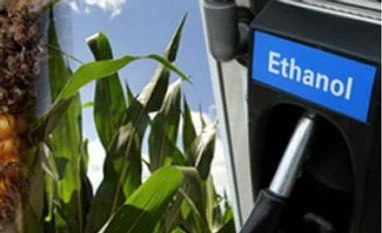 "Ethanol")
Pune-based Praj Industries is looking to tie up with private equity funds and foreign lenders after having announced setting up of a green fund last month. The ethanol technology provider is now focusing on second-generation ethanol production from agri-residue.
The newly announced fund will finance setting up of such projects. “We have developed a technology over the last six-seven years, where agri-residue is converted into ethanol,” Pramod Chaudhari, executive chairman, Praj Industries, told Business Standard.
The government is pushing for 10 per cent ethanol blending with petrol, from the current four per cent. In India, ethanol is currently made from molasses produced from sugarcane.
The government has asked oil marketing companies (OMCs) to set up biomass-based ethanol projects, he said. “To set up the projects, technology suppliers will also take part position in the project cost,” Chaudhari said. Each project will require Rs 400-550 crore, depending on the configuration. OMCs will take the lead in the first batch of 10 projects. Chaudhari said OMCs do not have the kind of experience needed to run an ethanol business.
“They need help from plant supplier for operations and maintenance. The Praj Board has given approval for the green fund launch, which will help on both parameters. It will also demonstrate our commitment to the plant.”
Praj has installed around 100 first-generation (1G) ethanol plants in India. It claims that six-seven per cent of global ethanol is produced from technology provided by it. It exports technology to 75 countries, including the UK, the US, Germany and Belgium.
Some of their clients in India for 1G ethanol plants are Balrampur Chini Mills, Triveni Engineering & Industries, Bannari Amman Sugars, KCP Sugar & Industries Corporation, Warana SSK, Harinagar Sugar Mills, Lokmangal Agro Industries and EID Parry.
Chaudhari said they would look for part funding from investors, while chipping in with some funds. “This would ensure our customers have the comfort of financial support. While structuring these projects, we will decide the amount and nature of our exposure. We have to do some smart financial engineering,” he said.
The 10 projects are expected to materialise over the next six to nine months. Bharat Petroleum, Hindustan Petroleum, Indian Oil Corporation are doing three of these projects, while Numaligarh Refinery will be doing one.
Besides Praj, the Indian Institute of Chemical Technology - with funding from the department for biotechnology - is also in the fray.
Ethanol procurement is currently a big issue for OMCs since they face competition in ethanol procurement from industrial alcohol and liquor companies. Once 1G technology is established, agri-residue will be an added source.
Chaudhari said the company also planned to get backend tie-up for biomass. “We are working on a farmer-centric model. Only then, can you get assured supply of biomass.”
Besides, Praj is also looking at bio-compressed natural gas (CNG) as co-product of ethanol. “It can be an additional revenue stream. We are trying to have value maximisation through ethanol, bio-CNG and biochemicals,” he said.
The newly announced fund will finance setting up of such projects. “We have developed a technology over the last six-seven years, where agri-residue is converted into ethanol,” Pramod Chaudhari, executive chairman, Praj Industries, told Business Standard.
The government is pushing for 10 per cent ethanol blending with petrol, from the current four per cent. In India, ethanol is currently made from molasses produced from sugarcane.
The government has asked oil marketing companies (OMCs) to set up biomass-based ethanol projects, he said. “To set up the projects, technology suppliers will also take part position in the project cost,” Chaudhari said. Each project will require Rs 400-550 crore, depending on the configuration. OMCs will take the lead in the first batch of 10 projects. Chaudhari said OMCs do not have the kind of experience needed to run an ethanol business.
“They need help from plant supplier for operations and maintenance. The Praj Board has given approval for the green fund launch, which will help on both parameters. It will also demonstrate our commitment to the plant.”
Praj has installed around 100 first-generation (1G) ethanol plants in India. It claims that six-seven per cent of global ethanol is produced from technology provided by it. It exports technology to 75 countries, including the UK, the US, Germany and Belgium.
Some of their clients in India for 1G ethanol plants are Balrampur Chini Mills, Triveni Engineering & Industries, Bannari Amman Sugars, KCP Sugar & Industries Corporation, Warana SSK, Harinagar Sugar Mills, Lokmangal Agro Industries and EID Parry.
Chaudhari said they would look for part funding from investors, while chipping in with some funds. “This would ensure our customers have the comfort of financial support. While structuring these projects, we will decide the amount and nature of our exposure. We have to do some smart financial engineering,” he said.
The 10 projects are expected to materialise over the next six to nine months. Bharat Petroleum, Hindustan Petroleum, Indian Oil Corporation are doing three of these projects, while Numaligarh Refinery will be doing one.
Besides Praj, the Indian Institute of Chemical Technology - with funding from the department for biotechnology - is also in the fray.
Ethanol procurement is currently a big issue for OMCs since they face competition in ethanol procurement from industrial alcohol and liquor companies. Once 1G technology is established, agri-residue will be an added source.
Chaudhari said the company also planned to get backend tie-up for biomass. “We are working on a farmer-centric model. Only then, can you get assured supply of biomass.”
Besides, Praj is also looking at bio-compressed natural gas (CNG) as co-product of ethanol. “It can be an additional revenue stream. We are trying to have value maximisation through ethanol, bio-CNG and biochemicals,” he said.

Don't miss the most important news and views of the day. Get them on our Telegram channel
First Published: Sep 06 2016 | 12:32 AM IST