Aryama Sundaram, Mistry's counsel, was referring to the Article 75 of Tata Sons' charter. Sundaram said that any provision in it "with unbridled power to take out a shareholder’s title to property in shares, ignoring constitutionally valid safeguards in company law is void." Article 75 of the Tata Sons Articles of Association says: “The company may at any time by Special Resolution resolve that any holder of ordinary shares do transfer his ordinary shares. Such member would thereupon be deemed to have served the company with a sale notice in respect of his ordinary shares.”
Sundaram alleged that even if the courts were to hold that such a provision is not void, such provision would in itself be oppressive to the shareholders. Even legally valid provisions can be inequitable and warrant intervention by the court, added Sundaram.
Mistry's counsel is seeking scrapping of Article 75. Abhishek Manu Singhvi, Tata Sons' counsel, on 17th January had argued that Article 75 has been part of the charter since 1917. He added that having not objected to such Articles for decades, and given the law has upheld such provisions, it cannot be construed as an act of oppression now.
Meanwhile, taking on Singhvi’s argument of companies being “Public Public” or “Private Private” or “Public Private”, which are concepts unheard of, Sundaram said under new company law that commenced in September 2013, there is no concept of any hybrid company. "That's why, Tata Sons, which is now clearly a public company is seeking to convert it into private now is to escape the rigour of governance standards – a retrograde step," Sundaram said.
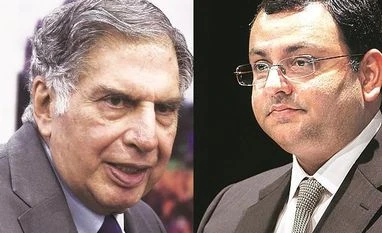
Tata Sons and Mistry family firms have been at loggerheads since the Cyrus Mistry was suddenly removed as the chairman of Tata Sons on 24 October 2016.


 "Ratan Tata, Cyrus Mistry, Tata Sons,")