


Getting India vaccinated: Should governments target specific zones?
Districts with a higher rate of growth in cases than the national average have a lower rate of vaccination than districts with lower growth rate.
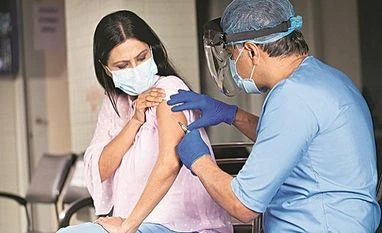 "vaccination, coronavirus, covid-19, vaccines")
premium
Delhi, Mumbai, Kolkata, Chennai, Bengaluru and Pune comprise nearly 43 per cent of the total cases and deaths in the country.
1977 was the year when smallpox was eradicated from the world. India was one of the last places where the disease was prevalent, and researchers used a strategy called ring vaccination to contain it. The idea of ring vaccination was simple. Authorities would identify the infected person, monitor the ring of people around the infected entity and vaccinate them. Then the second ring of people who came in contact with the first ring was identified and vaccinated. The World Health Organisation replicated these efforts during the Ebola outbreak. Contact tracing during Covid-19 is done similarly.
But as Covid-19 vaccines are available now, many are asking if a ring vaccination strategy can be followed in the case of Covid-19. While there is certainly a need for mass vaccination, Dr K Srinath Reddy claims that ring vaccination may not be a viable approach in the case of Covid-19.
“Ring vaccination is a concept where you have a contagious disease which spreads from person to person. If you vaccinate the people around and they become immune and you can limit the transition of the virus. When there is an aerosol spread, it is less effective. In the case of Covid-19, a vaccine’s primary purpose is to prevent severe disease. The effect on limiting transmission is also going to be there, but that is more of a delayed effect with a large number of people getting vaccinated,” he said.
However, Dr Reddy believes that the government can target specific areas for vaccination first.
“It is important to have more vaccines in areas where cases are rising more rapidly,” he told Business Standard.
Evidence indicates a wide disparity in the spread of the virus across the country. So, the government can prioritise one zone over the other. Urban districts account for two-thirds of the total infections across the country. Within these urban centres, the top six metropolises have a 68 per cent share. Delhi, Mumbai, Kolkata, Chennai, Bengaluru and Pune comprise nearly 43 per cent of the total cases and deaths in the country.