Thursday, January 08, 2026 | 02:59 PM ISTहिंदी में पढें
Business Standard
Notification Icon
userprofile IconSearch

The second wave: Migrant crisis looms again as Covid-19 curbs expand

Lack of business to hit payouts, pushing people out of jobs and cities
Coronavirus, covid-19, lockdown, restrictions, curbs
premium

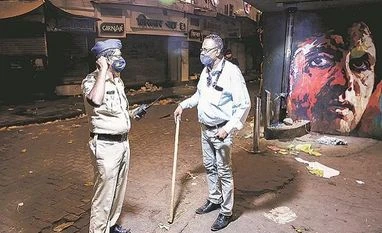
Police personnel patrol Mumbai’s Dadar market during the night curfew imposed due to a surge in Covid cases

Viveat Susan PintoShally Seth MohileArnab Dutta Mumbai/New Delhi
The closure of non-essential retail establishments, including malls, multiplexes, auto dealerships, and eateries in Mumbai and the rest of Maharashtra, could trigger a reverse migration of workers from the state for the second year in a row, industry bodies and top executives have told Business Standard.

Delhi announced a night curfew on Tuesday, hitting businesses in the crucial evening hours for bars, restaurants, and pubs.

“Seventy per cent of the business comes in the evening in both Mumbai and Delhi for restaurants. In Mumbai, non-essential retail has been barred for a month. In Delhi, night curfew begins at 10 pm. Takeaways cannot substitute for dine-in services. And there are restrictions on home deliveries in cities such as Mumbai. So what are we left with?” asks Riyaaz Amlani, chief executive officer (CEO) and managing director, Impresario Entertainment and Hospitality.

Amlani runs restaurants such as Smoke House Deli and Social in both Mumbai and Delhi.

“The new measures are understandably the need of the hour, but they will have a huge impact on sales and on the survivability of the industry,” said Zorawar Kalra, founder and director of Massive Restaurants, which owns fine-dining restaurants such as Masala Library by Jiggs Kalra. Kalra expects 50-60 per cent reduction in overall sales for restaurants, since the 10 pm night curfew in Delhi and the 8 pm night curfew in Mumbai will hit dinner services hard. Apart from the loss of business during peak dine-in hours, night curfews will also hit footfalls at bars and pubs during the Indian Premier League, which begins Friday.


“We have been operating at 50 per cent capacity and restricted business hours since last year.   We had just about begun seeing an improvement in consumption, and now the spate of night curfews in Delhi and Mumbai! We are worried about the fate of our employees,” said Kabir Suri, vice-president, National Restaurant Association of India.

Suri is also the co-founder and director of Azure Hospitality, which runs restaurant chains such as Mamagoto in multiple cities.

Restaurants fear wage and salary payouts will be a challenge in April, pushing migrants out of job and cities. The retail sector in Maharashtra, for instance, employs close to 5 million people, while the restaurant industry in the state employs another 2-3 million people. Between 85 and 90 per cent of these people are front line workers employed on shop floors as retail executives or waiters, delivery persons, and kitchen staff.

Maharashtra also accounts for 10 per cent of auto retail purchases in the country. During local festivals such as Gudi Padwa and Ram Navami, the contribution of the state touches 12-13 per cent, says Vinkesh Gulati, president of the Federation of Automobile Dealers Association. The period is considered auspicious for purchasing big-ticket items such as automobiles.

Even last year, during Gudi Padwa, said Gulati, the state was under lockdown and this year too things look bad.

Till a few weeks ago, auto dealers were celebrating the strong order books for the period. Sales now seem uncertain with weekend lockdowns and restrictions in place in Maharashtra. “For this period, the region (Maharashtra) has bookings of close to 25,000 cars and 75,000 two-wheelers. We don’t know how to handle it now,” Gulati said.