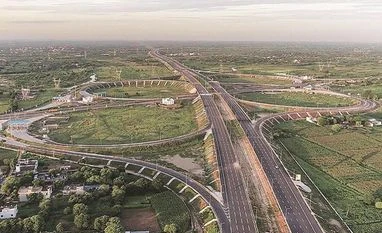
The 246-km section has been developed at a cost of over Rs 12,150 crore. The operationalisation of this section is expected to provide a major boost to economic development of the entire region and become a massive pillar in the Centre’s long-term vision to bring the national cost of logistics down to 7-8 per cent of the national GDP.
The commissioning of this section also starts the countdown for the completion of the 1,380-km expressway, which has been hailed as a landmark project in infrastructure planning. The project, which is the crown jewel of Centre’s Bharatmala Pariyojana, is expected to be completed in 2024.
The project, being built at a cost a trillion rupees, is the country’s longest expressway, armed with hundreds of amenities and facilities.
Length: 1386 km (to reduce distance between Delhi and Mumbai by 12 per cent to 1242 km)
Travel Time: 12 hours (currently 24 hours)
States: Delhi, Haryana, Rajasthan, Madhya Pradesh, Gujarat and Maharashtra
Connectivity to: 93 PM Gati-Shakti economic nodes, 13 ports, 8 major airports and 8 multi-modal logistics parks (MMLPs) along with spurs to new upcoming greenfield airports such as Jewar Airport, Navi Mumbai Airport and Jawaharlal Nehru Port.
12 lakh tonnes of steel to be used for construction
10 crore man days of employment to be generated
80 lakh tonnes of cement to be used for construction
8-lane access-controlled expressway with scope for expansion to 12 lanes.


 "Delhi-Mumbai Expressway")